
How HIFU Skin Tightening Actually Works Under the Skin
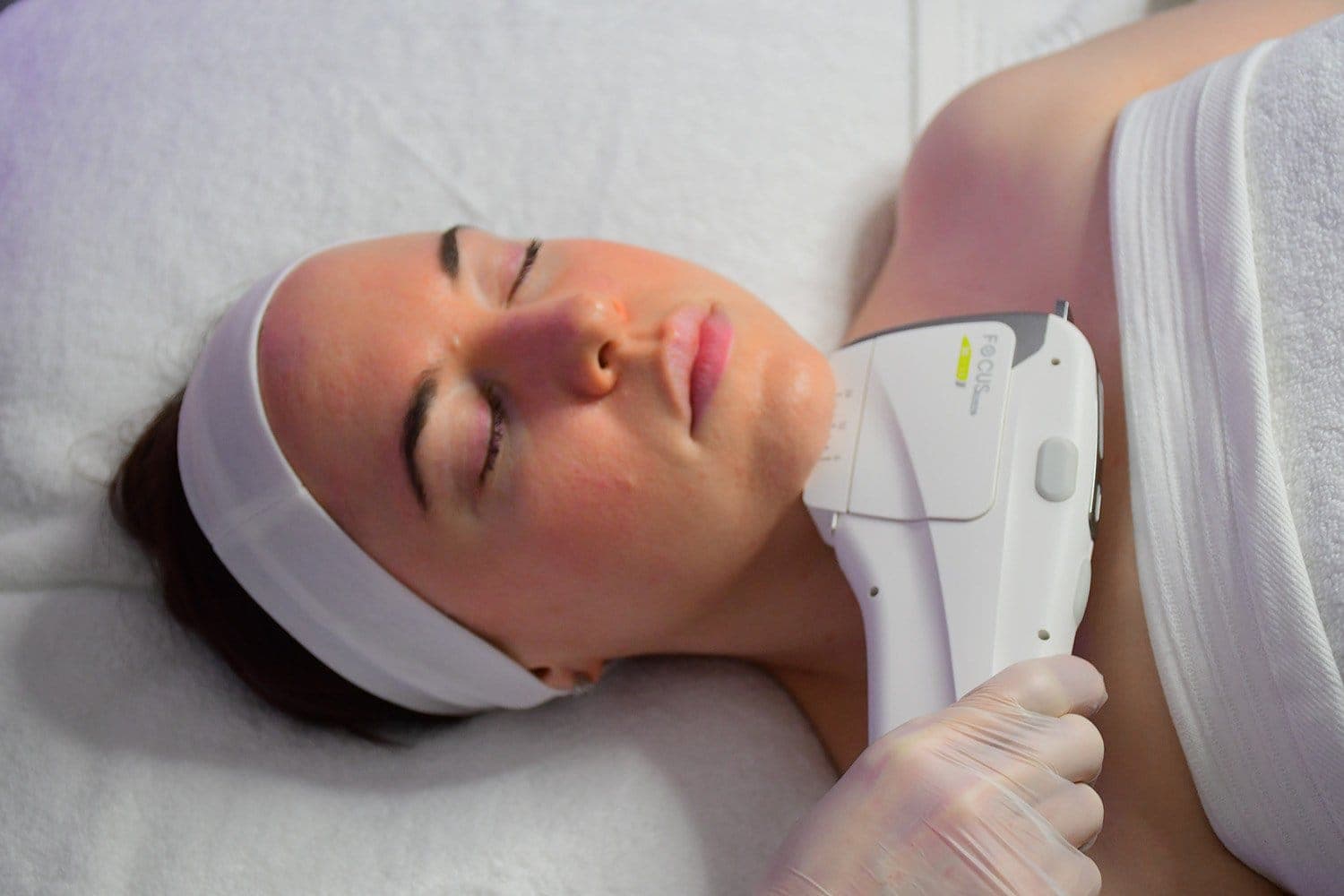
HIFU — High-Intensity Focused Ultrasound — tightens skin by delivering ultrasound energy to a precise depth beneath the surface, where the heat stimulates your own collagen production. The surface itself is never broken: no incision, no injection, no wound to heal. The lift that follows is gradual, because it is built by new collagen over the weeks and months after the session rather than placed there on the day.
That one sentence — your own collagen does the work, on its own timetable — explains almost everything people find surprising about HIFU: why there is nothing dramatic to see when you leave the clinic, why the mirror keeps improving at month two, and why the result reads as "looking well" rather than "having had work done." Here is what is actually happening under the skin.
What does HIFU actually do beneath the surface?
Focused ultrasound heats a set depth below the skin surface — and the word focused is doing the real work in that sentence. Think of the way a magnifying glass concentrates sunlight at one point while the air above it stays cool: the ultrasound energy passes through the surface untouched and converges only at the depth the doctor intends. That is why the skin is never broken and why the session needs no anaesthesia — no incisions, no injections.
At that focal depth, the controlled heat does something deliberate: it signals the skin to produce new collagen. Collagen is the scaffolding that keeps skin firm, and it is exactly what mild laxity has started to run short of. The treatment does not fill, pull or paralyse anything — it prompts a repair response, and the repair is what lifts.
During the session itself, most patients report minimal discomfort — a slight tingling or a warm sensation as the energy is delivered. If it is more than that, tell the doctor: the settings can be adjusted. A session runs from about 30 minutes to an hour and a half depending on the area being treated, and afterwards you go straight back to your day. Most patients resume normal activities immediately, and any slight redness typically settles within a few hours — which in practice means a session at our Indiranagar clinic on a lunch break, or at Bellandur on the way home past the Outer Ring Road, with nothing on your face to explain in the evening meeting.
Why do HIFU results take two to three months to show?
Because collagen takes that long to build — and no honest clinic will tell you otherwise. The change comes from your own collagen response rather than from a product placed under the skin, so there is nothing new in your face on day one to admire. What happens instead is slower and, for most patients, better: the effect continues to improve over several months after the session rather than peaking on the day.
This is the part worth understanding before you book, because it sets the right expectation for the weeks in between. Immediately after a session, you will look like yourself. Over the following weeks, as new collagen builds, the areas treated — typically the brow, the nasolabial folds, the jawline and the neck, the places where mild laxity shows first — firm and lift gradually. People around you tend to notice that you look well, or rested, rather than that you have had something done. For many of our patients, that is precisely the point: the change arrives so gradually that there is never a single day when it announces itself.
The flip side of the same biology: if you have a wedding reception or a big event in ten days, HIFU booked this week is the wrong tool for that date. It is a treatment you book a season ahead of the occasion, not the week of it.
Is HIFU or a thread lift right for you?
They approach the same complaint — early laxity along the jawline, neck and lower face — from different directions, and the honest answer is that candidacy is a consultation decision, not a comparison-table decision. HIFU's case is everything described above: nothing enters the skin, no anaesthesia is needed, there is no downtime for most patients, and the lift builds gradually from your own collagen. A Thread Lift is a different kind of procedure with its own profile and its own candidates, and which of the two suits your face depends on the degree of laxity, the areas involved, and what timeline you are working toward — all things a doctor judges by examining you, not things to self-diagnose from a blog post, including this one.
The same applies to the wider family of skin-tightening options. Evolve Skin Tightening sits in that family too, and part of what a consultation at a doctor-led clinic is for is matching the technology to your skin rather than fitting your skin to whichever machine was advertised to you last.
Which areas can HIFU treat?
The face, neck and décolletage are the usual ones. Within those, it is most commonly used to lift the brow, soften the nasolabial folds, tighten along the jawline and improve overall texture and firmness — the early-laxity zones where skin first starts to sit differently in photographs. If your concern is one of those areas, HIFU belongs on your shortlist; if it is something else entirely, the consultation will say so plainly and point you at the right tool instead.
The sensible next step
If your jawline has softened, your neck photographs differently than it used to, or you simply want to understand whether your degree of laxity suits an ultrasound lift or something else, book a consultation at The Aesthetic Edge — Indiranagar or Bellandur, whichever suits your week. A doctor will examine the areas that concern you, tell you honestly what HIFU can and cannot do for them, and — if it is the right tool — plan the depth, the areas and the timing around the result you actually want.