
Evolve Skin Tightening on Indian Skin: What Changes and Why It Matters
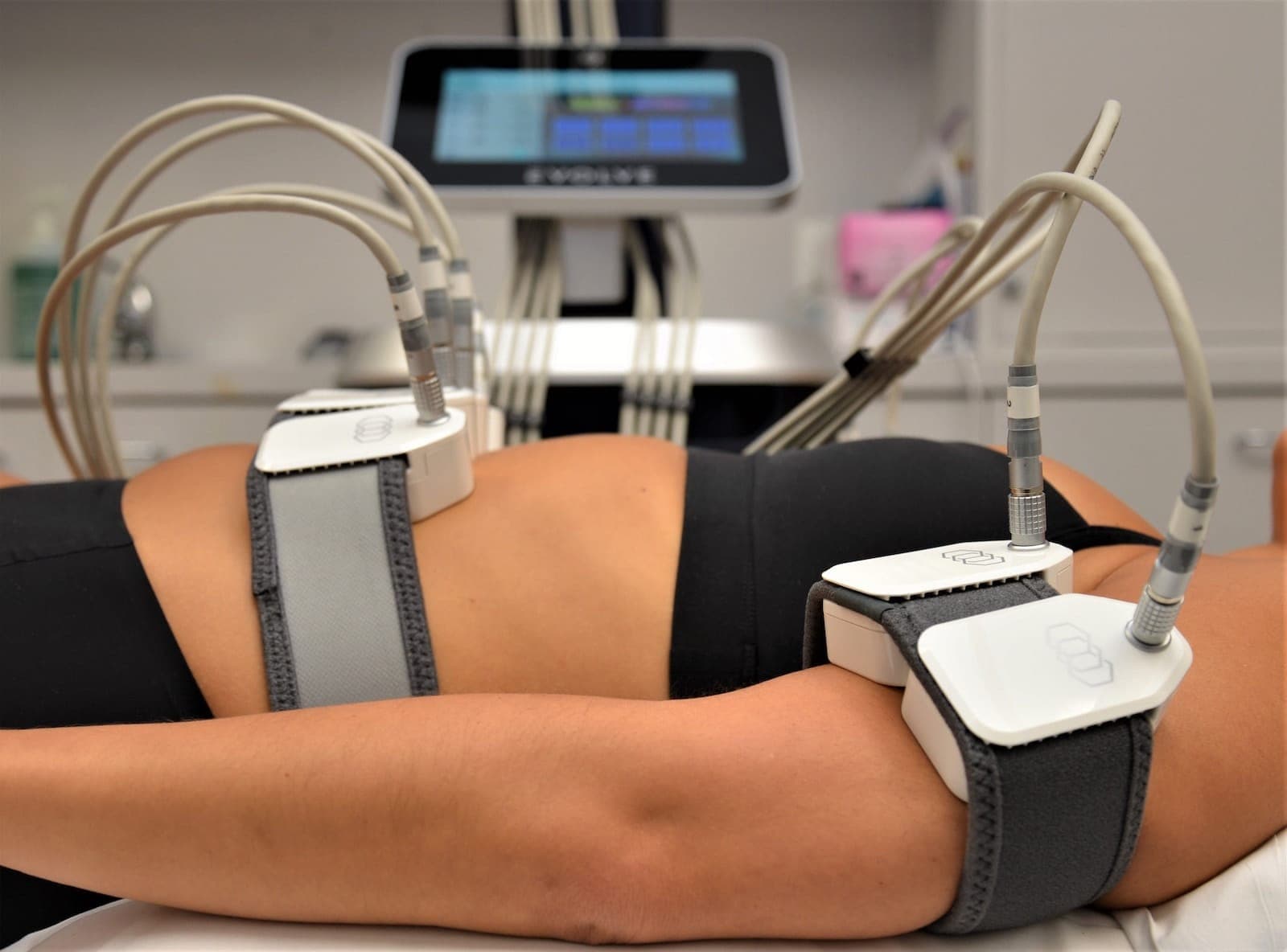
Radiofrequency heats tissue rather than targeting pigment, so Evolve is generally suitable across skin tones — unlike some light-based devices, which work by targeting pigment and are restricted by how deep a skin tone is. What a deeper tone does change is what you should raise at the consultation: scarring history, how your skin has behaved after past inflammation, and how the settings are handled.
If you have deeper skin and have been turned away from an energy-based treatment before, or warned about marks afterwards, that experience is real and worth bringing with you. This page sets out where it applies here and where it does not.
Does Evolve work the same way on deeper skin tones?
Yes — the mechanism does not depend on how much pigment your skin carries.
That is the central fact and everything else follows from it. Evolve's Tite mode uses heated applicators to warm the deeper layers of the skin and prompt a collagen response. Its Trim mode uses vacuum-assisted radiofrequency on localised fat, and its Tone mode uses electrical muscle stimulation on the muscle beneath. None of those three is reading the colour of your skin to decide where to deposit energy.
Why does "no wavelength" matter here?
Because radiofrequency is not light, so there is no wavelength to choose — and that removes the whole question that makes deeper skin harder for some devices.
Light-based devices deliver a specific wavelength that is absorbed preferentially by a target, and melanin is one of the things that absorbs it. On deeper skin, more of the energy can be taken up by pigment in the surface layers instead of reaching the intended target, which is why device and wavelength selection is such a serious conversation for lasers and why some devices are unsuitable altogether.
Radiofrequency works differently: it heats tissue, and pigment is not what it is aimed at. So the "which wavelength is safe for my skin tone?" question, which is exactly the right question to ask about a laser, does not have an equivalent here. This is a fact about the technology, not a claim about a particular result on any particular person.
What does a deeper skin tone actually change, then?
The conversation at your assessment, rather than the physics of the treatment.
The things worth raising are the ones that have nothing to do with what the device targets and everything to do with how your skin heals: any history of raised or thickened scars, how your skin has behaved after previous inflammation or injury, any active skin condition in the area you want treated, and anything about your general health that affects healing. Your doctor is the one who weighs those. Nothing on this page can do it for you.
Is there a risk of dark marks afterwards?
Our treatment core does not address this specifically, so we are not going to state a rate or a reassurance we cannot support. It is a question for your consultation.
Here is what we can tell you honestly. The side effects the clinic does document for Evolve are redness and warmth in the treated area, which usually settles within hours; soreness for about a day, particularly after Tone; dryness or sensitivity for a short period; and, rarely, blistering or burns. Anyone with deeper skin who has been told before that inflammation can leave a mark will recognise why the last of those matters more to them than the description "rare" suggests, and why the surface-preparation step below is not a formality.
Ask the question at your consultation and get an answer from the doctor who has examined your skin. A page that told you either "no risk at all" or "high risk" would be doing you the same disservice in opposite directions.
What about raised or keloid scars?
Being prone to keloid scarring is on the clinic's own list of reasons Evolve may not be suitable.
It sits there alongside pregnancy and breastfeeding, having a pacemaker or a metal implant in the treatment field, an active skin disorder in the area, and immunosuppressive conditions. So if you or your close family have a history of scars that heal raised, thickened or beyond the boundary of the original injury, say so at the consultation — including a piercing, a vaccination mark or an old surgical scar that healed that way. That is not a self-assessment you should be making; it is a piece of history the doctor needs from you in order to make one.
Why does surface preparation matter more than it sounds?
Because it is what makes energy delivery even, and unevenness is what the rare burns come from.
The clinic's own process includes cleansing and checking the skin, and removing anything sitting on the surface — oil, lotion, powder — so that the energy is delivered as intended. That is worth taking seriously on the day: arrive with the area clean and unmoisturised rather than applying something on the way. The documented reason blistering and burns are rare at all is that surface preparation and correct settings are done properly. It is a step you can help with.
Does the settings conversation change?
The conversation is the same one everybody should be having, and it is the part patients most often skip.
The clinic's guidance is plain: it is non-invasive, most people describe warmth and a strong but tolerable sensation rather than pain, the muscle contractions in Tone mode are noticeable, and if anything is uncomfortable you should tell the operator, because the settings can be adjusted. Saying so is not being difficult and it does not mean a worse result. Sitting quietly through something that has stopped feeling like warmth and started feeling like pain is the thing to avoid — on any skin tone, and especially if you are already worried about how your skin marks.
Does the results timeline differ?
Not according to anything the clinic documents.
The expectation is the same one given to every patient: some change is often noticeable soon after treatment, and it continues to develop over roughly six to eight weeks as collagen builds and the course progresses. A course is usual, and the number of sessions is set at your consultation rather than sold as a fixed package, because it varies with your body, your skin and what you want to change. Downtime is none for most people, with mild soreness in the treated area for about a day.
Is this a treatment for my body size?
No, and this is worth saying to anybody, on any skin.
Evolve is body contouring: it changes the shape and firmness of a treated area in someone near a stable weight. It is not a weight-management programme and should not be chosen as one. Nobody's body is a problem to be corrected, and a consultation that pushes a course of sessions as an answer to a number on a scale is answering a question you did not ask.
What should I tell the doctor at the consultation?
Bring the history, not just the goal.
- How your skin has healed after past inflammation, injuries or procedures.
- Any history of raised or keloid scarring, in you or close family.
- Any active skin condition in or near the area.
- Pregnancy, breastfeeding, a pacemaker or any metal implant in the area.
- Any immunosuppressive condition or medication.
- What, specifically, you want changed — loose skin, muscle tone, localised fat, or a combination, since that decides which of the three modes are used.
What should prompt a call after a session?
Anything that is not settling, and you should not be the one deciding whether it counts.
Report any persistent pain or blistering to the clinic rather than treating it at home. Beyond that: redness or warmth that has not settled by the next day, soreness that is worsening rather than easing after the first 24 hours, any blister or broken skin over the treated area, or a change in the skin's colour or texture there that concerns you. Call the clinic or use the booking page and ask to be seen. If you have deeper skin and have had marks after inflammation before, ring early rather than waiting to see how it settles — early is when there is most that can be done about it, and being told all is well costs you almost nothing.
Where to go next
The genuinely useful next step is an assessment, because every question this page has left open is one that needs somebody to look at your skin. The full treatment page for Evolve skin tightening sets out the procedure, and HIFU and CoolSculpting have their own pages if you are weighing the options. The consultation is ₹500, waived off against treatment — you can book an appointment at either of our Bangalore clinics.