
Evolve Skin Tightening: What the Sessions Actually Feel Like
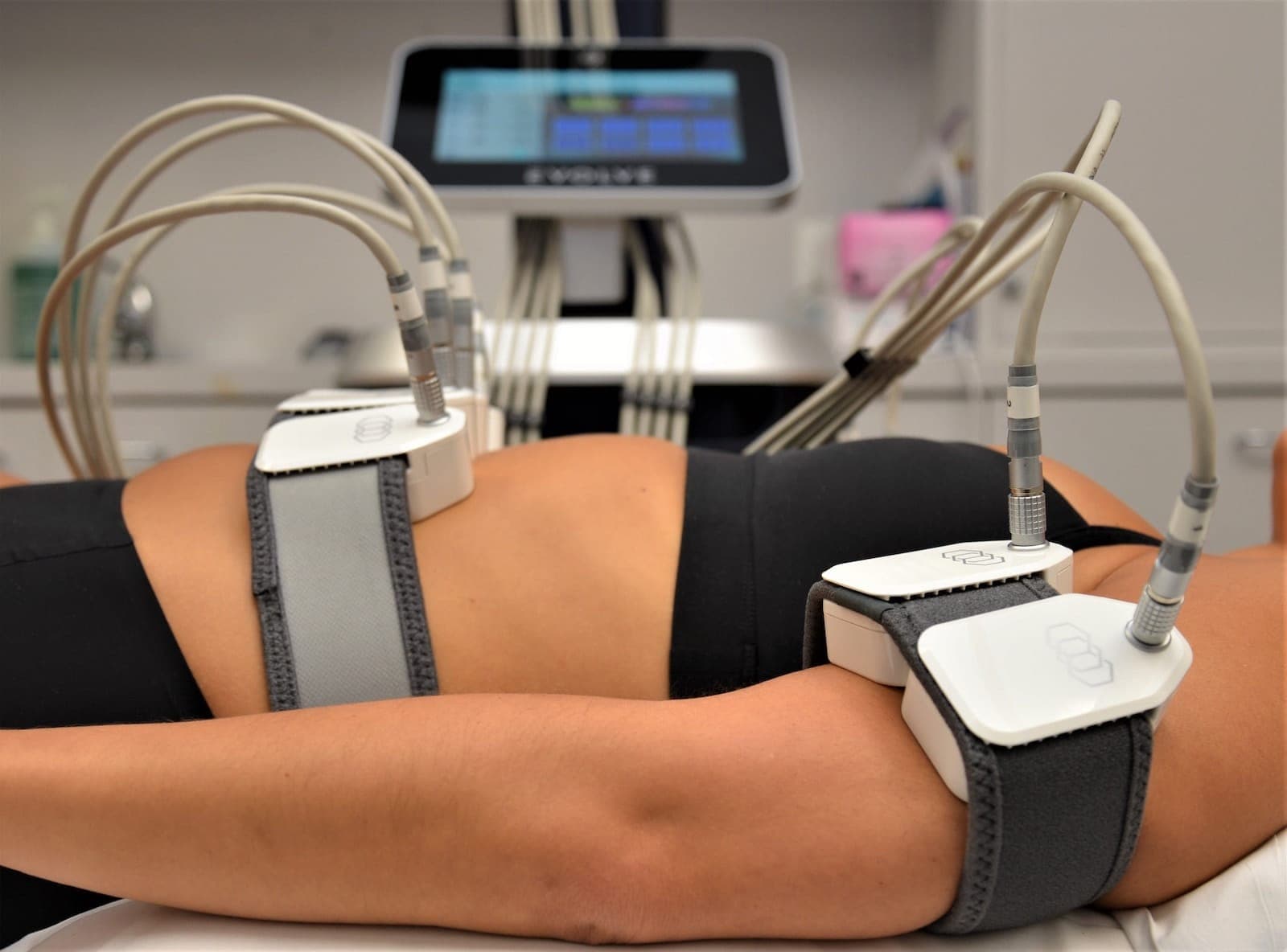
Evolve is a hands-free body platform with three modes — Tite for skin tightening, Tone for muscle stimulation and Trim for localised fat reduction — delivered through applicators strapped to the treatment area rather than held by a therapist. A session is non-invasive, most patients describe warmth and a strong but tolerable sensation rather than pain, and there is no recovery time: you go back to your day immediately, with some soreness in the treated area for about a day.
If you have seen the name and wondered what actually happens in the chair — or on the bed, since this is a strapped-on treatment — this post walks through a realistic session with Evolve Skin Tightening, how the course gets planned, and how it sits next to HIFU when you are trying to decide between them.
What do the three modes actually do?
Each mode works a different layer of the same area, which is why they are used together rather than as three separate treatments.
Tite is the skin layer. Heated applicators warm the deeper skin layers to prompt a collagen response — and that collagen is what firms skin that has loosened after pregnancy or weight change. Tone is the muscle underneath: electrical muscle stimulation produces contractions in the muscle beneath the treatment area, working it in a way that is difficult to replicate voluntarily — you feel the muscle firing without doing the work yourself. Trim is the fat between the two: vacuum-assisted radiofrequency targets stubborn subcutaneous fat in a defined area, which is why it runs alongside the other two rather than on its own.
That three-layer logic is the honest answer to "why not just one mode?". Loose post-pregnancy skin, a softened muscle wall and a stubborn fat pocket usually arrive together, and treating one layer while ignoring the other two is how people end up disappointed with single-purpose devices.
What does a session actually feel like?
Less eventful than the machine photos suggest. The applicators are strapped to the area — abdomen, or wherever the plan targets — and the session runs without anyone holding a handpiece over you. Because the delivery is hands-free, several areas can run at once and the treatment time is predictable, which makes it one of the easier treatments to slot into a working day at either our Indiranagar or Bellandur clinic: you know when you will be done before you start.
The sensation depends on the mode. The radiofrequency modes read as warmth — building, noticeable, strong at times but tolerable. In Tone mode the muscle contractions are distinctly noticeable: an odd feeling the first time, closer to an intense gym set happening to you than any kind of pain. If anything is uncomfortable, say so — the settings can be adjusted, and the operator expects that conversation.
Afterwards there is nothing to schedule around. Most patients resume their usual activities immediately; the treated area can feel sore for about a day, roughly the way a worked muscle does.
One more point that matters in this city: Evolve is suitable across skin tones. Radiofrequency heats tissue rather than targeting pigment, so unlike some light-based devices it is not restricted by how deep your skin tone is — a question worth asking of any energy device, and one this platform answers cleanly for Indian skin.
How many sessions, and when do results show?
A course is usual, and the number is set at consultation — it varies with your body, your skin and what you want to change, so a doctor gives you a realistic course length rather than a standard package. Some change is often noticeable soon after treatment, and it continues to develop over roughly the next six to eight weeks as collagen builds. As with every collagen-driven treatment, the calendar matters: if you are working toward an occasion, count back in weeks, not days.
For loose skin after pregnancy specifically — one of the most common reasons patients ask about this platform — it is commonly used for exactly that: tightening the loosened skin, toning the muscle underneath and reducing localised fat. What it can achieve depends on how much laxity there is, and your doctor should be straightforward with you about that at consultation rather than promising a particular outcome.
Evolve or HIFU — how do you choose?
Mostly by area and by what needs treating. HIFU is a focused ultrasound treatment used for gradual lifting and firming of the face, jawline and neck — the small, precise zones where early laxity first shows. Evolve is a body platform: strapped-on applicators, larger areas, and the three-layer skin-muscle-fat approach that a face never needs. So for a softening jawline the conversation usually starts with HIFU; for a post-pregnancy abdomen it usually starts here. Where a concern could go either way, the consultation decides — by examining the area, not by brand preference.
And if the concern turns out to be fat alone, with no meaningful laxity and no muscle component, a single-purpose option such as Cool Sculpting may fit better than a three-mode platform. Part of what a doctor-led clinic does is refuse to sell you three layers of treatment when one layer is the problem.
The way to find out
If your abdomen, arms or thighs have changed after pregnancy or a weight shift and creams and gym time have stopped moving the needle, the useful next step is an examination rather than more research. Book a consultation at The Aesthetic Edge — Indiranagar or Bellandur — and a doctor will look at the area, tell you which of the three layers is actually involved, and give you an honest course plan before you commit to anything.