
Double Chin: Is It Fat, Skin Laxity, or Both?
A double chin is not one thing. It can be a pocket of localised fat under the jaw, it can be skin and tissue that has softened and lost firmness along the jawline, or it can be a measure of both — and each of those responds to a different treatment. That is the whole reason some people treat a double chin, see a real change, and still feel the profile has not resolved: the part they treated was not the only part that was there.
Why does one treatment sometimes disappoint?
Because fat treatments reduce fat and tightening treatments tighten. Neither does the other's job, and if the two components are present in roughly equal measure, addressing one of them leaves the other exactly as it was.
This is worth sitting with before you book anything, because the mismatch is almost always a diagnostic one rather than a treatment failure. A course of fat reduction can do precisely what it is supposed to do — reduce a defined pocket of fat — and the jawline can still read soft afterwards, because the softness was never fat. The reverse is equally true. Tightening will not remove a volume of fat that is sitting under the chin.
The useful question at consultation is therefore not "what should I have?" but "what am I actually looking at?"
What does the fat component respond to?
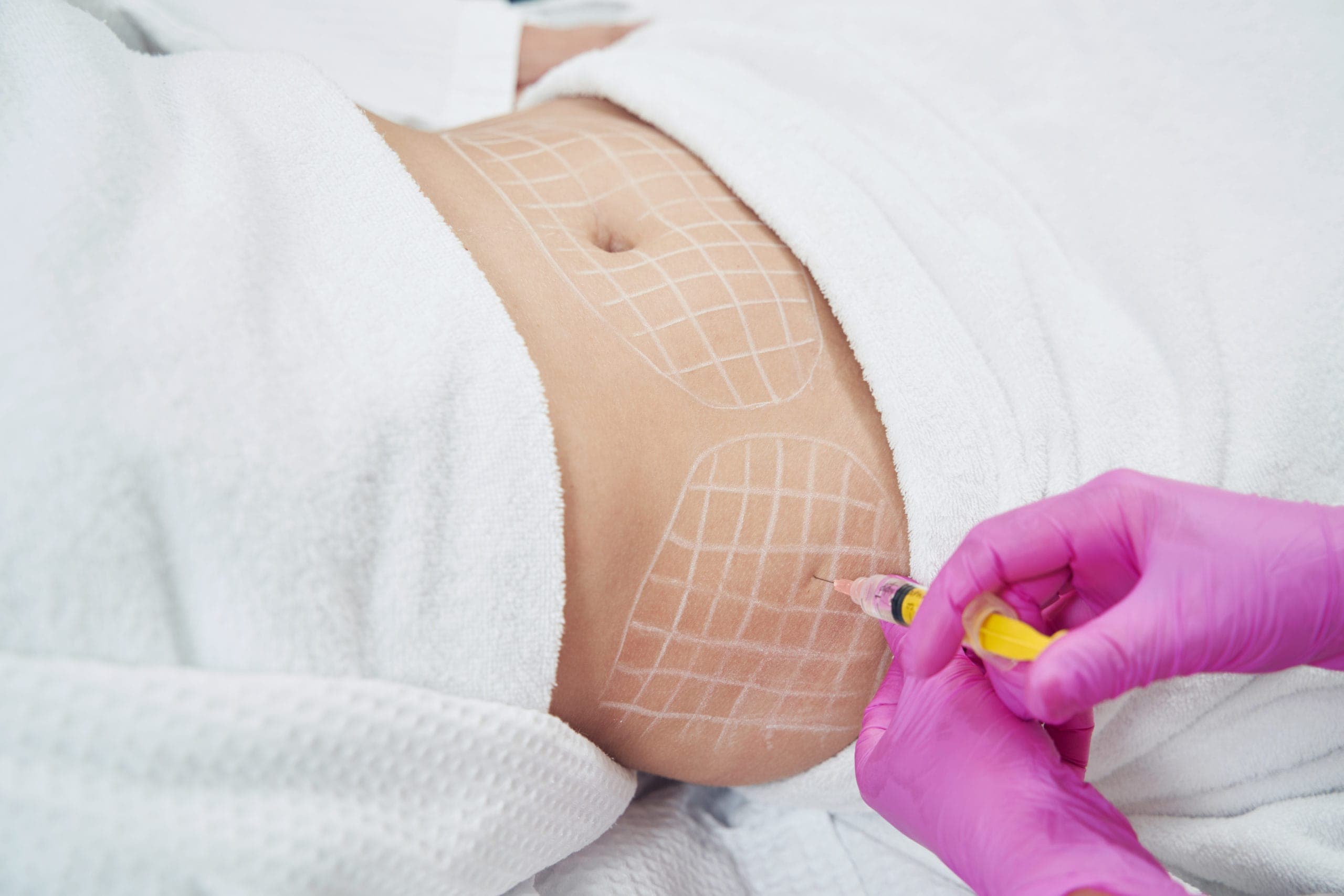
Localised, defined pockets of fat. Lipolytic injections use agents that break down fat cells in a small, defined area — most often under the chin, or a stubborn pocket on the body. The agent is injected into the pocket being treated, so it can be directed at a small area in a way that diet and exercise cannot: general weight change reduces fat across the whole body and cannot be aimed anywhere in particular.
Several things about it are worth knowing plainly. There are no incisions, no general anaesthetic and no hospital admission. The injections themselves take a matter of minutes, so a session fits inside a working day — which for anyone working the Bellandur tech corridor and reluctant to explain an absence is often the deciding practicality. A course is usual rather than a single appointment, and the number of sessions the area realistically needs is set at consultation, before you commit to the first one.
There is also a timing quirk that catches people out. The area swells first and then settles, so early on it can look larger rather than smaller. Real change becomes visible over the weeks across a course, not after one session. Mild swelling and tenderness for a few days is normal.
Two clarifications the doctors here repeat constantly, because the misunderstandings are so common. This is not liposuction: liposuction is a surgical procedure performed under anaesthetic that removes fat physically and achieves considerably more in one sitting. And it is not a weight-loss treatment. It reduces fat in a small defined area; it does not change your weight, and without a stable weight and consistent habits the surrounding fat simply changes shape around the treated area.
Where does CoolSculpting fit in?
Cool Sculpting approaches the same problem from outside the skin, using controlled cooling delivered through an applicator that sits on the surface. It also treats stubborn localised fat in a specific area rather than overall weight, needs no needles or incisions, and leaves most patients able to resume normal activity immediately. Smaller areas often need one to two sessions; larger ones may need four to six.
The practical difference between the two is reach. Under the chin, along the jaw and other small areas can be difficult to treat with device-based applicators — injections get into them. Whether your particular pocket suits an applicator or an injection is a judgement made on the area itself, and specifically on whether the fat is pinchable and localised.
And if the problem is laxity rather than fat?
Then the mechanism you need is a different one entirely. HIFU — High-Intensity Focused Ultrasound — delivers ultrasound energy to a precise depth beneath the skin to stimulate collagen, without breaking the skin surface. The brow, the nasolabial folds, the jawline and the neck are the areas usually treated: the places where mild laxity tends to show first.
Because the change comes from your own collagen response rather than from a product, it develops gradually over the following months instead of peaking on the day, and the result is reviewed some weeks later rather than immediately after the session. A session runs from about thirty minutes to an hour and a half depending on the area, needs no anaesthetic, and most patients go straight back to their day with any slight redness settling within a few hours.
It has limits, and they are stated honestly. Significant laxity may need a surgical approach instead, and your doctor should tell you so rather than selling you a course that cannot reach it.
What should you expect at the consultation?
An assessment of the area before anything is recommended. For fat reduction, a doctor confirms the fat is pinchable and localised, reviews the medical history for what rules the treatment out, and tells you how many sessions the area realistically needs before you commit to any of them. For tightening, the doctor examines the degree of laxity and says plainly whether ultrasound can achieve what you want, or whether another approach would serve you better.
Not everyone is a candidate for any of the three, and being told so is part of what you are there for. A doctor here will tell you if what you are describing is better addressed another way rather than booking you in for a course.
A few things worth bringing with you. Note when you first noticed the change, and whether it tracks with weight change or with age. Notice whether it looks different in a mirror than it does on the front camera in a video call — the angle that has made a great many desk-bound professionals in this city suddenly aware of their jawline. If your weight has moved recently, say so, because stability matters to how any fat reduction holds. And if you have a date in mind, mention it early: gradual is the honest description of every option here, and a few weeks is not the timescale any of them work on.
If you would like a proper read on which component you are dealing with, and therefore which treatment is worth your money, book a consultation at our Bellandur or Indiranagar clinic and ask the doctor to talk you through the assessment.