
Evolve Skin Tightening Aftercare: The First Week, Day by Day
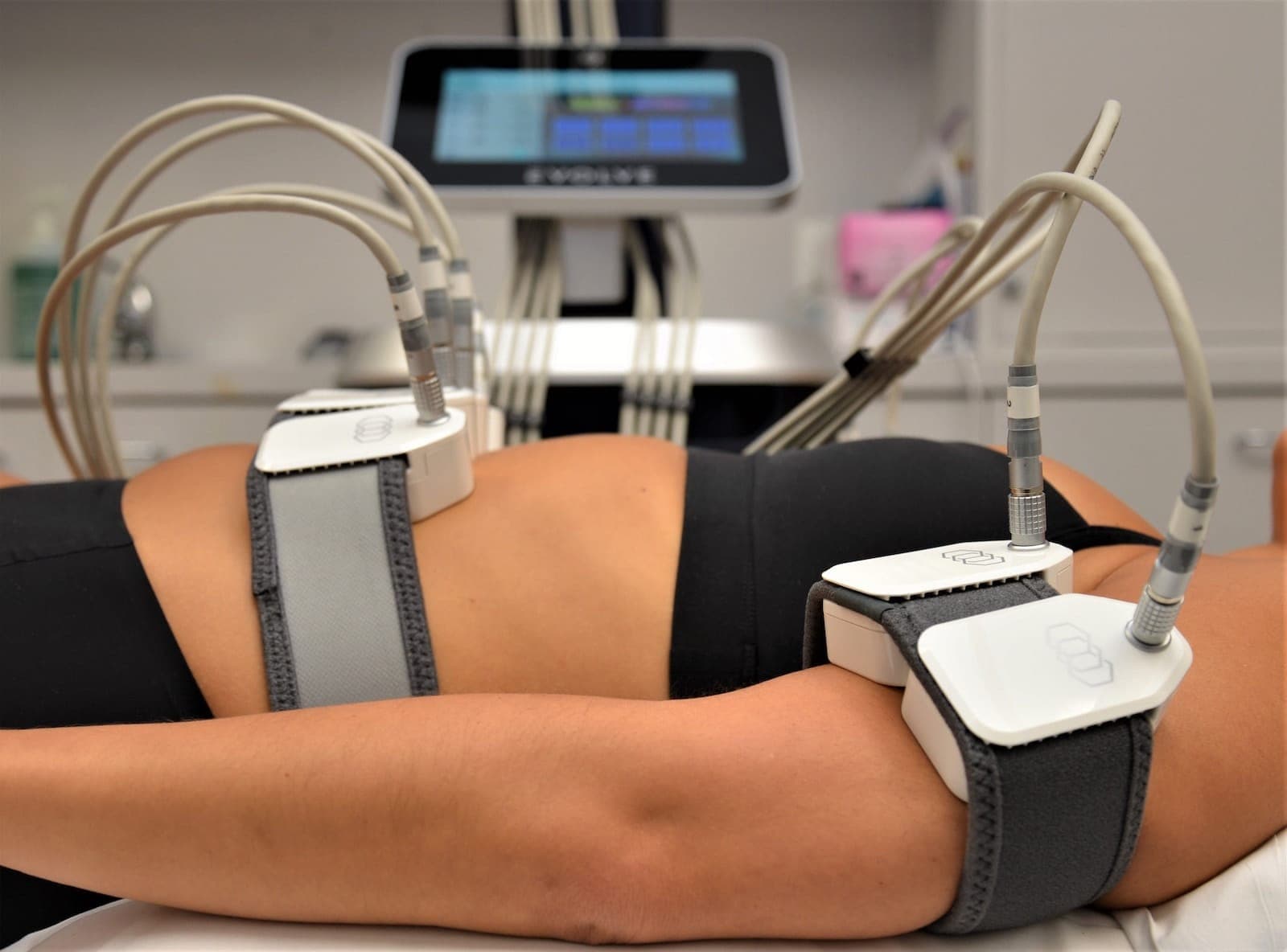
For the first week after an Evolve session there is very little to do. Expect redness and warmth in the treated area that settles within hours, mild soreness for about a day — more so if Tone was used — and possibly dry or sensitive skin for a short period. Contact the clinic about persistent pain or blistering rather than treating it at home.
The short aftercare list is a real feature of the treatment rather than a gap in the instructions. What the week does need is a sense of what is normal, so you can tell it apart from what is not.
The first few hours: is redness and warmth expected?
Yes. Redness and warmth in the treated area straight after a session are normal and usually settle within hours.
That is what a radiofrequency treatment feels like on the way out of the room: the applicators have been warming the deeper layers of skin deliberately, and the surface reflects that for a while. There is no dressing, no wound and no recovery time — most patients resume their usual activities immediately.
The one thing worth doing in these hours is paying attention rather than managing. You are establishing your own baseline for what settling looks like, and that is what makes the rest of this week easy to read.
Day one: why am I sore, and is that the treatment working?
Because your muscle was worked, and it is sore for the same reason muscle is sore after any hard session. Mild discomfort or muscle soreness in the twenty-four hours after treatment is common, particularly after the Tone mode.
Tone uses electrical muscle stimulation to produce contractions in the muscle beneath the treatment area — working it in a way that is difficult to replicate voluntarily. You did not do the work, but the muscle did, and the next day reflects that honestly.
It is worth separating soreness from pain here, because they behave differently. Soreness eases across the day and responds to ordinary movement. Pain that keeps climbing does not, and that belongs in the section below rather than in a waiting game.
Do not read the soreness as a report card, though. Feeling it does not mean the session worked and not feeling it does not mean it failed — the amount of muscle work varies with the modes chosen and the settings used, and your doctor sets both.
Days two and three: dryness, sensitivity, and what to put on it
The treated skin can feel dry or sensitive for a short period afterwards. That is on the documented list and it is unremarkable.
Keep the area comfortable and keep the routine boring — this is not the week to introduce a new active, a scrub or anything that stings on application. If you want a specific product recommendation for the area, ask at the clinic. The protocol for Evolve Skin Tightening does not prescribe an aftercare product, and inventing one on a website is how people end up applying something their doctor would not have chosen.
The same applies to the questions this post is repeatedly asked and deliberately will not answer from a keyboard: sauna and steam, hot yoga, deep massage of the area, compression garments, and sun on a treated abdomen. None of them is covered by the documented aftercare, so the answer is not "yes" and it is not "no" — it is a two-line question at your next appointment, or a phone call.
When can I train again?
The general answer is already in the protocol: there is no downtime for most patients, and normal activity resumes immediately. Soreness for about a day is the only limiting factor most people meet.
The sensible version is to let the sore area lead. If your midsection has just had a Tone programme and you had planned a heavy core session the next morning, moving it by a day costs you nothing. If you train that area seriously several times a week, this is worth raising at the consultation so the sessions and your training can be sequenced rather than colliding.
Days four to seven: should I be able to see anything yet?
Some change is often noticeable soon after treatment, and the honest expectation for this week is that you are early. The result keeps developing over roughly six to eight weeks as collagen builds and the course progresses.
That timeline is not a hedge, it is the mechanism. Tite works by warming the deeper skin layers to prompt a collagen response, and collagen is built on the body's schedule rather than the appointment's. A course is usual, and the number of sessions is set at consultation rather than sold in advance.
Two practical consequences. First, judging the treatment at day seven is judging it too early. Second, if you are photographing progress, take the pictures in the same light, from the same distance, at the same time of day — most disappointment at the two-week mark is a lighting difference rather than a result.
What should make me contact the clinic?
Do not sit at home working out what a symptom means. You are not expected to assess this yourself, and the clinic would far rather answer a question that turns out to be nothing than hear about something a week late.
Contact the clinic if:
- pain persists, or is getting worse rather than easing after the first day or two, instead of settling the way soreness does;
- you see blistering, a burn-like mark, broken skin, a crust or any open area in the treated zone — the protocol's instruction is to report this rather than treat it at home;
- redness or warmth has not settled within hours as expected, or is spreading beyond the area that was treated rather than fading;
- you develop a fever or feel generally unwell after a session;
- numbness or an altered sensation in the area persists rather than passing;
- you simply are not sure whether what you are seeing is normal for the modes and settings you had. Uncertainty is a legitimate reason to ring, and it takes a minute to answer.
Blistering and burns are rare with this treatment — surface preparation and correct settings are the reason they stay rare — but rare is exactly why they are written into the instructions rather than left to judgement.
What if it is after hours, or a Wednesday?
Both clinics are open 10:30 to 20:00 and closed on Wednesdays, so plan for the gap rather than being caught by it.
If something on the list above appears while the clinic is closed and it can wait, note what you are seeing — a photograph in good light helps — and call when the clinic opens. If it cannot wait, or if you are worried, do not wait for opening hours: get urgent medical care locally or go to your nearest emergency department, and tell the clinic what happened afterwards so it goes on your record and informs the rest of your course.
If you develop breathlessness, swelling of the face, lips or tongue, or a widespread rash at any point, treat that as urgent and seek immediate medical care rather than ringing a clinic that may be shut.
What happens between now and the next session?
The next appointment is where the plan gets adjusted rather than repeated. Your doctor reviews how the area actually responded and decides what to change — which is the reason the course length is set after an assessment rather than quoted from a brochure.
Bring the honest version. What was sore, for how long, what you noticed, and any question from the list above that you sat on. If your plan sits alongside other body treatments, sequencing is part of that conversation too: HIFU and CoolSculpting work differently, have their own assessments and their own aftercare, and are not interchangeable slots in a calendar.
Worth repeating once, because it changes what you should expect to see: this is body contouring, not weight loss. It changes the shape and firmness of a treated area in someone near a stable weight, and it is not a weight-management programme.
Where to start if you have not booked yet
The consultation is ₹500, waived against treatment, and it is where suitability, the modes and the course length are decided.
Book a consultation at Indiranagar or Bellandur. If you have had this treatment elsewhere and were sent home without any aftercare instructions at all, mention that — it changes what your doctor needs to ask.