
Dermaplaning vs Microneedling: Two Different Jobs, Often Confused
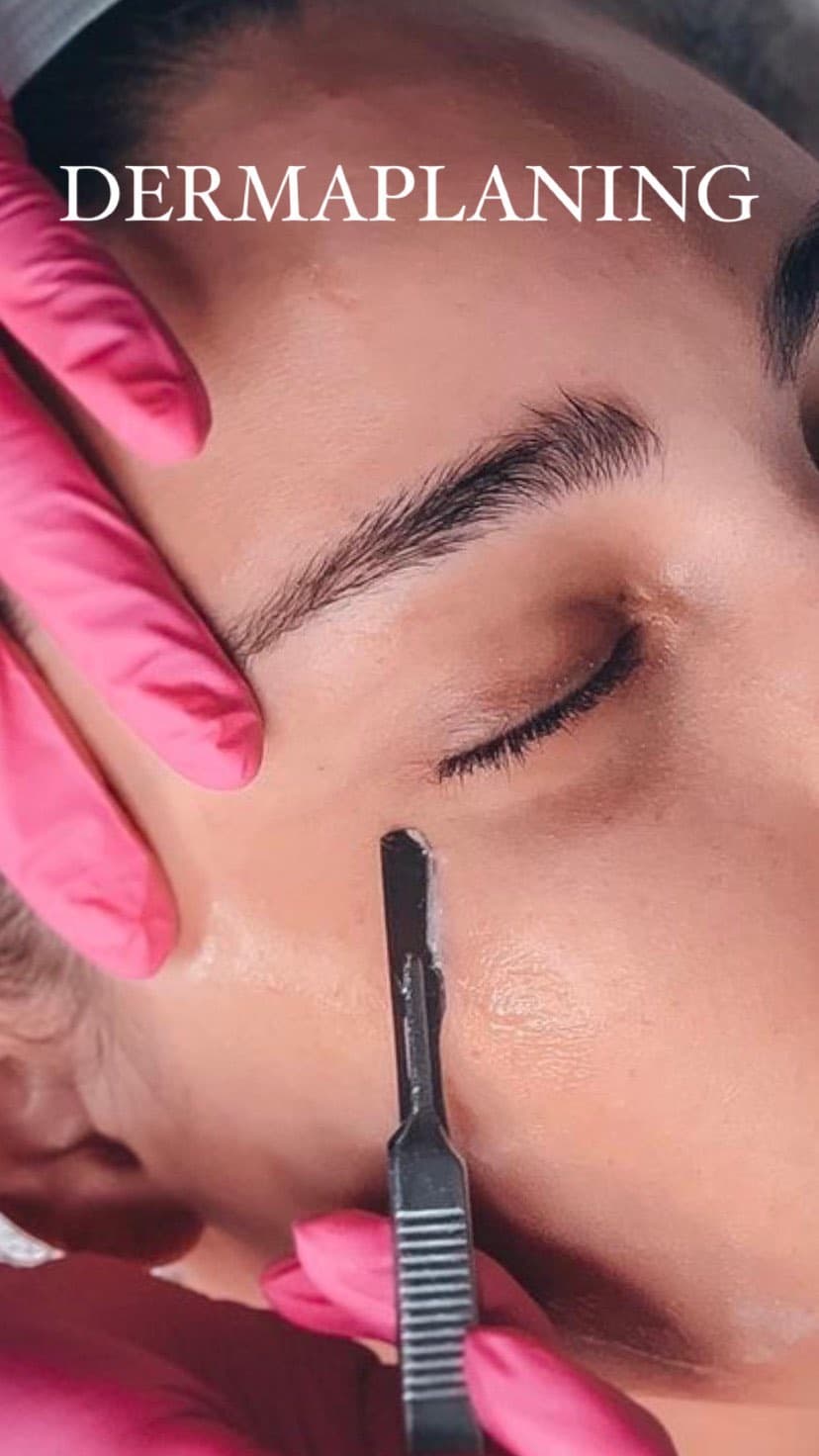
Dermaplaning and microneedling get confused constantly — both are "texture treatments," both show up in the same reels — but they do entirely different jobs. Dermaplaning is a physical exfoliation of the surface: a sterile blade lifts away dead cells and fine facial hair, skin is smoother the same day, and there is no downtime at all. Microneedling works in the opposite direction: it is a collagen-induction treatment that reaches deeper and asks for real recovery time, because provoking the skin's repair response is the entire point.
Surface versus depth, instant versus gradual, zero downtime versus some — once you hold those three contrasts, choosing between them mostly resolves itself. Here is what Dermaplaning actually does, where microneedling takes over, and why some patients end up wanting both, sequenced correctly.
What does dermaplaning actually do?
It is honest, mechanical, and immediate. A sterile single-use blade, held flat against the skin, lifts away the dead surface cells and the fine vellus hair most people call peach fuzz. Nothing is injected, no needles are involved, and by the end of the 30-to-45-minute session the skin is noticeably smoother to the touch.
The practical wins are the ones patients book it for. Makeup sits flat instead of patchy — foundation catches on fine hair and flaking skin, and with both lifted it applies evenly, which is why this is a favourite pre-event booking before a reception or a shoot. Your skincare also works harder: serums and actives penetrate a freshly exfoliated surface far better, so the routine you already own simply does more. The result is visible immediately and holds for roughly three to four weeks, which is also the sensible repeat rhythm — every three to four weeks, in step with the skin's own renewal cycle.
Two reassurances, because the same two questions come up in nearly every consultation. First: the hair does not grow back thicker or darker. The fine vellus hair on the face regrows exactly as it was — same texture, same colour — because cutting hair does not change the follicle; it can feel blunter for a few days simply because the tapered tip was cut straight across, which is where the myth comes from. Second: this is not the same as shaving your face at home, and it is not worth attempting. A razor is designed to cut hair at the skin's surface; dermaplaning uses a surgical blade at a specific shallow angle to lift the dead cell layer as well, and done at home the common outcomes are nicks, uneven patches and irritation. In clinic it is performed by a trained clinician under doctor supervision, it is painless for most people — a light scratching sensation at most, no numbing needed — and you can go back to work, and to makeup, the same day. Sunscreen is essential afterwards.
When is microneedling the right tool instead?
When the concern lives below the surface. Microneedling with Dermapen is collagen induction: rather than clearing what sits on top of the skin, it prompts the skin's own repair machinery to rebuild what lies underneath, and it accepts some downtime as the price of that deeper work. That makes it a different answer to a different question.
The sorting rule is simple. If your complaint is about the surface — roughness you can feel with a fingertip, dullness, makeup catching, peach fuzz visible in sunlight — that is dermaplaning territory, and you will see the answer the same day. If your complaint is structural — the kind of texture change that no exfoliation touches, where the skin itself needs rebuilding rather than clearing — that is collagen-induction territory, and the results arrive on repair-time, not same-day. A doctor examining your skin will place your concern on the right side of that line quickly, and being placed correctly is worth more than any amount of comparison reading.
Can you have both — and in what order?
Yes, and this is where the two stop being rivals. Because dermaplaning clears the surface first, it helps whatever follows reach the skin more evenly — which is why it is often done as a prep step rather than alone. A cleared surface lets a facial, a Chemical Peel or a deeper treatment work on skin rather than on the layer of dead cells and fine hair sitting above it.
The sequencing, and the spacing between treatments, is a clinical call — made at assessment, not assembled from the internet. What matters for you as the patient is simply knowing the combination exists: "smooth it now, rebuild it over time" is a legitimate plan, and it is put together properly at a doctor-led clinic rather than booked as two impulse appointments.
One eligibility note that applies before any of this: dermaplaning is not done over active inflamed acne — pustules or cysts — because the blade can spread bacteria and irritate lesions. If your acne is settled and the concern is texture or marks, it is often fine. The assessment decides, which is exactly as it should be.
Which one is your skin asking for?
If you want smoother skin for something on the calendar this month, dermaplaning answers today. If your texture concern has outlasted every exfoliating product you have tried, the conversation is probably about collagen induction. And if you are not sure — which is most people — that uncertainty is precisely what a consultation is for. Book a consultation at The Aesthetic Edge, at Indiranagar or Bellandur, and a doctor will look at your skin, name the actual problem, and match it to the treatment — or the sequence — that genuinely fits it.