
Acne Scars & Post-Acne Marks: What Actually Works, and What Only Sounds Like It Does
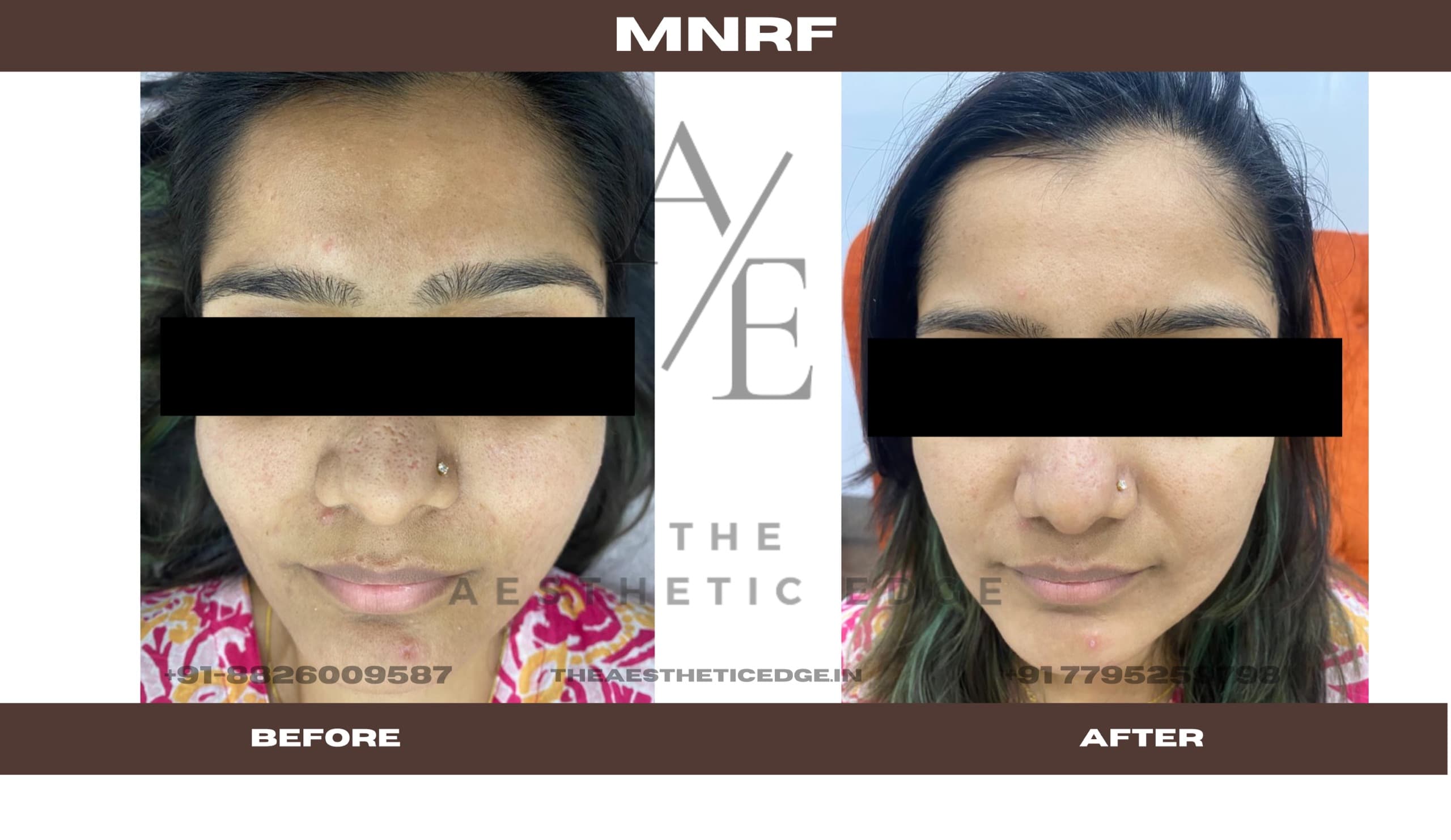
Marks and scars are not the same problem. A post-acne mark is flat discolouration sitting on skin whose surface is intact; it fades slowly and responds to treatments that speed up turnover. A scar is a change in the structure of the skin, a dip or raised patch you could find with your eyes closed. Set scarring does not fade, and needs collagen rebuilt underneath it.
Almost every wasted year of acne-scar spending traces back to treating one of those as though it were the other.
How do I tell which one I have?
Run a finger over it, and look at it in side lighting rather than head on.
Flat and coloured, with skin that feels level, points towards a mark. Uneven under the fingertip, or throwing a small shadow when light comes from the side, points towards structural scarring. Standing at a window with a hand mirror angled to catch light across the cheek tells you more in ten seconds than any front-lit bathroom mirror will.
This page is not going to tell you which you have, and neither should any website. What it can do is explain what each category responds to, so the conversation you eventually have with a doctor starts from a sensible place.
Why does acne leave something behind at all?
Several factors are commonly involved, and they tend to stack rather than act alone.
How deep and how inflamed the original lesion was. Surface breakouts usually settle without consequence. Deeper, angrier, longer-lasting lesions disturb more tissue, and more disturbed tissue means more repair — repair that does not always land level.
How long it went untreated. Months of active inflammation give the skin more to recover from than weeks of it.
Squeezing and picking, which extends the inflammation outwards and downwards from where it started.
Sun exposure afterwards, which tends to darken and prolong discolouration that might otherwise have faded quietly.
Skin that carries more melanin, which reacts to inflammation by producing pigment. That is why brown or grey marks after a spot are so familiar to Indian patients and comparatively rare in the international content you may have been reading.
None of that is a diagnosis of your skin. It is a list of what commonly contributes, and which of them applies to you is an examination question.
What genuinely helps flat marks and discolouration?
Turnover and sun discipline, in that order of effort and reverse order of importance.
Because a mark is pigment sitting in skin that is structurally normal, treatment aims at shifting that pigment and encouraging fresher skin through. A chemical peel does exactly this: a controlled solution lifts away dead surface cells, with the depth and the solution chosen for your skin type by a doctor. Over a course, marks read lighter.
Daily sun protection is the part nobody wants to hear, because it is unglamorous and takes years to visibly pay off. It is also the single intervention that stops today's marks getting darker while you are paying to lighten them.
Marks reward patience. They are the category where doing sensible things consistently genuinely outperforms doing dramatic things occasionally.
What genuinely helps set, depressed scarring?
Rebuilding collagen at the level where the scar actually sits — which surface treatments cannot reach by definition.
That is the reasoning behind MNRF, where fine needles carry radiofrequency energy into the deeper layers of the skin and remodel collagen underneath the scar rather than polishing the skin above it. It is also the reasoning behind microneedling with a Dermapen, which creates controlled micro-channels so the skin repairs itself with new collagen and elastin.
Both are courses rather than appointments. With MNRF, most plans run to three or four sessions, spaced by the doctor, and the meaningful change accumulates over weeks as collagen remodels — some early improvement can show after the first session, but judging the outcome at that point tells you very little.
Do all scars respond the same way?
No, and this is the honest part most treatment pages skip.
Broad, shallow, gently undulating depressions generally have more to work with than narrow, deep, pinpoint ones, because a treatment working across an area can influence the former far more readily than it can reach the base of the latter. Raised and thickened scarring is a different problem in the opposite direction — and a tendency to form keloids is one of the documented reasons someone should not have MNRF at all.
Most faces carry a mixture. Which of your scars will respond, which will respond partially, and which need a different approach entirely, is settled by someone examining your skin — and being told plainly that one type will improve more than another is a good sign, not a bad one.
What only sounds like it works?
Scrubs and abrasive cleansers. Set scarring lives below the surface; taking more off the top does not lift a floor that has dropped, and it irritates skin that is already prone to reacting with pigment.
Home needling devices. The needling half of a clinic treatment is only half of it, and depth and hygiene are exactly what an untrained hand cannot control.
Kitchen-cupboard acids. Lemon juice on skin that pigments easily, followed by Bangalore sunlight, is a reliable way to swap a mark you had for a mark you made.
Waiting. Correct for marks. Actively costly for structural scarring, because the years spent waiting are years the scar is not being treated.
Any single session sold as the whole answer. Collagen remodelling is a slow biological process; a plan that respects that is a better sign than a plan that promises to beat it.
Where should I start?
With a name for the problem before a name for the treatment.
Bring your questions in this order: which of these are marks and which are scars, which will respond to what, how many sessions the plan involves, and what will still be there at the end. A doctor willing to give you an unflattering answer to the last one is worth more than a package.
Book a consultation at Indiranagar or Bellandur to have your skin looked at properly. It costs ₹500, waived off against treatment if you decide to go ahead.