
Dental Implants vs Bridges & Crowns: How to Choose
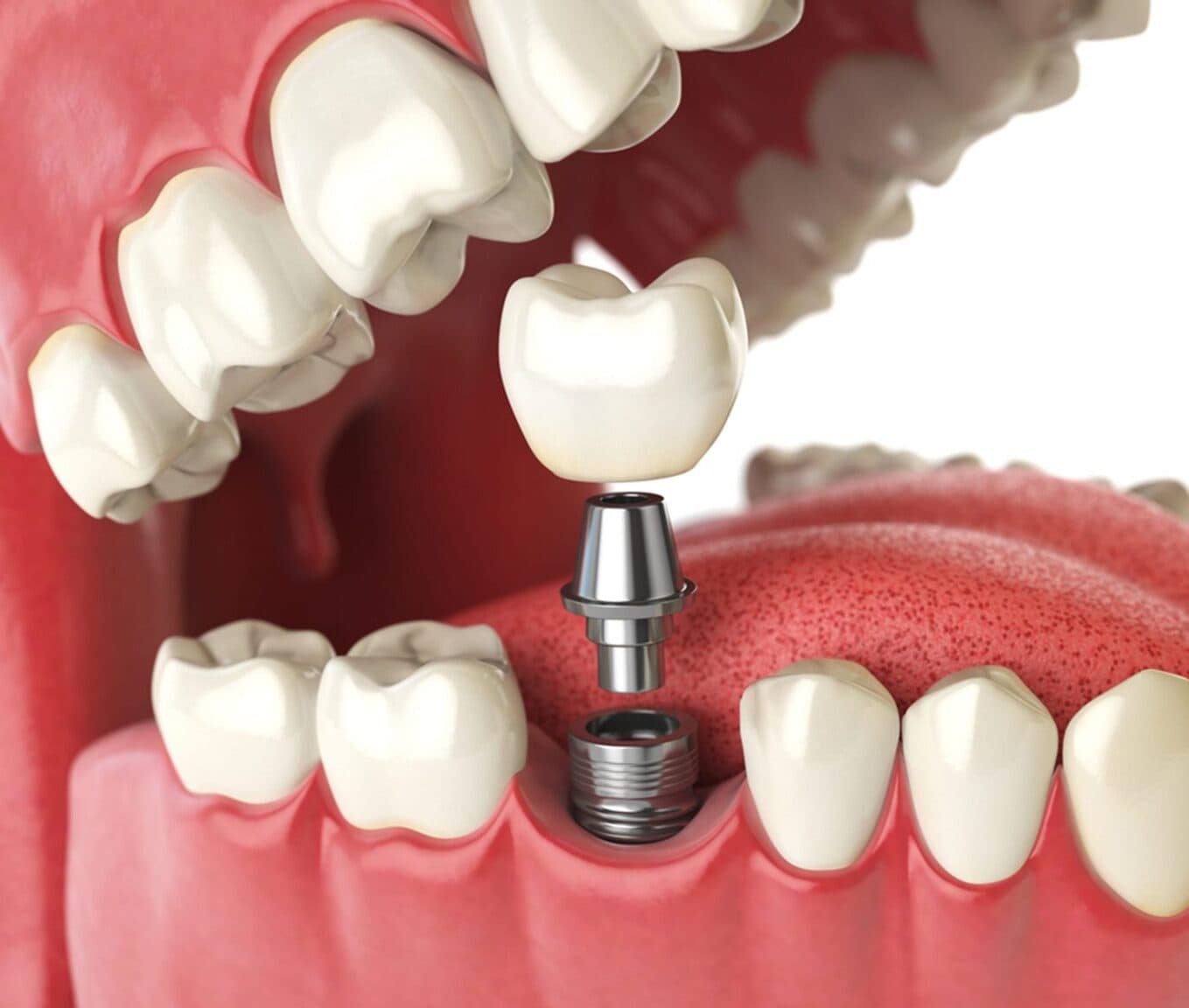
An implant replaces the root; a bridge borrows the two teeth beside the gap to carry a replacement. Neither is the better treatment in general. A bridge wins where the neighbouring teeth already need crowning, where surgery is unwise, or where you want the whole thing finished in two visits. An implant wins where those teeth are untouched and the bone is sound.
Most comparisons of these two arrive at the same conclusion regardless of the mouth in front of them. This one is organised the other way round — by what each option asks of you, and by the cases where each is genuinely the sensible answer.
What is a crown, and is it the same thing as a bridge?
They are related but they do different jobs, and confusing them makes the whole comparison harder than it needs to be. A crown is a cap fitted over one existing tooth that is weakened, cracked or heavily filled, to restore its strength and shape. A bridge replaces a missing tooth, using crowns on the teeth either side of the gap to hold the replacement in place. So a bridge is built out of crowns, but a crown on its own replaces nothing — it protects what is already there.
That matters for this decision because your mouth may need both conversations at once. If the teeth flanking your gap are themselves cracked or heavily filled, they may be heading for crowns anyway, and a bridge puts that work to use. Both are set out on the bridges and crowns page.
When does a bridge genuinely win?
Four situations, and they are common rather than exotic.
When the neighbouring teeth already need restoring. A bridge requires the two teeth beside the gap to be reshaped so it can be cemented over them. Where those teeth are already crowned or heavily filled, that costs you very little — you are using work that needed doing anyway to solve a second problem.
When there is not enough bone. An implant needs enough healthy jawbone to fuse into. Where the scan says there is not, the choice is grafting first or a different route entirely, and a bridge is the fixed option that does not depend on the bone under the gap.
When surgery is unwise or unwanted. Implant placement is a surgical procedure. Uncontrolled diabetes, active gum disease and heavy smoking are all named on our own implant page as things that can affect healing; where they apply, or where you simply do not want a surgical procedure, a bridge is fixed in place without one.
When the timeline matters. A bridge is usually two visits — preparation and fitting — with a temporary in between. An implant usually runs three to four visits across several months.
A bridge also does the structural job properly, which is worth saying plainly rather than treating it as the compromise option: it restores chewing across the gap, it stops the neighbouring teeth drifting and the opposing tooth over-erupting, it spreads chewing forces back where they belong, and it is cemented in place with nothing to remove at night. Shade, shape and size are matched against the teeth either side, so a well-made bridge in the smile line should be difficult to identify.
When does an implant genuinely win?
Two things, and they are the things a bridge structurally cannot do.
It leaves the neighbouring teeth alone. A dental implant stands on its own root in the bone, so healthy teeth beside the gap stay exactly as they are. Where those teeth are pristine, a bridge means cutting into two sound teeth to replace one missing one — and that is the trade to weigh hardest, because it is the irreversible half of the decision.
It addresses the bone. The jaw loses bone where a tooth root is missing. A bridge replaces the visible tooth but leaves the space beneath it unloaded, so that slow loss carries on underneath. An implant transmits chewing forces into the bone the way a natural root does, which helps slow it.
Beyond those, an implant is cleaned like a natural tooth, is shaped and shaded to sit with your own teeth, does not slip or click while you speak, and is intended as a long-term replacement with good hygiene and regular check-ups. It also scales: implants can support a single crown, a bridge spanning several missing teeth, or a full arch, with the number decided at the planning stage.
What does living with each actually involve?
This is the part most comparisons skip, and for some people it decides the question.
An implant is cleaned like any other tooth. Brush it, floss it, keep your check-ups.
A bridge needs a technique. Plaque collects beneath the false tooth, where ordinary flossing cannot reach, and the tools for it are a floss threader, superfloss or an interdental brush. You are shown how at the fitting appointment, and it matters more than most people expect — without it, the supporting teeth underneath are exposed to decay and gum disease, which puts the whole restoration at risk. That is not an argument against bridges. It is an argument for being honest with yourself about whether you will do it daily, and for saying so at the consultation if you know you will not.
How many visits, and how long?
A bridge is usually two appointments. The teeth either side are prepared under local anaesthesia, an impression or digital scan goes to the laboratory, and a temporary bridge protects the prepared teeth while the final one is made. At the second visit it is tried in, checked for fit, contact and shade, adjusted against your bite and cemented. Expect the prepared teeth to be sensitive to hot and cold while the temporary is in, and briefly after the final cementation; it usually settles.
An implant is typically three to four visits across several months: assessment and imaging, a treatment plan, placement under local anaesthesia, then the abutment and final crown once the implant has fused with bone. The wait in the middle is the fusing, and it is not padding — it is what makes the implant hold. The reassuring part is that the individual appointments are short; it is the gaps between them that are long.
What happens to each of them over the years?
Both are long-lived, and both have a maintenance story you should hear before you choose.
Crowns and bridges commonly last a decade or more with good hygiene and regular check-ups, with lifespan depending on the material, where in the mouth it sits, and whether you grind your teeth. Implants are intended as a long-term replacement rather than something replaced every few years — though the crown on top may need replacing sooner than the implant itself.
The honest way to compare cost, then, is not the first invoice. It is what each asks up front, what is likely to need redoing over the years, and what condition each leaves your neighbouring teeth and bone in. Ask for that over-time picture at your consultation rather than comparing two single numbers, because a single number does not describe the same span of time for each option.
What is permanent about each decision?
One thing, and it belongs in bold in your head: enamel removed does not grow back. Preparing a tooth for a crown, and preparing the two teeth either side for a bridge, removes tooth structure permanently. Those teeth will always need a restoration afterwards. That is a reasonable price where they were already compromised, and an expensive one where they were sound.
An implant makes no such demand of the neighbours, but it does depend on your bone, on healing, and on the assessment being right — which is why the imaging comes before the plan rather than after it.
When should I contact the clinic?
Whichever route you take, some things want a call rather than a wait, and you should not be the one deciding what they mean:
- A temporary crown or bridge that has come loose or come off. Temporaries are cemented lightly on purpose — ring the clinic rather than waiting for the next appointment, and avoid sticky and hard foods on that side meanwhile.
- Sensitivity that is getting worse rather than settling, or pain when you bite after a restoration has been fitted.
- After implant placement: pain or swelling increasing after the first few days instead of easing, bleeding that does not stop, fever, a bad taste or discharge from the site, or a bite that suddenly feels wrong.
- A restoration that feels loose at any point, or a gum that has become sore around one.
- Anything that worries you, whether or not it appears above.
Some soreness, swelling and minor bruising for a few days after implant placement is expected and is managed with the medication you are prescribed. Knowing that is not the same as being able to tell where expected ends — so ring, and let someone who can examine it make that call.
Letting the examination decide
Everything above narrows the field; an examination finishes the job. The state of the teeth either side of your gap, the bone beneath it, and how long the tooth has been missing are facts a dentist reads in minutes, and they usually make the choice feel obvious rather than agonising. Book an appointment at The Aesthetic Edge, Indiranagar or Bellandur — the consultation is ₹500, waived off against treatment — and have both options planned and quoted against your own mouth before you commit to either.