
Why BB Glow Treatment Is a Course, Not a Single Session
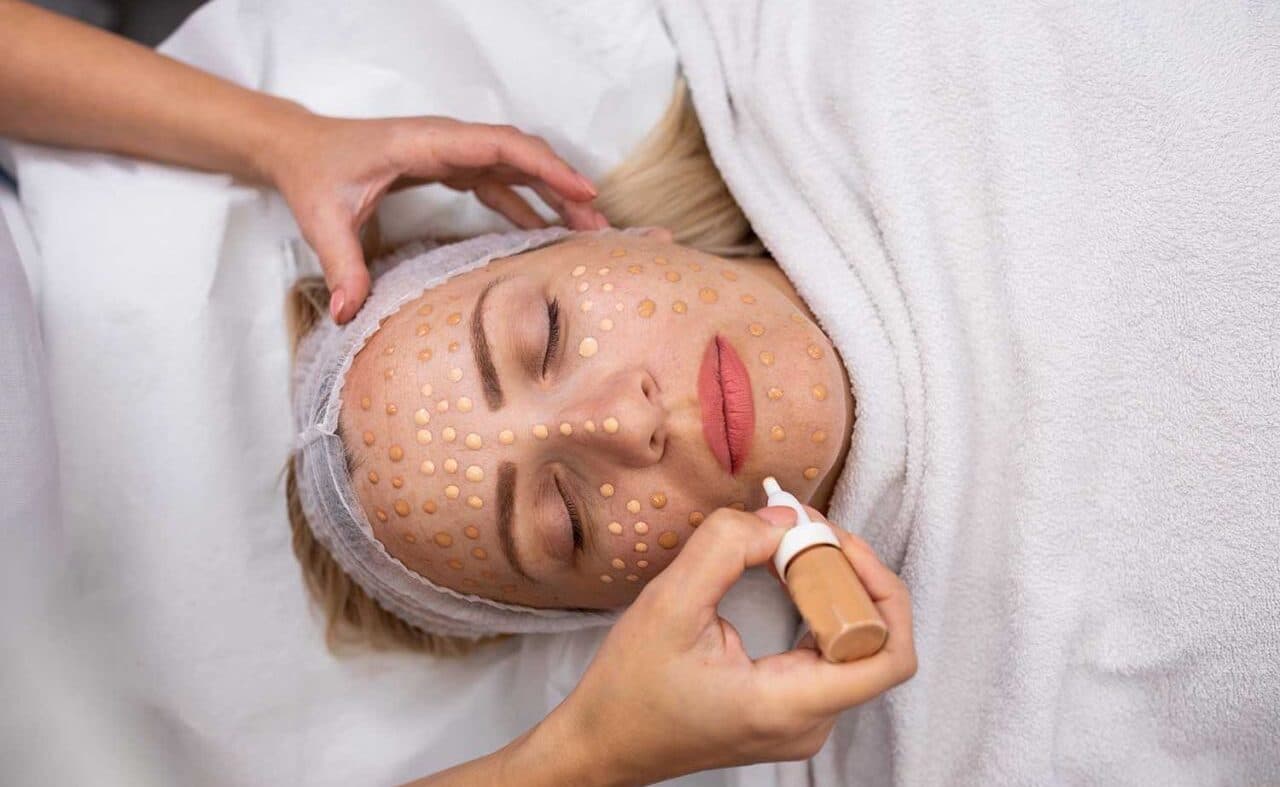
BB Glow is planned as a course of four to six sessions, spaced about two weeks apart, because the tint builds gradually rather than arriving in one visit and because the skin needs that fortnight to settle between treatments. A completed course holds for roughly four to six weeks, with maintenance every four to five months. Your doctor sets the number at consultation.
That is the schedule. What follows is why it is shaped that way, and what changes if you deviate from it.
Why can't one session do it?
Because the result you are after is cumulative, and because a single heavy session is not a safer or faster route to it.
BB Glow works by driving a tinted, hyaluronic-acid-rich serum into the upper layers of the skin with a micro-needling pen at a controlled depth. Each pass places a modest amount of tint, and the softening of patchiness accrues across sessions. That gradual build is also what keeps the outcome looking like your own skin rather than like a layer of makeup — one of the things patients most often say they wanted.
Trying to compress the same result into one long session does not work in the direction people hope. Depth and coverage are set for what the skin can tolerate comfortably, not for what would make the calendar shorter.
Why two weeks between sessions?
Because that is roughly how long the skin takes to settle, and treating before it has is how problems start.
Tightness, redness and mild irritation are common in the first few days and usually settle within three to four. On top of that, treated skin is more reactive to UV, and sunlight, steam rooms and saunas should be avoided for two weeks after each session. The fortnight gap lines up with that recovery window rather than being an arbitrary interval.
There is also a practical layer. Retinol, AHAs and BHAs stay out of your routine for the length of the course, and daily sunscreen becomes non-negotiable — a rhythm that is far easier to hold across a planned block than across appointments booked ad hoc whenever a slot appears.
What does each session actually add?
Every visit follows the same four steps, and the assessment at the front of them is not a formality.
A doctor reviews your skin type, active breakouts and the cause of your pigmentation, and confirms BB Glow is the right route. The face is then cleansed and an exfoliating gel is applied for a few minutes and removed, so the serum reaches evenly prepared skin. The tinted serum is worked into the upper layers with the pen. A calming mask pack finishes the session, and you leave with a written aftercare sheet and your next appointment about two weeks out.
The part worth noticing is that skin type and breakouts are reviewed at each visit, not only the first. Skin changes across a couple of months — a breakout arrives, a holiday happens, a new product goes wrong — and each session is adjusted to the skin in front of the doctor on the day. A course is therefore a sequence of decisions, not a pre-agreed set of identical appointments.
What happens if I stop halfway?
You get a noticeably shorter-lived result, not half of a full one.
The four-to-six-week figure describes what a completed course holds. A partial course fades faster, because less tint was placed and the skin renews at the same rate regardless. That is worth understanding before the first appointment rather than at session three, because it changes how you should think about the commitment: the course is the unit, and the sessions are instalments of it.
Life happens, and there is no lecture here about missing one. If you have to break the rhythm, say so and let your doctor re-plan the spacing rather than quietly stretching the gaps and hoping.
And once the course is finished?
Expect around four to six weeks of held result, then a top-up every four to five months to maintain it.
How long it actually lasts varies with skin type, sun exposure and how consistent your aftercare is. Sunscreen is the single largest lever you control — treated skin is more reactive to UV, and sun exposure both fades the tint and drives the unevenness you were treating. Retinol, AHAs and BHAs speed up turnover, which is precisely what carries the tint away, so time them around your maintenance rather than abandoning them permanently.
When is a package a red flag?
When it is sold to you before anyone has assessed your skin.
This is worth stating plainly, because pre-paid blocks are common in aesthetics and most of them are perfectly reasonable arrangements. The problem is not paying in advance. It is the sequence: a course length can only be decided once a doctor has reviewed your skin type and the cause of your pigmentation and confirmed the treatment suits you at all. A package quoted over the phone, or sold at a counter from a price list, has decided the answer before the question was asked.
Questions worth putting to any clinic, including ours:
- How many sessions am I being sold, and who decided that number? It should be a doctor, after examining your skin, not a standard package.
- Does the assessment come first? If a course is being priced before a consultation, ask why.
- What happens if my skin turns out not to suit this? There should be a clear answer, and it should not be "you have already paid".
- What if I need fewer sessions than the block? Or more.
- Is maintenance included, or is it a separate cost later? The four-to-five month top-up is part of the real cost of this treatment and belongs in the conversation from the start.
- Am I being pushed toward a longer course than my skin needs? Where an outcome is possible in four sessions, six is not automatically better.
A clinic that answers all six comfortably is one you can plan with. A course length that arrives before the examination does is the thing to question — not the price itself.
What does it cost?
There is no single number to quote here honestly, and we would rather say that than publish one that applies to almost nobody.
What sets the cost is how many sessions your skin actually needs, and that is the thing being decided at the assessment. Maintenance every four to five months sits alongside it. Both are confirmed at consultation, which is ₹500 and waived off against treatment, once a doctor has looked at your skin and told you what a realistic plan looks like.
If a course turns out not to be the right route — because the pigment underneath is the real problem rather than how it reads — you will be told that too. A course of chemical peels works on surface pigment and texture, and lip colour specifically is assessed separately as lip micropigmentation.
Between sessions, what should prompt a call?
Redness, tightness and light irritation settling over three to four days is the expected pattern between appointments. Ring the clinic rather than waiting if redness or heat is spreading instead of fading after day two, if swelling worsens rather than settles, if there is any weeping or crusting, or if you develop a fever. Also call if a breakout, cold sore or any active infection appears before your next session — that appointment may need moving, and that is a decision for your doctor rather than for you.
Please do not assess these yourself or manage them at home with actives. Contact whichever clinic treated you, Indiranagar or Bellandur; out of hours, ring at the start of the next working day rather than leaving it.
Planning the block
If you are going to do this, plan it as a two-to-three month commitment with sunscreen through the whole of it, and count backwards from anything in the diary you want to look settled for. Book an appointment at either clinic and the plan gets made properly, in the right order.