
What Is PRP Vampire Treatment? A Plain-English Explanation
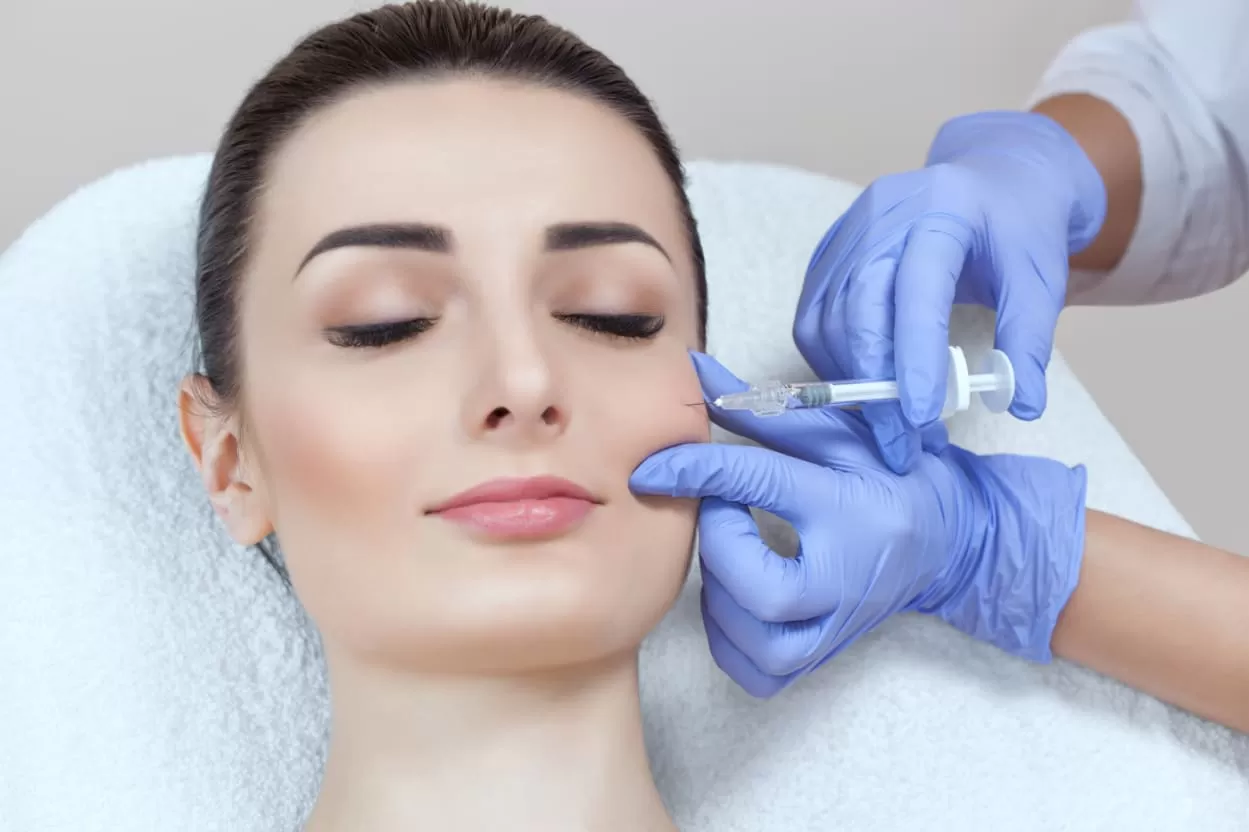
PRP stands for platelet-rich plasma. A small sample of your own blood is spun in a centrifuge to concentrate the platelets, and that concentrate — dense in growth factors — is returned to your skin to prompt collagen production. The "vampire facial" nickname refers to the blood, not to a different procedure. It is used mainly for acne scarring and skin firmness.
If that is all you needed, you can stop there. The rest of this page is for people who want to know what the appointment is actually like before they consider one.
Why is it called a vampire facial?
Because of the blood, and because the name travels well. It is a media nickname rather than a clinical one — the treatment on our own menu is listed as PRP vampire treatment, and there is no separate, different procedure hiding behind the nickname.
It is worth saying that the name is doing the treatment a disservice in both directions. It makes something fairly ordinary sound dramatic, and it makes people expect a transformation rather than a gradual improvement in skin quality.
What is platelet-rich plasma, in ordinary words?
Blood is not one substance. It is red cells, white cells, platelets and plasma — the fluid the rest sits in. Platelets carry growth factors, which are the signalling molecules your body uses when it repairs tissue.
Spinning a blood sample in a centrifuge separates those components by density. What you can then draw off is plasma with a far higher concentration of platelets in it than ordinary blood carries — hence "platelet-rich plasma".
Return that to the skin and you are delivering a concentrated dose of your own repair signalling to the layer where collagen is made. That is the whole idea. Nothing synthetic is involved, and because the material is yours, there is nothing to react against and no risk of an allergic reaction to a foreign product.
What actually happens at the appointment?
Four stages, and none of them is as dramatic as the name suggests.
1. Assessment and preparation. Your doctor reviews the scarring or skin quality being treated and goes through your medication. You are asked to stop blood thinners and anti-inflammatories for seven days beforehand — so this conversation happens well before the session itself, not on the day.
2. Numbing and blood draw. Topical anaesthetic is left on for about forty-five minutes. A small sample of your blood is taken during that window, the same way it would be for any blood test.
3. Concentrating the platelets. The sample is spun in a centrifuge, separating and concentrating the platelets and the growth factors they carry. This happens in the clinic while you wait.
4. Returning the plasma to the skin. The platelet-rich plasma is delivered superficially across the treated area. Collagen remodelling then continues for weeks afterwards, which is why the result builds between sessions rather than appearing at the end of the appointment.
The single most useful thing to take from that list is the forty-five minutes. People plan for the procedure and forget the numbing, then find the appointment took twice as long as they budgeted for.
Does it hurt?
It is designed to be comfortable. Topical anaesthetic is applied about forty-five minutes beforehand, and most patients describe pressure and brief stinging rather than pain.
What is it actually used for?
Three things, in the order patients tend to raise them.
Acne scarring. Concentrated growth factors drive collagen remodelling in the dermis — the layer where acne scars sit, and the layer creams cannot reach. This is the single most common reason people come in for it: marks and scarring that have never fully settled, however long they have waited.
Firmness and elasticity. New collagen production improves skin quality over the weeks following each session, which is what patients notice as tighter, less slack skin. The typical description on arrival is skin that looks tired rather than lined.
Fine lines. As collagen rebuilds, the visibility of fine lines and early wrinkles reduces — without adding volume or altering your features.
That last clause is the boundary of the treatment, and it is worth holding on to. PRP improves the quality of the skin you have. It does not change the shape of your face.
How is it different from a filler?
This is the comparison that clears up most of the confusion.
A dermal filler places hyaluronic acid to add volume or reshape a contour. PRP adds no volume at all — it uses your own growth factors to prompt collagen production, improving skin quality rather than changing your features. They address different problems, and neither is a substitute for the other.
If it is skin quality you are after and PRP turns out not to suit you, injectable skin boosters are another route to the same territory — hyaluronic acid placed into the skin itself rather than under it, hydrating from within and prompting collagen, again improving texture and elasticity rather than changing shape.
PRP is also frequently discussed alongside microneedling with a Dermapen, which reaches the same collagen-producing layer by a different route. Whether the two are combined, and in what order, is a decision your doctor makes at consultation.
How many sessions, and how long does it last?
Around five to six sessions makes a full course, spaced so collagen remodelling can complete between them. Your doctor confirms the number after assessing what is being treated.
Skin usually looks fresher within the first week or two, but the real change is cumulative and builds across the course. The effect of a completed course typically holds for around a year, with maintenance sessions after that to sustain it — which follows from the mechanism, since the treatment prompts your own collagen response rather than placing anything permanent in the skin.
Is there downtime?
Minimal. Expect redness and mild swelling for a day or two, plus pinpoint bleeding immediately afterwards, which is expected rather than a problem. Some patients bruise lightly at the blood-draw site as well.
Plan for about twenty-four hours without intense exercise or sun exposure. Most patients book it with a clear day afterwards rather than taking time off.
Is it safe, and what should I watch for?
Two separate answers, and the honest version needs both.
There is no risk of an allergic reaction to a foreign product, because the plasma is concentrated from your own blood. That is a real advantage of the treatment and it is why it is often described as safe in the first breath.
But the procedure necessarily breaks the skin, and that carries its own risks. Blood is drawn, spun and re-injected under sterile conditions by a doctor, which is what keeps infection risk low — low but real, never zero. Your part of that is the aftercare: clean bed linen, no picking, and no makeup for the first day. Freshly treated skin also burns and pigments more easily, so SPF 50 or higher daily and no direct sun for at least twenty-four hours are the core of what follows.
Report spreading redness or increasing pain — contact the clinic rather than waiting to see whether it settles. Redness and swelling that ease over a day or two are expected. Redness that spreads, or pain that grows rather than fades, is not.
Who should not have it?
PRP is avoided during pregnancy and breastfeeding, while taking blood-thinning medication, and while on a course of antibiotics.
Blood disorders and some medications also affect whether platelets can be usefully concentrated in the first place — which is why your doctor asks about everything you take, not only what seems related to your skin. Tell them the lot, including anything over the counter.
Is it worth considering?
If your complaint is acne scarring that never settled, or skin that has lost firmness and looks tired, then yes — it is a well-matched treatment, and one that works with your own biology rather than placing a product in your face.
If you are expecting a change in your features, it is the wrong treatment, and a consultation should tell you so.
Book a consultation at Indiranagar or Bellandur — ₹500, waived off against treatment — and have your skin examined before anyone draws blood.