
What Changes the Cost of PRP Vampire Treatment in India
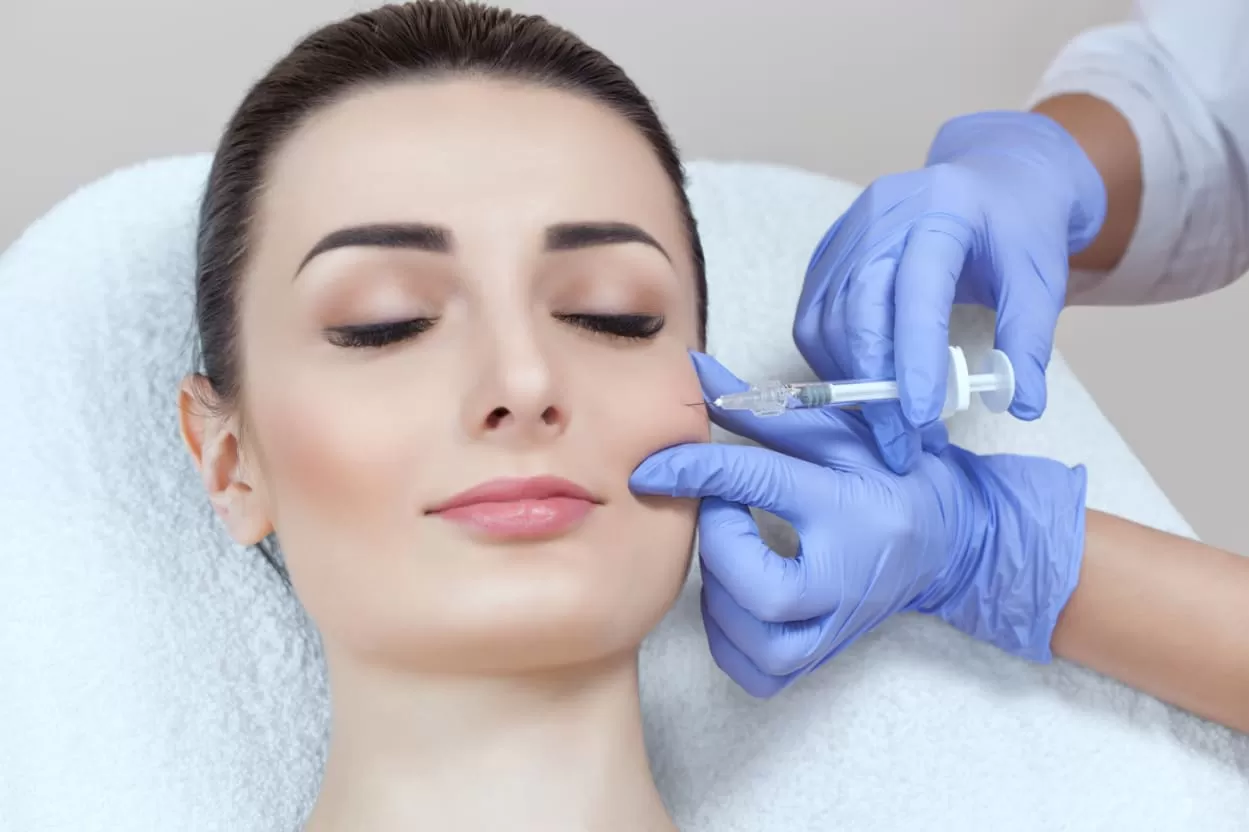
Four things move the price of a PRP vampire facial in India: how many sessions the course runs to, how large an area is treated, whether it is combined with microneedling, and who is performing it and where. At The Aesthetic Edge the treatment starts from ₹5,999 per session, with the number of sessions confirmed after an assessment.
Everything below is the detail behind those four. We have deliberately not published a national price range, because we do not hold reliable data for one and a made-up range is worse than no range.
Why is there no single price for a vampire facial?
Because "vampire facial" describes a mechanism, not a fixed procedure.
The PRP vampire treatment works like this: a small sample of your blood is taken, spun in a centrifuge to separate and concentrate the platelets and the growth factors they carry, and that platelet-rich plasma is returned to your skin to prompt collagen production. Because the material is yours, there is no foreign product involved and nothing to react against.
Notice what that description does not fix: how much plasma, over how much skin, how many times, delivered how, by whom. Every one of those is a variable, and every one of them costs something. Two clinics quoting very different numbers may be quoting for genuinely different amounts of work.
How many sessions does a course actually need?
This is the largest multiplier by a distance, and it is the one most often left out of a comparison.
A full course runs to around five to six sessions, spaced to let collagen remodelling complete between them. A single session is not the treatment — skin usually looks fresher within the first week or two, but the real change is cumulative, building across the course as collagen remodelling continues for weeks after each visit.
So a per-session price is only half the information. If one clinic quotes per session and another quotes for a package, you are not comparing like with like until you know how many sessions each assumes. Ask.
There is a second, quieter session question: maintenance. The effect of a completed course typically holds for around a year, after which maintenance sessions sustain it. That is not an upsell invented later — it follows from the mechanism. PRP prompts your own collagen response rather than placing anything permanent in the skin, so the result behaves like a biological one and fades like one.
Does the size of the treated area change the price?
Yes, and sensibly so. Plasma is delivered across the treated area, so a full face is a different quantum of work from a targeted patch of acne scarring, and adding the neck is different again.
It is worth being specific when you ask for a quote. "How much for PRP" and "how much for PRP across the full face" are different questions, and the second one gets you a number you can actually hold someone to.
Does adding microneedling change the price?
It can, and this is a common source of confusion because the two are so often mentioned together.
Microneedling with a Dermapen is its own treatment with its own price. Where PRP is delivered alongside it, you are buying two things happening in one sitting, and a quote may be built either way. When you are given a figure, the useful question is simply: is microneedling included in this, or is it separate?
We are not going to guess the answer for another clinic's price list, and you should not have to either.
Why does the practitioner and the setting change the price?
Because this treatment breaks the skin, and the controls that make that safe have a real cost.
Blood is drawn, spun and re-injected under sterile conditions by a doctor — that is what keeps infection risk low in a procedure that necessarily breaks the skin. Sterile single-use consumables, a proper centrifuge, a clinical room and a doctor's time are all real inputs, and a quote that undercuts the field substantially is usually undercutting one of them.
The core safety facts are worth carrying into any price conversation:
- Infection risk is low but real, and it is managed by sterile technique on the day and by aftercare afterwards — clean bed linen, no picking, and no makeup for the first day.
- Topical anaesthetic is applied about 45 minutes before the session, so the appointment occupies more chair time than the procedure alone.
- You are asked to stop blood thinners and anti-inflammatories for seven days beforehand, which means a proper assessment happens before anyone books you.
If a quote comes without an assessment, the price is not the thing to worry about first.
Does the city change the price?
In practice, yes — clinical overheads in a metro differ from a smaller city, and a price list reflects the room it is written in. We are not going to publish a city-by-city table, because we would be inventing most of it.
What is worth saying for Bangalore specifically is that a course is several visits spread over months, each needing about 45 minutes of numbing before anything starts. If the clinic is an hour of traffic away, the commute is a real cost of the course even though it never appears on the invoice. Booking somewhere you can actually get to is not a trivial consideration across five or six visits.
What should a quoted price include?
Ask these, in this order, and most quotes become comparable:
- Is this per session, or for a course? If a course, how many sessions?
- Does it include the consultation, or is that separate?
- Is microneedling included, or priced on top?
- What area does it cover?
- Are review visits between sessions included?
- Who performs it — and is it a doctor?
What does it cost here?
The treatment starts from ₹5,999 per session at The Aesthetic Edge. The consultation is ₹500, waived off against treatment — so if you go ahead, the assessment costs you nothing extra.
The number of sessions is confirmed after your doctor has assessed what is actually being treated, because scarring and general skin quality are not the same job and do not always need the same course.
What if it turns out not to be suitable?
Then the assessment has done its job, and that is a legitimate outcome worth budgeting for.
PRP is avoided during pregnancy and breastfeeding, while taking blood-thinning medication, and while on a course of antibiotics. Blood disorders and some medications also affect whether platelets can be usefully concentrated at all — which is a good reason to tell your doctor about everything you take, rather than only what seems relevant. If PRP is not appropriate, other routes to skin quality such as skin boosters may be discussed instead, and their pricing is a separate conversation.
Is it worth the money?
That depends entirely on what you are treating, which is why the honest answer sits after an examination rather than before one. What we can say is what you are buying: around five to six sessions, minimal downtime of a day or two of redness and mild swelling each time, and a result from a completed course that typically holds for around a year.
Judge a quote against that shape. A number without a session count, an area and a named practitioner is not really a quote.
Book a consultation — ₹500, waived off against treatment — and get a figure built around your own skin rather than an average.