
The Vampire Facial Trend, Assessed for Indian Skin
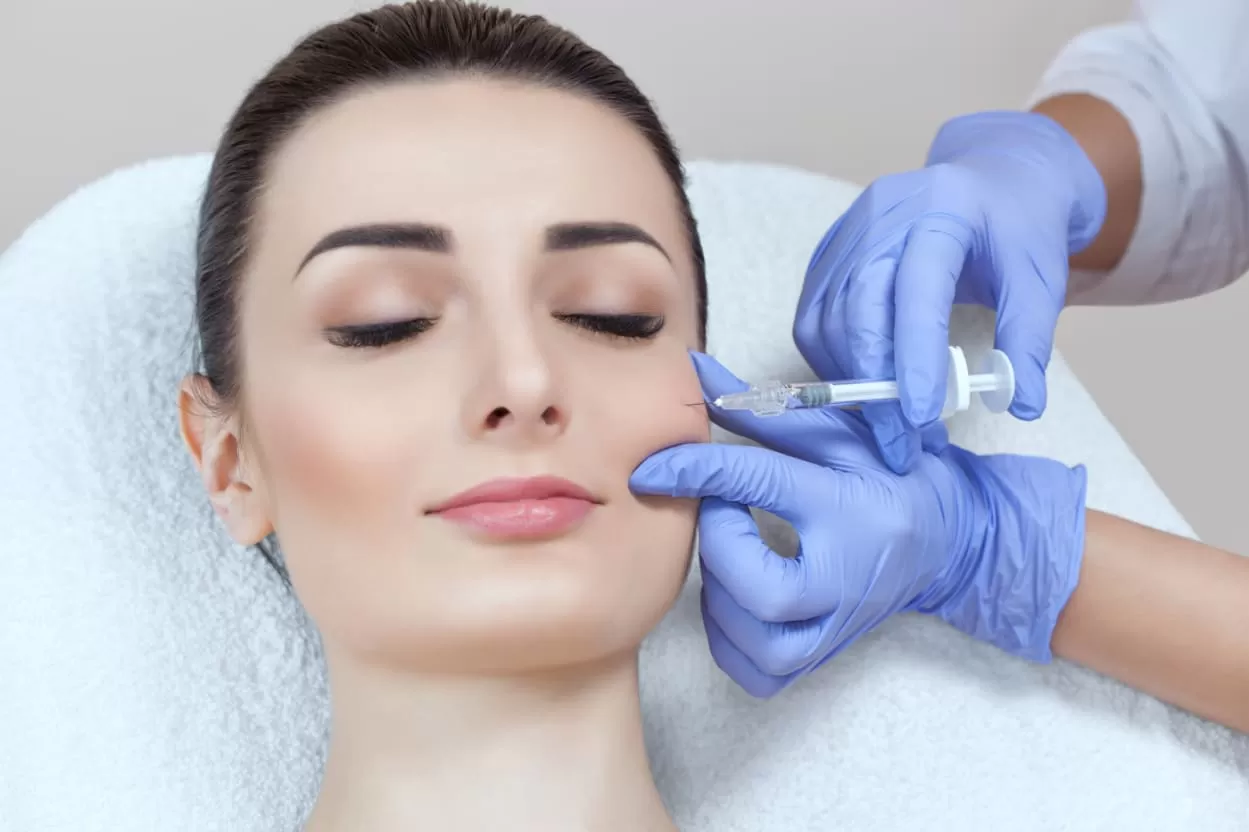
The thing the trend gets wrong is the timescale, not the treatment. What circulated as a celebrity photograph is one appointment; what the clinical version actually is, is a course of around five to six sessions whose effect builds as collagen remodels over the weeks after each one. And for an Indian reader there is a genuinely useful answer on skin tone: because the material being returned to your skin is concentrated from your own blood, there is no foreign product for deeper skin to react to differently. What deepens the calculation here is the needling that delivers it, not the plasma itself.
So this page is about separating those two things — the plasma, which is yours, and the procedure, which breaks the skin.
What is the trend actually describing?
PRP Vampire Treatment takes a small sample of your blood, spins it in a centrifuge to concentrate the platelets, and returns that platelet-rich plasma — dense in growth factors — to your skin to prompt collagen production. The name comes from how it looks mid-appointment, which is also why it travels so well on social media and so badly as medical information.
What it is genuinely good at, per our own protocol, is collagen work: softer acne scarring, because the growth factors drive remodelling in the dermis where scars sit and creams cannot reach; improved firmness and elasticity as new collagen builds over the weeks after each session; and softer fine lines, without adding volume or altering your features.
Notice what is absent from that list. It is not a brightening treatment and it is not a pigmentation treatment. If the photograph is what sold you on it, check that what you actually want is on that list.
Does the evidence support doing it as a course?
Our position is that the result is cumulative rather than immediate, and the protocol reflects it: around five to six sessions for a full course, spaced to let collagen remodelling complete between them, with your doctor confirming the number after assessing what is being treated. Skin usually looks fresher within the first week or two, but the real change accrues across the course.
A completed course typically holds for around a year, with maintenance sessions after that — because the treatment prompts your own collagen response rather than placing anything permanent in the skin. That is the honest frame for the spend: a course and then upkeep, not a one-off purchase.
Which means a single session booked for an event is the one version of this treatment that is almost certainly not worth it.
Does deeper skin change how this works?
Not in the way the international content on this trend usually implies, and the reason is worth understanding. The active material is concentrated from your own blood, so there is no foreign product and no risk of an allergic reaction to a product. That is true at every Fitzpatrick type. There is no light, no wavelength and no energy setting in this treatment, so none of the device considerations that genuinely matter for lasers on deeper skin apply here.
What does apply is that the treatment necessarily breaks the skin to deliver the plasma. That is a procedure consideration rather than a plasma one, and it is why the delivery question matters more than the trend ever acknowledges — this is almost always paired with Microneedling with Dermapen, and the needling depth is a clinical decision made by someone looking at your skin.
We are not going to publish a pigmentation-risk figure for this treatment, because our protocol does not document one and inventing a number for deeper skin would be exactly the kind of claim this page exists to push back on. What we will say is that the needling side of the conversation is the side to have in person, and that it is a reasonable thing to raise directly at your consultation.
What about the Bangalore climate?
The climate changes the aftercare window rather than the treatment. Downtime is minimal — redness and mild swelling settling over a day or two — which sounds trivial until you put it next to a commute through afternoon sun or an outdoor function the same evening.
Practically: allow the day. Topical anaesthetic goes on about 45 minutes beforehand, so the appointment is longer than the injecting suggests, and you want the hours afterwards to be unremarkable rather than spent outside. Across a five-to-six-session course that is a handful of quiet evenings, not a lifestyle change.
Is it safe, and what should I actually ask?
It uses plasma concentrated from your own blood, so there is no risk of reacting to a foreign product. The main risks are those of any procedure that breaks the skin, which sterile technique and aftercare address — blood drawn, spun and re-injected under sterile conditions by a doctor is what keeps infection risk low.
So the questions worth asking anywhere are about the procedure rather than the plasma. Who draws and spins the blood. Whether it is a doctor doing the re-injection. What the sterile handling actually is between the draw and the delivery. A clinic that answers those crisply is describing a protocol; a clinic that answers with before-and-after photographs is describing a marketing campaign.
Would something else suit me better?
Possibly, and it depends on what you are actually unhappy about. If your concern is hydration and skin quality rather than scarring or laxity, Skin Boosters work by a different mechanism — hyaluronic acid placed into the skin — and that is a different conversation with a different schedule. The honest comparison is each treatment against your complaint, not against the other.
And if what drew you here was the dramatic appearance of the treatment rather than the collagen work it does, that is worth saying out loud at the consultation. It is a reasonable thing to be curious about, and a poor reason to commit to six sessions.
Where to start
Bring the complaint rather than the trend name, and ask about the needling depth as well as the plasma. The consultation fee is waived against treatment if you go ahead, at either our Bellandur or Indiranagar clinic. Book an appointment and you will get a straight answer about whether a course of this is the right use of your time.