
What Is Dermaplaning? A Plain-English Explanation
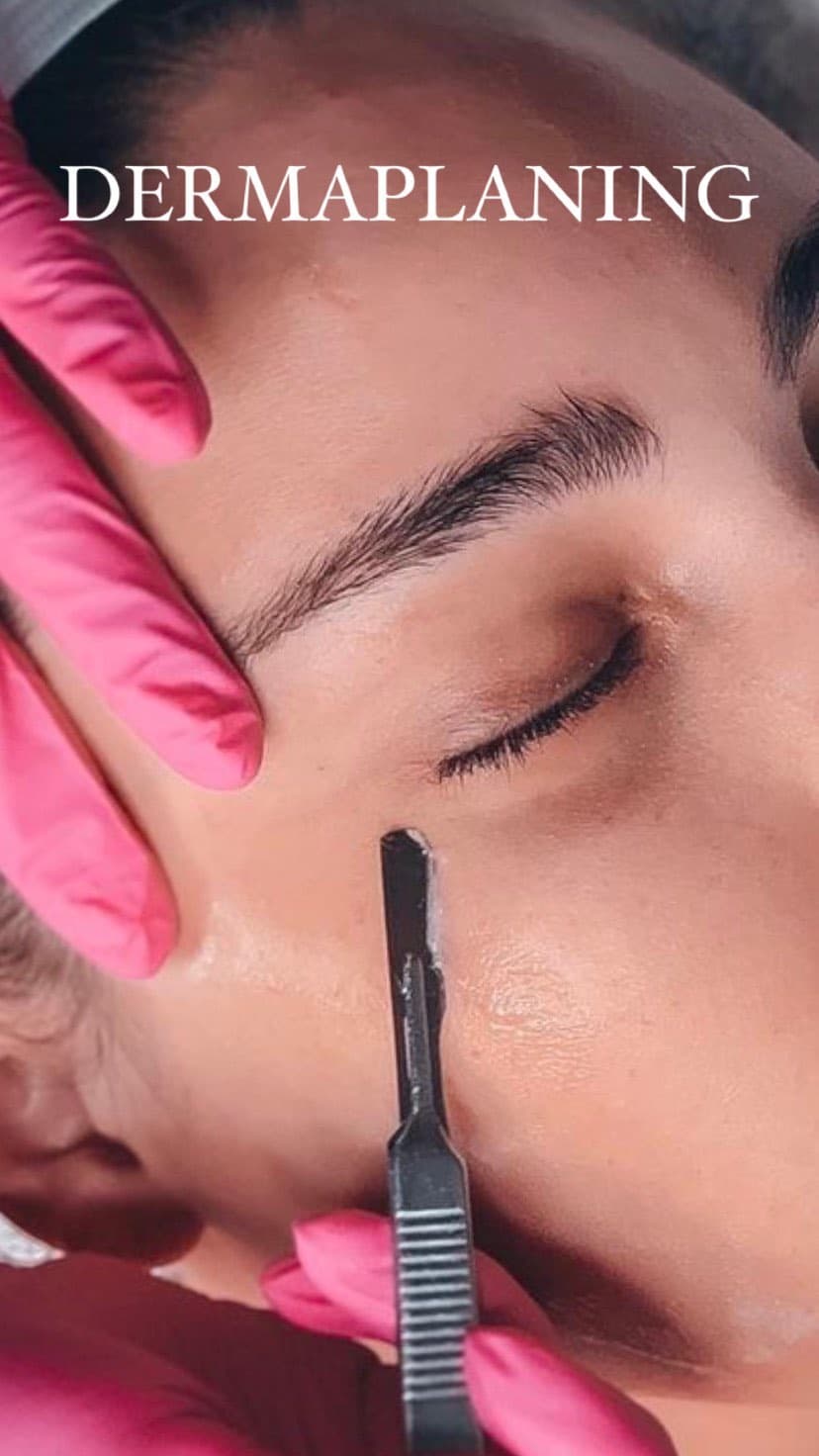
Dermaplaning is a physical exfoliation. A trained clinician holds a sterile single-use blade flat against clean, dry skin and lifts away the dead surface cell layer together with the fine vellus hair most people call peach fuzz. Nothing is injected and there is no downtime — skin feels smoother the same day, makeup sits flatter, and the products you already own absorb better.
That is the whole of it, and the plainness is the point. Dermaplaning has picked up a reputation online that is part magic and part cautionary tale, and neither half is accurate. Here is what Dermaplaning is, what it genuinely changes, and the situations in which a clinician will decline to do it today.
What actually happens during a dermaplaning session?
A session runs 30 to 45 minutes and has four parts. First, an assessment: the clinician checks for active acne, broken skin, sunburn or cold sores, all of which are reasons to postpone rather than proceed. Then the face is cleansed and dried completely — the blade cannot be used safely on damp skin, so this is not a step anyone rushes.
The blade work itself is short, flat strokes, section by section, with the skin held taut. It is methodical rather than dramatic. Finally a calming serum goes on, followed by sunscreen, because the freshly exfoliated surface is more sun-sensitive for roughly a week afterwards.
You will notice the difference by the time you sit up. That immediacy is unusual among skin treatments and is a large part of why people book it before an event.
Is dermaplaning the same as shaving my face at home?
No, and that difference is the reason not to attempt it yourself. A razor is designed to cut hair at the skin's surface. Dermaplaning uses a surgical blade at a specific shallow angle so it lifts the dead cell layer as well as the hair. The angle is the skill, and it is not something a home razor is built to hold.
Attempted at home, the common outcomes are nicks, uneven patches and irritation — not because people are careless, but because the tool and the technique are not the ones the job asks for.
Will the vellus hair grow back thicker or darker?
No. Fine vellus hair on the face regrows exactly as it was: same texture, same colour. Cutting a hair does not change the follicle it grew from, and the follicle is what determines thickness and pigment.
The myth has an honest origin. A vellus hair tapers to a fine point at the tip. Cut it straight across and the regrowing hair presents a blunt end for a few days, which feels different under your fingertips even though nothing about the hair has actually changed. Feeling blunter is not the same as being thicker.
Who is dermaplaning for, and who should wait?
The people who tend to get the most from it are those whose skin looks dull and whose makeup sits patchy or cakey, those with fine facial hair that catches the light in photographs, and those who want smoother texture without needles, acids at strength, or downtime. It is also a common pre-event booking, for the simple reason that the result is there the same day.
It is not for everyone on every day. Active cold sores, sunburn, broken or infected skin and some skin conditions mean the treatment is deferred or declined at assessment. Active inflammatory acne is the most frequent reason to wait: working a blade across inflamed spots, pustules or cysts can spread bacteria and make them worse. If your acne has settled and the concern is texture or marks, it is often fine — but that call is made at the assessment, by someone looking at your skin, not from a description.
Does it hurt, and is there any downtime?
Most people find it painless. The usual description is a light scratching or scraping sensation, and no numbing cream is needed. There is nothing to recover from afterwards: you can return to work, and to makeup, the same day.
Mild pinkness for an hour or two is common and settles on its own. Skin burns more easily for around a week, so daily sunscreen is part of the treatment rather than an optional extra. Small nicks or grazes are uncommon in trained hands — more likely on uneven or very reactive skin — and heal within a few days.
How often should it be done, and what does it cost?
Roughly every three to four weeks. That matches the skin's own renewal cycle; going more often means exfoliating skin that has not finished rebuilding. The smoothness itself holds for about that same three to four weeks, which is why the cadence lines up so neatly.
Dermaplaning at The Aesthetic Edge starts from ₹1,999 per treatment. A consultation is ₹500, waived off against the cost of treatment. Whether dermaplaning is the right starting point for your skin, and how often it should be repeated, is settled at that consultation rather than in advance.
What should make you contact the clinic afterwards?
Please do not try to work out for yourself whether something is normal. Get in touch with the clinic that treated you if redness lasts beyond a day or two, if a graze looks like it is not healing, if the skin becomes genuinely painful rather than mildly sensitive, or if a cold sore appears after the session. Ring the clinic or arrange a review — the team would far rather look at something early than hear about it a fortnight later.
The same applies to anything you simply were not expecting. You are not obliged to interpret it, and a short phone call is the cheapest way to have someone qualified do that for you.
Where does dermaplaning fit alongside other treatments?
Often as a preparation step rather than as a standalone. Clearing the surface first helps a facial or a peel reach the skin more evenly, which is why it is sometimes done before a Hydra Medi Facial rather than instead of one. A chemical peel works chemically and at a depth chosen by a doctor for your skin type; dermaplaning works mechanically and only at the surface. They answer different questions, and quite often the sensible plan uses more than one of them in sequence.
If you are not sure which of those your skin is actually asking for, that is exactly what a consultation is for. Book an appointment and someone will look at your skin properly before recommending anything.