
Questions to Ask Any Clinic Before a Korean HydraFacial
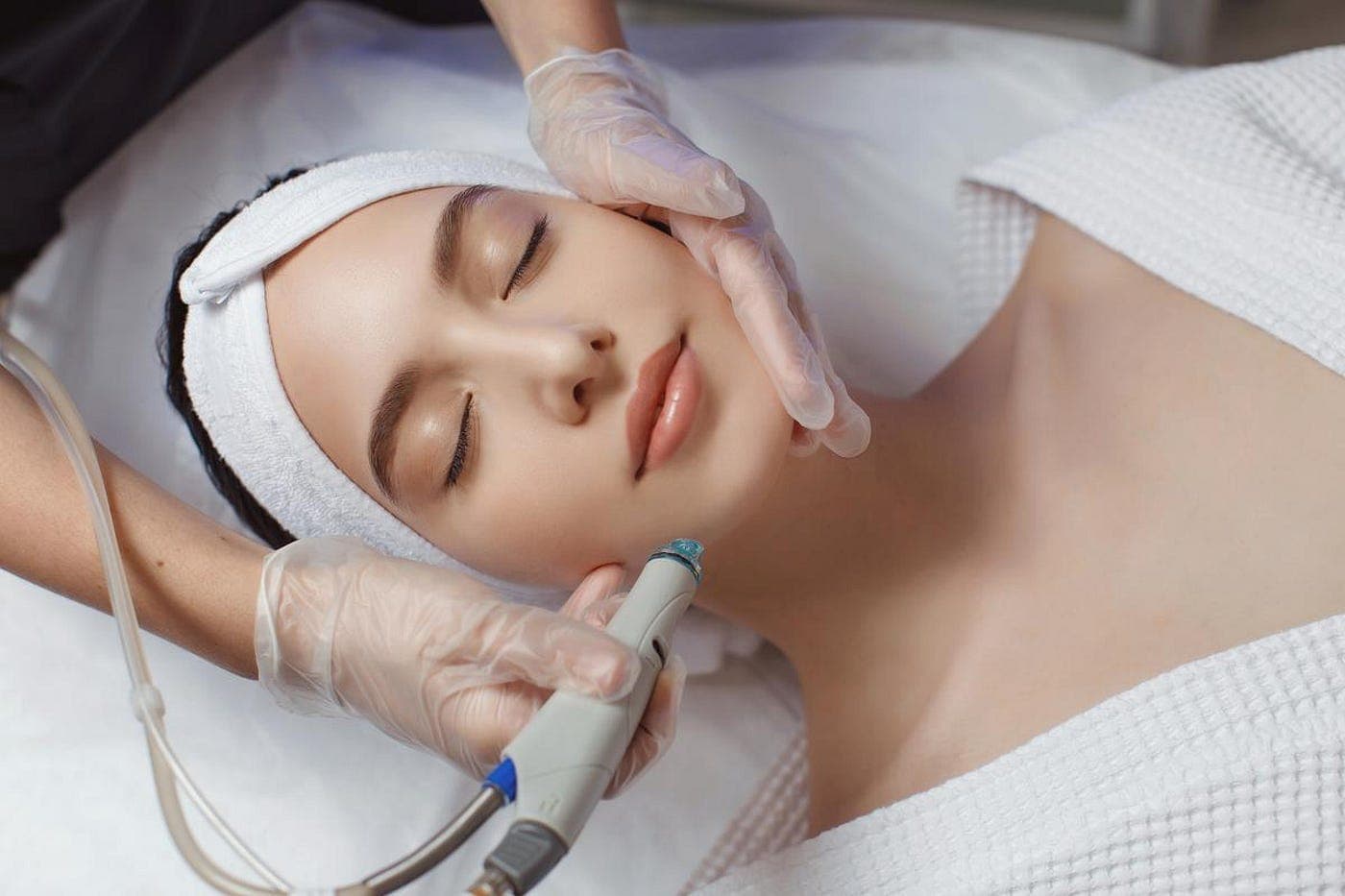
"Korean HydraFacial" is the name of a protocol rather than a machine, and that single fact is what makes a checklist necessary. The device is the same medical-grade one used for a standard session; what you are paying extra for is the number of steps and the length of the appointment. So the questions that matter are the ones that confirm you are actually getting those — because a shortened session on the same device looks identical in the photographs and costs the clinic a great deal less to deliver.
Eight questions. Use them on us as readily as anywhere else.
1. How many steps, and how long is my appointment booked for?
Ask for both numbers, and ask what is in the diary rather than what is on the website. The protocol for a Korean HydraFacial runs fourteen steps across 75 to 90 minutes. A standard Hydra Medi Facials session is cleanse, exfoliate and oxygenate in one sitting, around 45 minutes.
If you are quoted the longer protocol and booked into a 45-minute slot, those two things cannot both be true. This is the most useful question on the list because the answer is a number someone has already written down.
2. What are the extra steps, specifically?
The longer protocol adds layered serum infusions, a cooling mask, LED and lymphatic massage on top of the standard session. Ask which of those you are getting. "The Korean one" is a label; the list is the treatment.
Worth knowing why the layering is there rather than treating it as padding: the idea the protocol is built on is that thin serums applied in sequence absorb better than one rich product. Several light steps, not one strong one. A clinic that can explain that is describing a protocol it actually runs.
3. Is the LED included, or is it an add-on?
Here it is complimentary with every session. Elsewhere, ask — because an inclusion in one place is a line item in another, and that is exactly the sort of difference that makes two quotes look further apart than they are.
While you are asking, ask whether anything else is billed separately.
4. Who is supervising it?
The same doctor supervision applies to this as to the standard session. Ask who is in the room and who is accountable for the settings on the device. This is a medical-grade device being used on your face, and "our therapist does it" is a different answer from "a doctor supervises it" — neither answer is disqualifying on its own, but you should know which one you are getting.
5. How gentle is the exfoliation, really — and what happens if my skin reacts?
The protocol's exfoliation is deliberately gentle and it finishes with barrier support, which is why reactive skin generally copes with it better than a stronger single-step treatment. That is the design intent, and it is a reasonable thing to ask a clinic to confirm about its own version.
Then ask the follow-up that people skip: what happens if your skin does react? There is no downtime to speak of and any mild redness normally settles within an hour or two, but "normally" is a statement about the usual case. Ask who you telephone and when, and get it in writing rather than as a reassurance on the way out.
6. Is congestion cleared by suction or by squeezing?
Ask directly. The device lifts blackheads and surface build-up by suction rather than manual extraction, which means considerably less trauma to the skin. If what is being described to you involves fingers and pressure, you are being offered a different treatment under this name.
This is the question most worth asking if you are prone to marking, because manual extraction and suction leave the skin in genuinely different conditions.
7. What result is being promised?
Listen for overselling here. The honest expectation is brighter, smoother, more even-looking skin the same day. What nobody can deliver is the poreless finish in edited videos — pores do not close, and cleared, well-hydrated skin simply reflects light more evenly. Anyone promising flawless skin from a facial is overselling it, and that is our own treatment page's wording rather than a competitor jibe.
A clinic that volunteers the limit before you ask is telling you something useful about how it sells everything else.
8. Is this the right treatment for what I actually want changed?
The most expensive mistake here is not overpaying — it is buying maintenance when you wanted correction. This is a maintenance facial built for light reflection and smooth texture, not a corrective procedure. Deeper pigmentation and textural scarring are different problems needing different tools, and a Chemical Peel runs as a course with its own assessment and patch test rather than as a monthly upkeep appointment.
So say what is bothering you rather than naming the treatment, and see whether the answer you get matches it. For skin quality on a schedule, once a month is the rhythm and the benefit comes from regularity. For one event, a single session gives a visible same-day result and that is a perfectly good reason to book one.
One question not to bother asking
Whether it is a different machine. It is not, and a clinic claiming a special Korean device is either confused or hoping you are. The device and the supervision are the same as the standard session; the protocol around them is what differs. Knowing that is what stops you paying a premium for a brand name attached to the hardware.
Where to start
Ask all eight, here or anywhere. The consultation fee is waived against treatment if you go ahead, at either our Bellandur or Indiranagar clinic. Book an appointment — and if an answer about step count or appointment length comes back vague, that is information rather than an inconvenience.