
What Is Cool Sculpting? A Plain-English Explanation
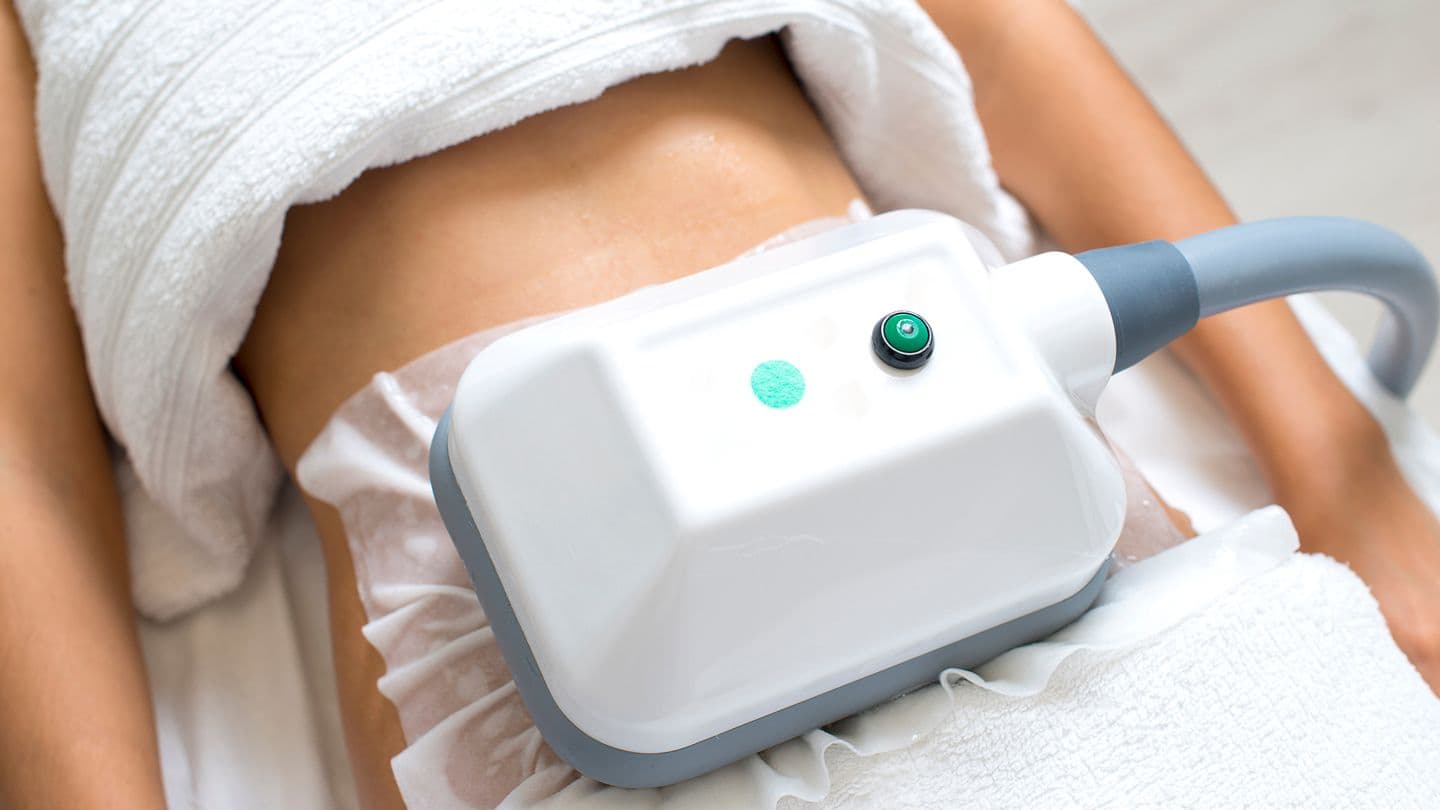
Cool sculpting is a non-surgical body-contouring treatment that uses controlled cooling to target fat cells in one specific area. An applicator sits on the skin — no needles, no incisions, no anaesthetic — and the treated fat is cleared gradually over the following weeks. It reduces a localised pocket of fat. It is not a weight-loss programme.
That last sentence is the one most people arrive without. The name travels faster than the explanation, so it is worth setting out properly what Cool Sculpting is, what a session involves, and what it is reasonable to expect from it, before anyone books anything.
What does the treatment actually do?
It targets fat cells in a defined area using controlled cooling, and then leaves your body to clear them. Nothing is cut, nothing is injected and nothing is removed on the day. The applicator is placed on the surface of the skin over the marked area, with a gel pad protecting the skin, and the cooling and suction do the work through the skin rather than under it.
The change follows afterwards rather than during. The treated fat is cleared gradually, which is why the difference shows over the weeks after the session and is assessed at a follow-up appointment rather than in the mirror on your way out. Fat cells cleared by the body are not replaced — though the cells that remain in the area can still enlarge if your weight increases, which is why the result depends on maintaining a stable weight afterwards.
Is this a way to lose weight?
No, and a clinic that suggests otherwise is misleading you. This is body contouring: it reduces fat in one specific area for someone who is already near a stable weight. It does not change what the scales say and it is not a substitute for a weight-management programme.
Diet and exercise reduce fat across the whole body and cannot be aimed at one place. That is the gap this treatment fills — it is applied to a specific pocket, such as the lower abdomen, the flanks, the inner thighs or under the chin. Which is also why it suits people who are otherwise close to the shape they want and have one area that is out of proportion with the rest.
If overall weight is what you want to change, this is the wrong treatment, and you should be told that plainly at the assessment rather than sold a course.
What happens in a session?
Four things, in order, and none of them involves a needle.
Assessment. The doctor examines the area, confirms the fat is the type this treatment can address, and reviews your medical history for anything that rules it out. Not everyone is a candidate, and a doctor here will tell you if what you are describing is better addressed another way.
Positioning. A gel pad protects the skin and the applicator is positioned over the marked area.
The cooling cycle. Suction and controlled cooling run for roughly 35 to 90 minutes per area. The first several minutes are the least comfortable — an intensely cold sensation with a strong pull. That usually fades once the area goes numb, and most patients find the rest of the session comfortable enough to read or work through.
Massage, and the weeks after. The area is massaged when the applicator comes off. From there the change develops over the following weeks and is reviewed at follow-up.
How many sessions will I need, and how long until I see anything?
It depends on the size of the area. Smaller areas often need one or two sessions; larger ones may need four to six. You should be given that number at consultation, before you commit to anything.
On timing: not on the day. Because the treated fat is cleared gradually, the change shows across the weeks following a session, and it is assessed at follow-up rather than immediately. That gradual arrival is part of the appeal for a lot of patients — the reduction reads as a change in shape rather than as a procedure someone has had.
Nobody can promise a particular result, and a clinic offering you a specific number in advance is telling you something it cannot know.
Is there any downtime?
Almost none. Most patients resume normal activities immediately after the session, including going back to work — there is no recovery period to plan around, no dressing and nothing to heal.
You should still expect the treated area to feel and look different for a short period. Redness, swelling and bruising are common and generally settle within hours to a few days. The area is often numb right after the applicator is removed; sensation usually returns within a few hours, though reduced sensation can persist for some days. Mild discomfort, aching or cramping in the treated area is common in the first few days too.
When to ring the clinic rather than wait and see. Contour irregularity and, rarely, an increase in fat in the treated area have both been reported with cooling-based fat reduction. Please raise any unexpected change with your doctor rather than waiting for it to settle — and the same goes for pain that is worsening rather than easing, numbness that is not recovering, skin that blisters or breaks down, or any change that simply does not look right to you. You are not expected to judge whether something is significant; that is our job, and we would far rather see you early. Call the clinic and we will arrange a review.
Who is it not suitable for?
Cool sculpting is not advised during pregnancy or breastfeeding. It is also ruled out for anyone with cold-related conditions such as cryoglobulinaemia, cold agglutinin disease or paroxysmal cold haemoglobinuria, and a hernia at the treatment site rules it out as well. These are checked as part of the medical history at assessment, so bring your full history and any medication you take.
How does it compare with the other options for a stubborn area?
There is more than one way to approach a localised pocket of fat, and they are not interchangeable. Lipolytic injections use an injected agent to break down fat in a small, defined area — often under the chin, or somewhere a device applicator cannot easily reach. Evolve is a hands-free platform whose three modes address different things again: skin tightening, muscle stimulation and localised fat, which matters when loose skin rather than fat is part of what you are seeing.
Loose skin, weak muscle tone and a pocket of fat can look similar in a mirror and respond to entirely different treatments. Working out which one you are actually looking at is the real value of the consultation.
What does it cost, and what happens next?
We do not publish a single figure for cool sculpting, because there is not an honest one to publish. The cost depends on the area being treated and on how many sessions it realistically needs — a small area treated once and a larger area over a course of four to six are very different propositions, and quoting the smaller of them as a headline price would set the wrong expectation.
What you can expect is a straight answer at the assessment: the area, the session count, and the cost, before you commit. A consultation is ₹500, waived off against treatment.
If you would like an honest assessment of whether this is the right treatment for what is bothering you — including being told if it is not — book an appointment at our Indiranagar or Bellandur clinic.