
What Does "RCT" Mean in Dentistry? (It's Not What Most Searches Assume)
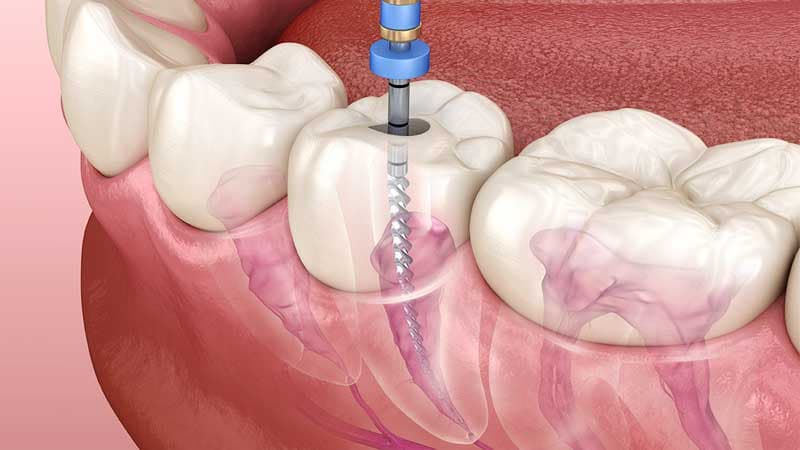
In dentistry, RCT stands for root canal treatment: a procedure that removes infected or damaged pulp from inside a tooth, cleans and disinfects the canals, and seals them — with the aim of relieving the pain and keeping your natural tooth rather than extracting it. The tooth is usually protected with a crown afterwards. That is the entire meaning; if a dentist has written "RCT" on your treatment plan, this is what they mean.
The acronym causes real confusion, because "RCT" means different things in different worlds — in research papers it is a randomised controlled trial, in other contexts something else again — and search results mix them all together. So this post does the disambiguating properly: what Root Canal Treatment (RCT) actually involves, how to tell when a tooth needs one rather than a simple filling, and an honest look at the "painful" reputation the procedure has never quite shaken off.
What actually happens during a root canal?
Three things, in a logical order. The inflamed or infected pulp — the soft tissue inside the tooth that is causing the pain — is removed, which addresses the source of the toothache rather than masking it with painkillers. The canals inside the root are then cleaned and disinfected, which stops bacteria tracking further into the bone or to neighbouring teeth and reduces the risk of an abscess. Finally the canals are sealed, and the tooth is restored with a filling or crown so it can take chewing load again.
The practical shape of it: local anaesthesia, roughly 60 to 90 minutes for a straightforward single-visit case, and more complex teeth — those with more canals — often split across two appointments. It is performed by a dentist, always, at both our Indiranagar and Bellandur clinics.
What you get back is worth spelling out, because it is the whole argument for the procedure. A treated natural tooth sits in its own socket with its own ligament — no replacement matches that, which is why saving the tooth is usually preferred to extraction. Keeping the natural root also preserves the jawbone, which resorbs where a root is missing. And with a properly matched crown or filling, the treated tooth does not stand out: you chew normally again, on both sides, and stop the quiet habit of favouring one side of your mouth that every long-standing toothache teaches.
Do I need a root canal, or just a filling?
The dividing line is the pulp. Decay that has damaged the outer layers of the tooth but not reached the living tissue inside can usually be cleaned out and repaired with a straightforward restoration — the territory of Dental Fillings / Teeth Fillings. A root canal enters the picture when the pulp itself has become infected or inflamed — usually from deep decay, a crack, repeated dental work on the same tooth, or trauma. At that point a filling cannot fix the problem, because the problem is no longer only in the part of the tooth a filling repairs.
You cannot make this call from home, and the symptoms overlap — which is exactly why the answer is an examination, not a search result. What you can do is not wait. Left untreated, an infected pulp does not settle on its own; the infection spreads and can cause severe pain and an abscess. The familiar Bangalore pattern — managing a toothache through two weeks of deadlines with painkillers from the pharmacy below the office — converts a one-visit problem into a longer one surprisingly fast. It is also worth saying that not all pain at the back of the mouth is a root canal candidate at all: an erupting or impacted third molar is a different problem with a different fix, covered under Wisdom Teeth Removal, and telling the two apart is another job for the examination.
Is a root canal really as painful as people say?
No — and this is the most outdated piece of dental folklore still in wide circulation. The procedure is carried out under local anaesthesia, so you should not feel pain during it. Most people find that the toothache that brought them in was considerably worse than the treatment that fixed it — which makes sense, since the procedure removes the very tissue that was generating the pain. Some tenderness for a few days afterwards is normal, and it is the ordinary soreness of a tooth that has been worked on, not a continuation of the original agony.
The reputation comes from an earlier era of dentistry, and it does real harm: fear of the procedure keeps people on painkillers until an infection that could have been cleared in one 90-minute visit has spread. If the fear is the thing holding you back, say so when you book — an unhurried appointment with everything explained before it happens is a reasonable thing to ask for, and a doctor-led clinic will oblige.
What happens after — and do I really need the crown?
For back teeth, usually yes, and it is worth understanding why rather than treating it as an upsell. A root-treated tooth is more brittle than a living one, and molars take heavy chewing forces every day. A crown protects the treated tooth from splitting — and a split of that kind is often not repairable, which would undo everything the root canal achieved. Front teeth and lighter-load cases are assessed individually; your dentist will tell you which restoration your tooth actually needs and why.
The next step, if a tooth has been talking to you
If you have a toothache that painkillers keep muting rather than fixing — or a dentist elsewhere has said "RCT" and you wanted to understand it before committing — the useful move is an examination while the problem is still small. Book an appointment at The Aesthetic Edge, Indiranagar or Bellandur. You will get a clear answer on whether the tooth needs a root canal, a filling, or something else entirely — and if it is a root canal, a calm, anaesthetised, modern version of it that bears little resemblance to the stories.