
What Changes the Cost of Exosome Hair Treatment in India
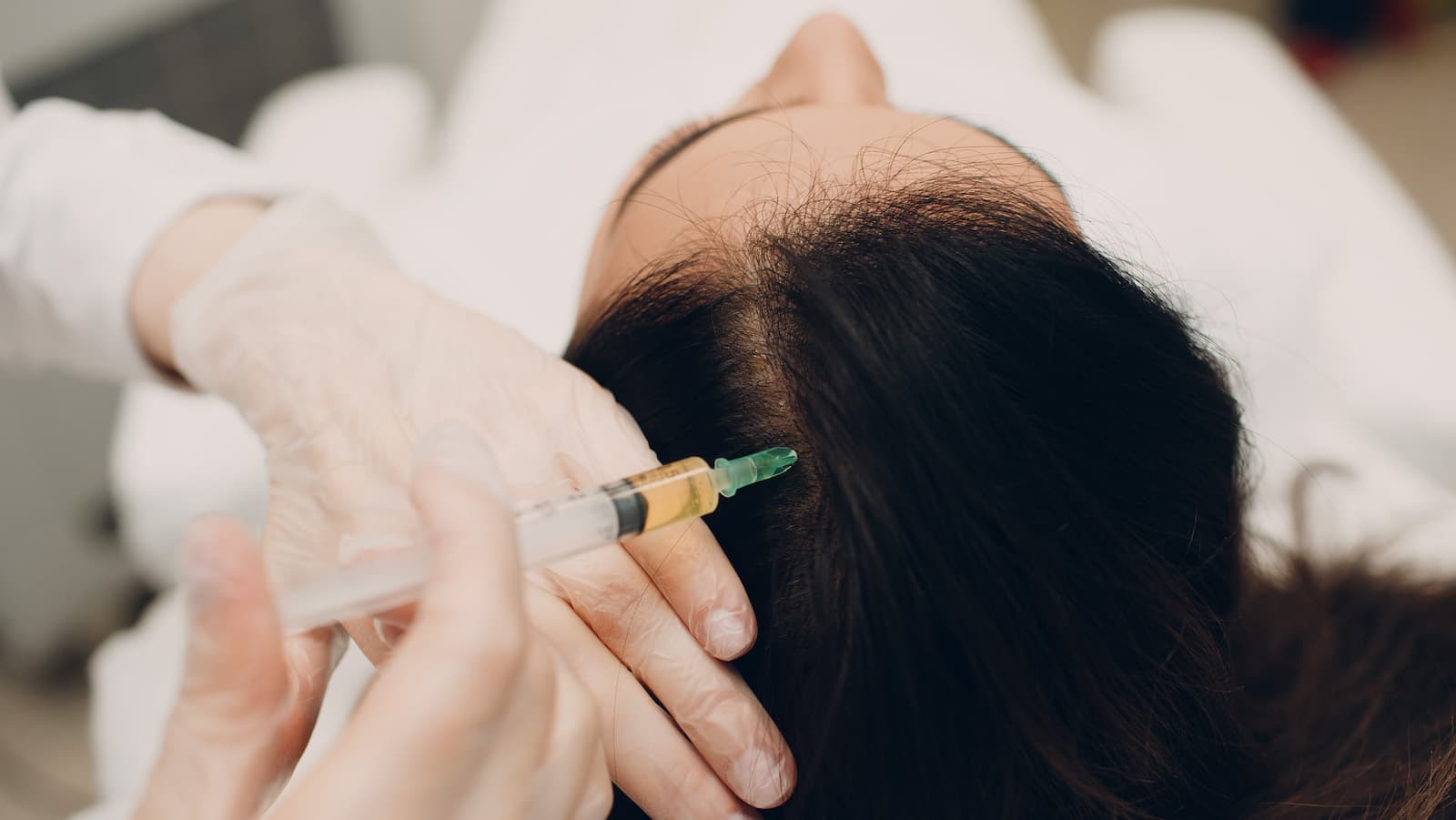
Exosome hair treatment does not carry a published starting price at this clinic, and we would rather explain that than invent a number. What moves the cost is a short list: the lab-prepared product itself, how much scalp is being treated, how many sessions your doctor thinks the plan needs, and the fact that a doctor performs every session. Anyone quoting you a firm course total before looking at your scalp is guessing, however confident the number sounds.
Why is there no price on the page for this one?
Because the honest figure depends on an examination that has not happened yet. Exosome signalling acts on follicles that are weakened but still active, so the first question is not what it costs but whether your scalp is in a state the treatment can act on at all. Areas that have been bare for years are not candidates, and your doctor will say so at assessment rather than sell you a course.
That ordering is the point. A price quoted before a scalp assessment is a price for a plan nobody has made.
What are you actually paying for in a lab-prepared treatment?
A purchased product, rather than an in-clinic process — and that is the single biggest difference between this and the blood-derived options.
With PRP hair regrowth treatment or GFC hair loss treatment, a sample of your own blood is drawn and processed in the clinic, so part of what you pay for is the draw, the centrifuge step and the single-use consumables around it. Exosome preparations are made in a laboratory, typically from stem-cell culture lines, and processed and screened by their manufacturer. There is no blood sample and no centrifuge step, which makes the session shorter and simpler — but the vial itself is a bought input with a manufacturer's price behind it.
So the cost structure genuinely inverts. You are paying less for in-clinic processing and more for a product that arrived screened and ready.
Does the product itself change the number?
Yes, and this is the variable most worth asking about directly. Preparations differ in source, in how they are processed and in how they are screened, and those differences are real rather than cosmetic. Exosomes carry growth factors and signalling molecules at a higher concentration than blood-derived preparations typically reach, and concentration, sourcing and screening are all things a manufacturer charges for.
Ask which product is being used, where it comes from and how it is screened. We discuss the specific preparation, its source and its screening openly at consultation, because with one of the newest options in hair regrowth that conversation is not optional. If a clinic will not name what is going into your scalp, the price is not the thing to be worried about.
Does the extent of thinning move it?
It does, for the same reason painting a larger wall costs more: the treated area determines how much product is used. A limited area of early thinning at the crown and diffuse thinning across most of the scalp are not the same job, and a quote that does not distinguish between them has not been worked out.
This cuts in the patient's favour more often than people expect. Because this treatment suits early and moderate thinning, the patients who are the strongest candidates frequently have smaller areas to treat.
Three or four sessions — so what is the quote for?
A typical course is three to four sessions spaced around four weeks apart, and the honest position is that the number is not fixed at the start. Scalp photographs are taken before the first session and compared at the three-month review, and the plan is adjusted from there.
That has a direct consequence for how you read any quote. A per-session figure is a real number; a course total quoted on day one is a projection of a plan that will be revisited against photographs. Ask which one you are being given, and ask what happens to the money if the review says a different number of sessions is appropriate.
Why is a doctor's time part of the cost?
Because every session here is performed by a doctor, and a session runs about 45 to 60 minutes including the numbing time. Delivery is by fine micro-injections after anaesthetic cream, and the depth, distribution and dose across a thinning scalp are clinical judgements, not a fixed pattern applied to everybody.
The baseline photography is part of that time too. Taking a proper baseline and comparing it honestly at three months is what separates a measured result from a remembered one, and it is work that happens whether or not the news is good.
Does being treated in a bigger city change it?
City-level pricing does vary, and we are not going to publish a national range for a treatment we only have our own data on — a number like that would be an estimate dressed as a fact. What we can say is what drives the variation: clinics in larger metros carry higher premises and staffing costs, and those reach the invoice like any other overhead.
What should not vary with the city is the substance — the product named, the screening described, the doctor performing the session and the photographs taken at baseline. If a cheaper quote in another city is cheaper because one of those is missing, the comparison is not like for like.
What should a quote already cover, and what will it not?
A quote should make clear whether it is per session or for a course, which product is being used, who performs it, and whether the three-month review and the comparison photographs are included.
What it will not cover is anything your scalp assessment turns up as a separate issue. Hair loss has causes that no injected signal addresses, and a consultation that finds one will tell you so. It also will not include a promise of regrowth, because regrowth cannot be promised at all where too little active follicle remains — and that is a limit of the biology, not a hedge in the pricing.
Where money actually gets wasted
In two places, in our experience. The first is paying for a course before an assessment, which is how people end up treating scalp that has nothing left to signal. The second is expecting the result too early: reduced shedding is usually the first change patients notice, while visible density takes months, because hair grows roughly a centimetre a month regardless of what the follicle is signalled with. Patients who abandon a course at week six have paid for the sessions and stopped before the measurement point.
In Bangalore specifically, there is a third: treating hair fall that is seasonal or water-related as though it were progressive thinning. The hard water in much of the city and the dust of a long commute produce plenty of shedding that is not the same problem, and a scalp assessment is the cheapest way to find out which one you have.
If you would like that assessment — and a figure based on your scalp rather than an average — book an appointment at our Bellandur or Indiranagar clinic and bring your full list of medicines and products with you.