
How to Prepare for Exosome Hair Treatment
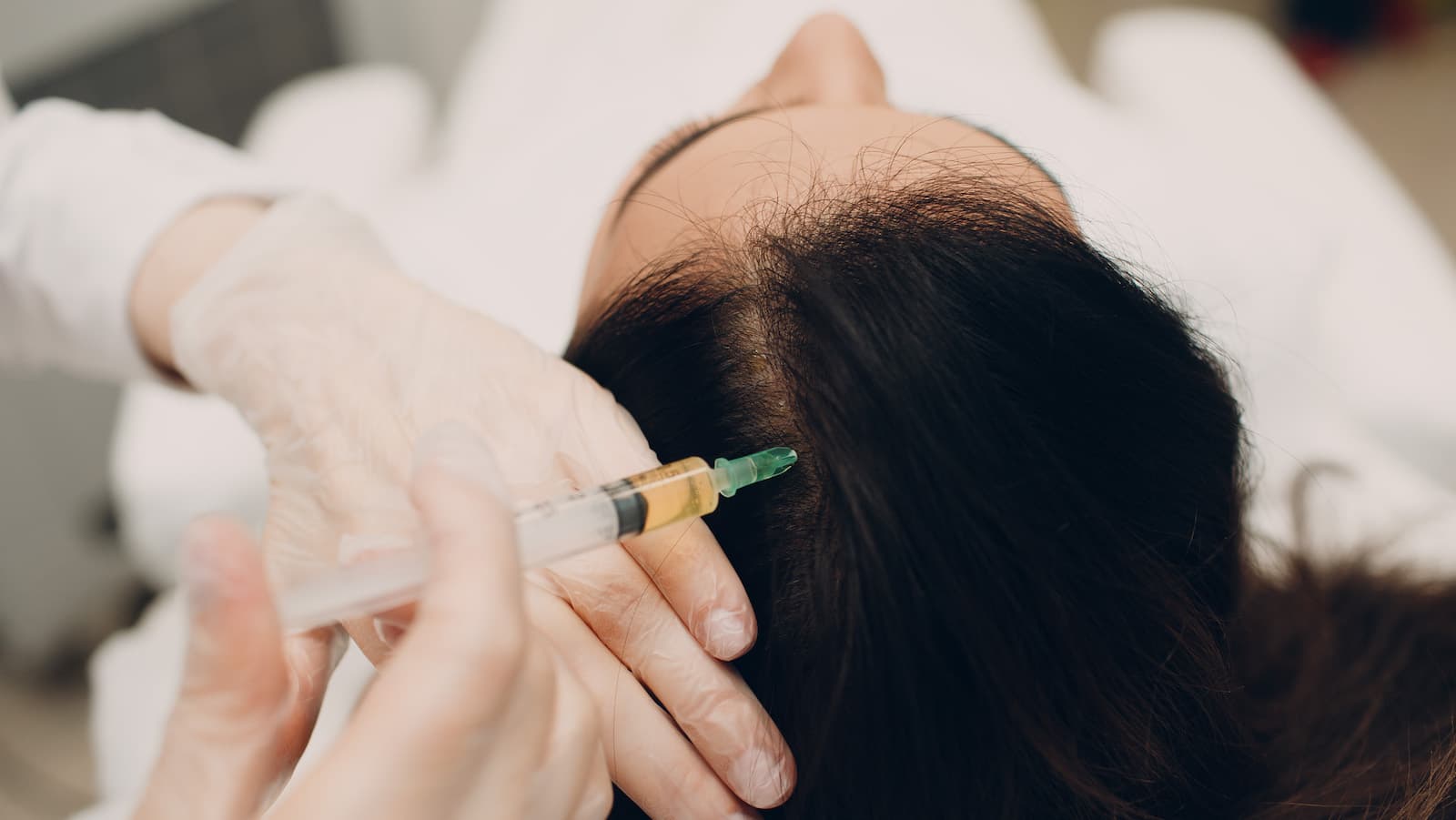
Preparing for an exosome scalp session takes very little doing, but the few things that matter are specific. Aspirin, anti-inflammatories and blood thinners are usually paused beforehand — on your doctor's instruction and never on your own reading — you arrive with a clean, product-free scalp, and you block out enough time for the numbing cream rather than only the injections. The single most useful piece of preparation is the scalp assessment that happens before any course is agreed at all.
That assessment is not a formality. Exosome Hair Treatment signals follicles that are thinning but still active, so the examination is what establishes whether yours are likely to respond before you commit to a course. If a clinic offers you this treatment without looking at your scalp first, the preparation advice on this page is the least of your problems.
What actually needs to stop before the appointment?
Aspirin, anti-inflammatory painkillers and blood-thinning medication are generally paused in advance, because fine-needle bruising is uncommon but noticeably more likely when they have not been. The instruction has to come from your doctor, though, and this is worth being firm about: if you take a blood thinner because a physician put you on one, you do not stop it for a cosmetic appointment on your own initiative. You tell us you are on it, and the decision is made properly — including the decision to reschedule if pausing it is not appropriate.
Nothing else routinely needs stopping. There is no blood draw and no centrifuge step in this treatment, so the fasting and hydration advice you may have read for blood-derived scalp treatments does not apply here.
What must the doctor know before anything is injected?
Your medication list and your medical history, because both are screened at the assessment. Beyond that, say so plainly if any of the following apply: you are pregnant or breastfeeding, you have an active scalp infection, or you have a patch that has been completely bare or scarred for years rather than thinning. The treatment is not carried out in the first two situations, and in the third it is not the right tool — signalling works on follicles that are still there, and no amount of it reaches ones that have gone.
This is also the appointment to ask what is being used. The preparations are lab-derived, most commonly from stem-cell culture lines, processed and screened by their manufacturer, and we discuss the specific product, its source and its screening openly rather than treating it as proprietary detail. Ask. A clinic that will not tell you what it is injecting into your scalp has answered your question anyway.
How much time should I block out?
About 45 to 60 minutes for the session itself, which includes the numbing. The anaesthetic cream goes on the scalp 30 to 45 minutes beforehand and the injection portion is roughly 20 to 30 minutes, so the cream is most of the clock. Add the travel and the sitting afterwards and treat it as a long lunch break rather than a quick stop.
Most patients describe pressure rather than pain during the injections, and there is no recovery period to plan around — normal activity resumes the same day.
Should I wash my hair before I come?
Come with a clean, dry scalp and no styling product, oil or serum on it. The numbing cream has to sit against the skin to work, and anything between the two is in the way. This is the opposite of the instruction for the hours afterwards, when hair products are left off for six hours and a gentle shampoo is the right choice for the first few days.
One thing people forget to mention: if you use hair fibres, a cosmetic powder or a spray to make thinning less obvious, tell the team before the photographs are taken. Scalp photographs are taken before the first session and compared at the three-month review, which is the measurement everything else is judged against. A baseline taken over a cover-up is a baseline you cannot use.
What should I plan for in the two days afterwards?
Mild redness or tenderness at the injection points can last a day or two, and some patients notice itching or a feeling of tightness for a couple of days. Leave it alone rather than scratching it.
Strenuous exercise, swimming and direct sun are avoided for two days. In Bangalore that last one is the clause worth reading twice: an afternoon on a two-wheeler in open sun is exactly what it means, so if you ride, schedule around it or cover up properly. The gym is a two-day pause, not a week.
How should the course sit in my calendar?
The typical course is three to four sessions spaced around four weeks apart, with the result reviewed against your baseline photographs at about three months. That is a commitment measured in months rather than weeks, so plan the first session when you know the next few are realistic — not in the week before a long work trip.
The number is not fixed at the start. It is reviewed at the three-month mark and adjusted from there, which is a better arrangement than paying for a block of sessions decided before anyone has seen how your scalp responded.
What will preparation not change?
The timeline. Hair grows roughly a centimetre a month whatever the follicle has been signalled with, so reduced shedding is usually the first thing patients notice and visible density takes months. No preparation, and no clinic, can honestly compress that — and where too little active follicle remains, regrowth cannot be promised at all. Your doctor will tell you that at the assessment rather than after three sessions.
It is also worth knowing before you book that this is the newer of the scalp options. GFC Hair Loss Treatment and PRP Hair Regrowth Treatment both start from a sample of your own blood and have been in use for longer, while the research base for exosomes is newer and still growing. We state that plainly because it should be part of your decision, not a footnote discovered afterwards. Which of them suits you is settled at the consultation, and avoiding a blood draw is a legitimate reason to prefer this route — it is simply not the only thing to weigh.
What to bring
A list of every medication and supplement you take, including the ones you assume are irrelevant. Any previous scalp treatment history. The dates you cannot be in the clinic over the next three months. And the questions above, particularly the one about the product being used.
Booking it
Start with the scalp assessment rather than the session — it is the step that decides whether a course makes sense for you at all. The consultation fee is waived against treatment if you go ahead, at either our Bellandur or Indiranagar clinic. Book an appointment and bring the medication list with you.