
What Changes the Cost of a Beauty Spot in India
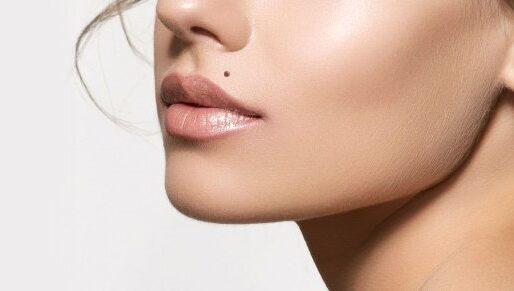
A beauty spot is a single pigment dot, and the placement itself takes minutes — so almost none of what you pay for is the doing. It is the deciding: where the spot goes, checked with you in a mirror from more than one angle, and which shade is mixed against your undertone. We do not publish a starting figure for it, and the honest reason is that the number comes from the consultation rather than from a list. What follows is what actually moves it.
Why does a procedure that takes minutes cost what it does?
Because the minutes are the last step, not the work. The spot is marked on and checked with you before any pigment is implanted, and position is most of the result. A dot two millimetres from where it should be does not read as a feature you were born with; it reads as a dot.
Shade is the other half. Pigment is selected against your own undertone so the mark looks like a natural feature rather than something applied — and too dark or too cool a shade is exactly what makes a cosmetic beauty spot look drawn on. On Indian skin that matching is the whole job, and getting it wrong is not something that washes off next week.
So you are buying two judgements and a few minutes of execution. Priced by the minute it looks expensive; priced by what happens if either judgement is wrong, it is the cheapest part of the decision.
Does the size or the position change the price?
Far less than with any other permanent makeup, and that is worth knowing before you start comparing quotes.
A brow, a lip border or a lash line covers an area, so the work scales with it. A beauty spot is one dot. There is no larger or smaller version of the job in the way there is with semi permanent makeup across the brows or with lip micropigmentation across the whole lip. That means the usual cost driver for pigment work — extent — barely applies here.
What does vary is how long the deciding takes. A patient who knows precisely where they want it and agrees the first marking is a shorter appointment than one who wants to see four positions in the mirror and think about it. Neither is wrong, and the second is often the better instinct.
What makes this a clinical cost rather than a salon one?
Pigment is implanted into the skin, which makes this a procedure rather than a cosmetic service. That means single-use sterile needles, medical-grade pigment and a doctor supervising — and each of those is a real line of cost that a salon offering something similar may not be carrying.
This is the comparison worth making carefully. If one quote is markedly lower, the question is not "why is theirs cheaper" but "which of those three things is missing". Ask what pigment is used, whether the needle is single-use and who is supervising. Those are fair questions and the answers should be immediate.
Is there a session beyond the first one?
One session, plus a review once the colour has settled. The colour darkens first, then lightens and settles over one to two weeks, and the review exists because judging the result before that has finished is judging the wrong thing.
Ask whether that review is included. It should be, and if a quote does not mention it, that is the thing to clarify rather than assume.
Should I budget for refreshing it?
Yes, and this is the cost most people do not think about at booking. A beauty spot is semi permanent rather than permanent: the pigment softens gradually over time, at a rate that depends on your skin type, sun exposure and your skincare. Many patients have it refreshed periodically.
So the real cost is not one appointment, it is one appointment plus an occasional one thereafter. Over several years that changes the arithmetic, and it changes it in a way that is partly within your control — the fading drivers are the same ones that apply to any implanted pigment, and sun exposure and acid-based skincare are the two you can actually do something about.
It also means a mistake is not permanent, which is the quiet upside of the same fact.
Why will nobody quote me a figure before seeing me?
Because for this treatment the consultation is not a formality in front of a fixed price. Where the spot goes and which shade suits you are decided there, and how long that takes is part of what is being priced. A number quoted before anyone has looked at your face, in daylight, from more than one angle, is a number attached to a job nobody has specified yet.
We would rather say that than publish a figure and then qualify it.
Does the city change what you pay?
City-level pricing does vary, and we are not going to publish a national range for a procedure we only have our own data on — that would be an estimate dressed up as a fact. What drives the variation is ordinary overhead: clinics in larger metros carry higher premises and staffing costs, and that reaches the invoice.
What should not vary with the city is the substance: medical-grade pigment, a single-use needle, a doctor supervising, the position agreed with you in a mirror first, and a review once the colour has settled. If a cheaper quote elsewhere is cheaper because one of those is absent, it is not the same procedure at a better price.
Where money actually gets wasted
In two places, and the first is not what people expect.
Rushing the marking. The appointment where you felt hurried into agreeing a position is the one you pay for twice. Position is most of the result, and the mirror check from more than one angle exists precisely so you can say no to the first suggestion.
Chasing a lower price on a shade decision. A spot that heals grey, ashy or too cool does not look like a feature, and the fix is not quick. Undertone matching is the thing least worth economising on.
In Bangalore specifically there is a third: booking it tight against an event. The colour takes one to two weeks to darken, lighten and settle, so a spot placed three days before a wedding is being judged mid-process. That is not a monetary cost, but it is the one that most often leads to an unnecessary second appointment.
The first step
A consultation, where the position gets marked and checked with you and the shade is matched against your own skin — and where you will get a figure that belongs to your face rather than to an average.
If you would like that, you can book an appointment at our Bellandur or Indiranagar clinic, and come without makeup on the area so the shade can be matched properly.