
How Beauty Spot Actually Works
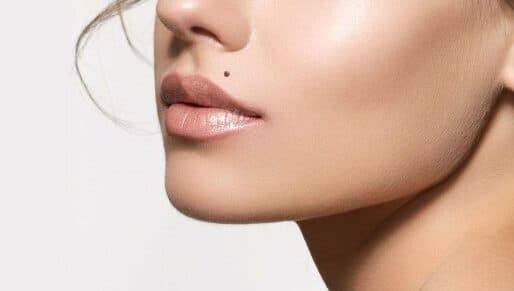
A cosmetic beauty spot works by implanting medical-grade pigment into the skin at a single agreed point, using a single-use sterile needle after the area has been numbed. The position is drawn on and checked with you in a mirror before any pigment goes in, and the shade is matched against your own undertone. The colour then darkens, flakes and settles over one to two weeks.
That sequence is the whole procedure, and the ordering of it is deliberate. Almost everything that decides whether a Beauty Spot reads as a feature you were born with or as a dot somebody applied happens before the needle is used. The placement itself takes minutes. The consultation, the mirror check and the shade match are where the result is actually made.
How is a beauty spot actually placed?
There are four stages, and only one of them involves a needle.
The first is consultation and shade matching. Skin tone and undertone are assessed, and a pigment shade is chosen against your own skin rather than off a generic chart. The second is marking: the intended spot is drawn on and checked with you in a mirror, from several angles, until you are happy with it. The third is placement — after numbing, pigment is implanted at the agreed point with a single-use sterile needle. The fourth is healing and review, where aftercare is given, the colour settles over one to two weeks, and the mark is looked at again once it has finished changing.
Because pigment is being implanted into skin rather than sitting on top of it, this is a clinical procedure rather than a cosmetic one. That is why it is done with single-use sterile needles, medical-grade pigment, and a doctor supervising — the same standard the clinic applies to semi-permanent makeup generally.
Why is the position marked and mirror-checked first?
Because position is most of the result, and it is the part that cannot easily be undone.
A beauty spot is a single point. There is no shape to soften, no gradient to blend, nothing to distract the eye from where it sits. A few millimetres higher or lower changes what the face reads as — and unlike the colour, which can be adjusted later, the location is fixed the moment pigment goes in.
That is why the mark is drawn on first and examined with you in a mirror from more than one angle rather than just head-on. Faces are not symmetrical and they are rarely seen straight on. A spot that looks right in a front-facing mirror can sit oddly in three-quarter profile, which is the angle most photos of you are actually taken from. Checking several angles before committing is the single cheapest thing you can do to like the outcome.
How is the shade chosen, and why does that decide whether it looks natural?
Pigment is selected against your undertone, not simply "dark".
This is the difference that most often separates a mark that reads as a natural feature from one that reads as applied. A generic dark shade — or one that runs too cool against warm skin — sits on the face like ink. A shade chosen against your own undertone sits in it. The technical work here is matching, not depositing, and it is the same colour-science logic that governs lip micropigmentation: Indian skin tones carry undertones that a one-size shade cannot serve.
Why does the colour go dark before it settles?
Because what you see in the first days is not the finished result.
Expect redness and slight swelling at the site for a day or so, which settles on its own. The colour then deepens before it lightens, and a small flake forms over the point as it heals. Under that flake the mark is still settling. When it comes away on its own, the shade underneath is lighter and softer than the one that alarmed you on day three.
This is also why picking matters more than it sounds like it should. Lifting the flake early lifts pigment out with it, and the mark heals patchy rather than solid — a cosmetic problem created entirely during the healing window, after the clinical part is finished.
Why does the doctor start lighter than I asked for?
Because the two directions are not equally reversible.
Colour settling lighter than expected is common, and it is deliberately allowed for. A doctor starts conservative because deepening a mark at the review appointment is straightforward, while lightening one afterwards is not. If you want it stronger once it has healed, that is a short second visit. If it has gone in too dark, there is no equivalent easy correction.
So a first result that looks slightly understated is usually the process working as intended, not an under-treatment. Judge it at review, once the colour has finished settling — not on day ten.
Why is it semi permanent rather than permanent?
The pigment softens gradually over time rather than staying fixed. How quickly depends on your skin type, your sun exposure and your skincare, which is why two people can leave on the same day and need refreshing months apart. In Bangalore, where the sun is a year-round constant rather than a seasonal one, that fade is worth planning around; many patients simply have the mark refreshed periodically.
The fade also functions as a safety net of sorts. Because it is semi permanent, a spot you tire of will soften on its own. Removal options do exist, but they are not straightforward, so the honest advice is to be certain at the marking stage rather than to rely on reversing it later.
What should I watch for while it heals?
Redness, slight swelling, darkening and a small flake are all expected. What is not expected is spreading redness, increasing pain, or any discharge from the site — allergic reaction and infection are uncommon with medical-grade pigment and sterile technique, but if you see any of those, contact the clinic promptly rather than waiting for the next review.
The procedure is also not advised during pregnancy or breastfeeding, over an active skin infection or inflamed skin at the site, or for anyone prone to keloid scarring. That assessment happens at consultation, before anything is booked.
One clarification worth making, because it comes up often: this is not mole removal. A beauty spot creates a cosmetic mark with pigment. Removing an existing mole or skin tag is a different procedure altogether, and it needs the lesion examined by a doctor first.
If you want to talk through position, shade and whether it suits your skin, a consultation is ₹500, waived against treatment — book an appointment and bring a photo of where you have been drawing it on.