
What Changes the Cost of Anti-Dandruff Treatment in India
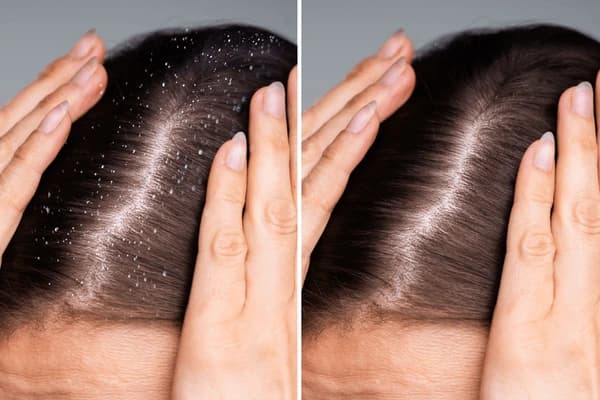
What you pay to treat dandruff in India is decided less by the shampoo than by what is causing the flaking. Seborrhoeic dermatitis, fungal overgrowth, scalp psoriasis and simple dryness all look similar on the shoulders of a dark shirt, and each is treated differently. The diagnosis sets the plan, and the plan sets how many clinic sessions, how much prescribed home care and how long maintenance runs.
Which is why a friend's quote is not a useful benchmark for yours. Below is what actually moves the number.
Why does the same complaint get priced so differently?
Because "dandruff" is a description of a symptom, not a diagnosis.
Flaking, itching and an oily scalp have several possible causes, and they are managed with different active ingredients, at different strengths, for different lengths of time. A clinic that quotes you a package before looking at your scalp is pricing a guess. At an anti-dandruff treatment here the first step is a scalp examination with a doctor, and everything downstream — including the cost — follows from what that examination finds.
This is also where a lot of money gets wasted before anyone reaches a clinic. Cycling through supermarket shampoos for a year is not free; it is just paid in instalments, with no diagnosis at the end of it.
Driver one: what is actually causing the flaking
The single biggest variable, and the one that cannot be shortcut.
Your doctor tells seborrhoeic dermatitis, fungal overgrowth, scalp psoriasis and dryness apart before prescribing, because a treatment aimed at the wrong one of those will fail politely — it will seem to help for a fortnight and then stop. If a routine has to be tried, abandoned and replaced, the cost is the sum of all the attempts.
A short examination that gets it right the first time is generally the cheaper path, even though it looks like an added line on the bill.
Driver two: whether you need in-clinic sessions at all
Not every plan includes them.
The pathway here is a diagnosis-led prescription — a medicated shampoo and topical routine with clear frequency instructions — and then, where needed, in-clinic scalp sessions that combine cleansing, a medicated application and gentle removal of loose flakes. "Where needed" is doing real work in that sentence. A mild, recently-started flare and a scalp that has been scratched raw for two years are not the same job.
An in-clinic scalp session runs around 30 to 45 minutes, with no downtime, so it is an appointment rather than a day off work.
Driver three: how long the course runs
The typical shape here is a short in-clinic course plus prescribed home care, and where you sit within "short" depends on how the scalp responds.
Itching often eases first, within the first week or two. Visible flaking usually takes a few weeks to settle. Your doctor reviews the scalp during that period and adjusts the routine rather than leaving you on the same regimen indefinitely — which means the course length is a clinical decision made as it goes, not a number fixed at the start.
That is genuinely inconvenient for budgeting, and pretending otherwise is how patients end up feeling the goalposts moved. The honest version is that you are quoted a plan and reviewed against it.
Driver four: the prescribed home routine
The line item people forget.
Clinic scalp treatments do the heavy work; the routine you follow at home between visits is what stops it returning. Prescribed medicated shampoos and topicals are a real, recurring cost, and they are typically bought at a pharmacy rather than billed by the clinic — so a quote for "the treatment" may not include them.
It is worth asking explicitly what your prescription is expected to cost each month, because that figure often outlives the clinic course.
Driver five: maintenance, because it comes back
Most dandruff is a chronic, relapsing condition rather than a one-off infection. Treatment settles a flare; a maintenance routine is what keeps it settled. Stopping everything the moment the flaking clears is the most common reason it returns.
So the useful question is not "what does a course cost" but "what does a year look like". After the flare settles, the scalp is reassessed and the routine is stepped down to a maintenance plan — usually less intensive, and less expensive, than the active phase. Anyone comparing quotes should compare the maintenance plan as carefully as the course.
Driver six: who is performing it, and under whose supervision
A salon scalp treatment and a doctor-led one are different products with different prices, and the difference is not the massage.
What you are paying for in a medical setting is the diagnosis, the choice of active ingredient, its strength and frequency, and the review that adjusts it. Treatment here is carried out under medical supervision. Over-the-counter and salon options cover a general case, which is exactly why they often help briefly and then stop working.
Whether that premium is worth it depends on how many general-case attempts you have already paid for.
Driver seven: whether hair fall is in the picture too
Very often it is, and it changes the plan.
Persistent scalp inflammation and heavy scratching can contribute to shedding, and an inflamed, flaking scalp limits what any hair fall treatment can achieve — which is why settling the scalp is often the first step before regrowth therapies are started. That said, hair fall usually has its own separate cause, which your doctor assesses rather than assumes.
Practically, that means two possible costs rather than one: the scalp plan, and whatever the hair fall assessment concludes is needed. Some plans also include supporting scalp therapy such as high-frequency treatment, which is most often combined with a wider hair fall or dandruff plan rather than used on its own.
Does the city you live in change the price?
Some, and for unglamorous reasons: clinic overheads, doctor time and how much of the work is done by a doctor rather than delegated. A metro clinic with a dermatologist doing the examination is not priced like a neighbourhood salon offering a scalp spa, and the two are not the same service.
What a city does not change is the mechanism. Wherever you are treated, the cost is still driven by cause, course length, home care and maintenance — so compare those four things between quotes rather than the headline number.
In Bangalore specifically, patients very often arrive having already decided the water or the weather is to blame. It may or may not be relevant to your scalp; the examination is what settles it, and it is worth resisting the urge to buy a treatment for a cause nobody has confirmed yet.
What is included, and what is billed separately
Ask any clinic to split a quote into these four, and comparison becomes possible:
- The consultation and examination. Here that is ₹500, waived against treatment.
- In-clinic sessions, if your plan needs them — how many, and over what period.
- Prescribed products for home use, usually bought separately.
- Review appointments, and what happens if the routine needs changing.
A quote that collapses all four into one figure is not necessarily more expensive, but it is harder to hold anyone to.
What can honestly be quoted in advance?
Not a total, and any clinic offering one before examining your scalp is guessing at the cause.
What can be committed to before you spend anything is the first step: a doctor looks at your scalp, tells you which of the several possible causes you actually have, and prices the plan for that cause — including the home routine and what maintenance will look like once the flare has settled. The consultation is ₹500, waived against treatment, so the diagnosis is not a separate expense if you go ahead.
If medicated shampoos keep working for a fortnight and then failing, that is usually the signal that the cause has never been identified rather than that you need a stronger shampoo.
Book a consultation and get the plan — and the price of it — built around what is actually on your scalp.