
Borewell Water, Scalp Irritation and Dandruff in Bangalore
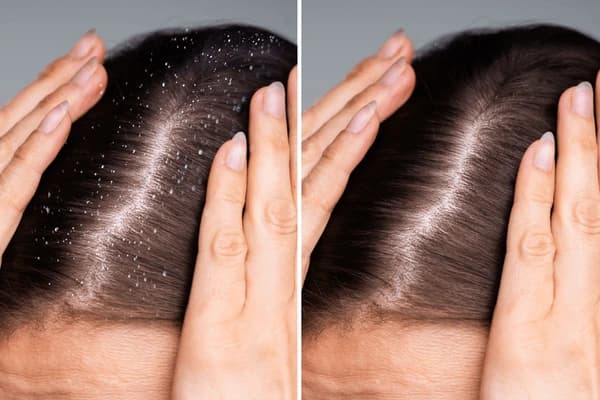
Hard borewell water can leave the scalp feeling tight, coated and itchy, and it makes shampoo harder to lather and harder to rinse away — but it does not by itself create dandruff. Flaking has its own medical causes: seborrhoeic dermatitis, fungal overgrowth, scalp psoriasis and simple dryness all look alike on the shoulder of a dark shirt, and each is treated differently. A doctor examines the scalp before anything is prescribed.
That distinction matters more in this city than in most, because the water story here is so easy to believe. If you have moved into a flat in Bellandur, Sarjapur Road, Whitefield or one of the outer layouts where piped Cauvery supply does not reach, your building probably runs on a borewell, a tanker, or some alternating combination of the two. The change is abrupt, it is noticeable in the first shower, and when the itching starts a fortnight later the timeline writes its own conclusion. The trouble is that the conclusion is untestable at home — and while you are testing shower filters, the thing that actually needs a prescription goes untreated.
Does hard water cause dandruff?
Not on its own. What hard water does is mechanical and it is about the wash, not about the biology of flaking. Water carrying a high mineral load does not lather well, so most people compensate by using more shampoo and scrubbing harder. It also leaves a residue behind that plain rinsing does not fully clear, which is why hair can feel coated and slightly stiff after drying even when it is clean. On a scalp that is already irritated, a harder scrub and a stubborn residue are not neutral — they are exactly the sort of thing that keeps an itch going.
But an itch that is kept going is not the same as an itch that was started. The flaking conditions that bring people to a clinic — seborrhoeic dermatitis, fungal overgrowth, psoriasis of the scalp, and straightforward dryness — are their own problems, and they arrive on their own schedule. They also present almost identically to each other, which is the real reason self-diagnosis fails here. Two people with the same visible flakes can need two completely different prescriptions.
Why does the water theory sound so convincing?
Because it explains one part of what you are noticing very well. Hard water genuinely changes how hair feels: rougher, harder to comb, flatter by evening, less responsive to the same products that worked in your home city. That much is real and you are not imagining it.
What it does not explain is a scalp that itches constantly, flakes that return within a fortnight of every medicated shampoo, or an oily, inflamed scalp that gets worse the more you scratch it. Those are the symptoms our Anti-Dandruff Treatment consultation exists to sort out, and the sorting has to come first. Getting the cause identified rather than guessed is the entire point of the first visit: a scalp examination, and then a prescription written for the cause that was actually found.
So will a shower filter fix it?
It may well make your hair feel better, and if your building's supply is harsh there is no argument against trying one. Treat it as a comfort measure, though, not as treatment. If the flaking and the itching persist after the water has been softened for a couple of months, the water was not the driver — and you will have spent those two months on the wrong problem.
The same caution applies to the shelf in the supermarket. Over-the-counter medicated shampoos are written for a general case, which is why they so often help for a fortnight and then stop working: the active ingredient may not be the one your particular cause needs, and the strength and frequency are not chosen for you. A doctor picks the active, the strength and the schedule against a diagnosis instead.
What does treatment actually involve?
Four stages, and the first one is not a product. Your doctor examines the scalp and the hair and identifies what is causing the flaking and itching. A medicated shampoo and topical routine is then prescribed for that specific cause, with clear instructions on how often to use it. Where it is needed, in-clinic scalp sessions combine cleansing, a medicated application and the gentle removal of loose flakes — around 30 to 45 minutes, with no downtime. Once the flare has settled, the scalp is reassessed and the routine is stepped down to a maintenance plan.
That last stage is the one people skip, and it is why dandruff so often comes back. Most dandruff is a chronic, relapsing condition rather than a one-off infection; treatment settles a flare, and the maintenance routine is what keeps it settled. Stopping everything the moment the flaking clears is the single most common reason it returns.
Consultation is ₹500, waived off against treatment, and everything is carried out under medical supervision. Where the scalp is oily or congested rather than dry, a short course of high-frequency therapy is sometimes sequenced alongside the topical routine — 15 to 20 minutes a session, no needles and nothing injected. It is a supporting part of a wider plan, not a treatment on its own.
Is the itching costing me hair?
It can contribute. Persistent scalp inflammation and heavy scratching are associated with shedding, and an inflamed, flaking scalp limits what any regrowth therapy can achieve — which is why settling the scalp is often the first step before anything else is started. That said, hair fall usually has its own separate cause, which is assessed rather than assumed. If the shedding is what actually worries you, that is a hair fall treatment question and deserves its own examination.
Bring it to the clinic sooner rather than later if the itch is constant, if scratching has broken the skin, if the flare is not responding to what you have been prescribed, or if the flaking is accompanied by soreness or noticeable shedding. None of those is an emergency, but all of them are signs that the routine needs reviewing rather than repeating.
Stop arguing with the water
Filter it if you like — but if your scalp has been itching through three brands of shampoo and two seasons, the water has had its turn. Book a consultation at The Aesthetic Edge, in Indiranagar or Bellandur, and have the scalp looked at properly, so what you go home with is a diagnosis and a routine rather than another bottle.