
Scalp Care as Skincare: The Korea Trend, Assessed for Indian Hair
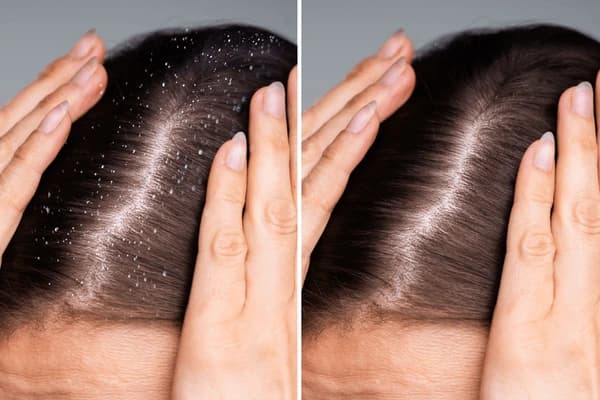
Treating the scalp as skin is a sound instinct and an incomplete plan. The habit it encourages — noticing the scalp rather than only the hair growing out of it — is useful. What it cannot do is tell you which of several conditions is causing your flaking, and buying a scalp serum for the wrong one is why so many routines work for a fortnight and then stop.
What is the trend actually asking you to do?
Roughly this: build the scalp a routine with the same structure as a facial one. A cleansing step. Something exfoliating. Something hydrating. Something soothing. Applied on a schedule rather than when a problem appears.
It came out of Korean beauty, where the shelf logic of skincare — a step for every function — was extended upward from the face, and it travelled here through the same channels every other routine does. Products now exist for categories that did not have a name five years ago.
Underneath the packaging, the claim being made is a reasonable one. The scalp is skin. It has the same oil glands, the same barrier, the same capacity to get irritated. Ignoring it entirely and then wondering why the hair looks flat is a real gap in a lot of routines.
Is the skin comparison a good one?
Up to a point, and the point is worth knowing.
Where it holds: an irritated scalp behaves like irritated skin. Scratching damages it and worsens the cycle, which is why calming the itch is treated as part of a plan rather than an afterthought. Leaving it alone until it settles is not a strategy; the itch is what keeps the damage going.
Where it stops holding: on your face, most people can tell dryness from breakouts from a rash, and the visual feedback is immediate. On the scalp, the symptoms collapse into one appearance. Flaking, itching and an oily scalp are symptoms with several possible causes — seborrhoeic dermatitis, fungal overgrowth, scalp psoriasis and simple dryness all look similar under hair, and each is treated differently.
A routine cannot make that distinction. Neither can you, in a mirror, through hair. That is the specific limitation the trend does not advertise.
So why does a good routine stop working after two weeks?
This is the most common story that walks into the clinic, and it is a clue rather than a failure of willpower.
Over-the-counter products cover a general case. They are formulated for the average scalp, which is why they often help briefly — enough to feel like the right purchase — and then stop. If your flaking has a specific cause and the product is only glancing at it, you get a fortnight of improvement and a return.
Cycling to the next product repeats the experiment with a different label. The useful reading of "it worked and then stopped" is not that you need a stronger version of the same thing. It is that nobody has established what you are treating.
What does the flaking usually turn out to be?
One of a handful of conditions that a doctor tells apart by examining the scalp — which is the first step of an anti-dandruff treatment here, before anything is prescribed.
Once the cause is named, the treatment changes shape: a medicated shampoo and topical routine is prescribed for that specific cause, with clear frequency instructions, at a strength a doctor has chosen rather than one a shelf offered. Where it is needed, in-clinic sessions combine cleansing, a medicated application and gentle removal of loose flakes — around 30 to 45 minutes, with no downtime.
Two things patients are usually relieved to hear. It is not contagious: common dandruff is a reaction of your own scalp rather than something passed between people. And the in-clinic treatment is topical, not injectable, so it does not hurt — though an actively inflamed or scratched scalp can feel tender during cleansing, in which case say so and the approach is adjusted.
Does the Indian hair routine already do some of this?
In parts, and it predates the trend by a considerable margin.
Oiling, scalp massage and a weekly wash day are all scalp-directed habits, not hair-directed ones. Anyone raised on them has been "treating the scalp as skin" for years without a product category to describe it. That is worth saying, because the trend is often sold as an entirely new idea being introduced to a market that had nothing.
What the imported routine adds is mostly vocabulary and a shelf. What it does not add is a diagnosis, which is the thing that was missing from the older routine too.
Is it the water, the helmet or the hair oil?
In Bangalore this is the question, usually asked with the answer already decided. The water is blamed most often, the helmet on a long commute second, and somebody's oiling habit third.
The honest position is that any of them might be relevant to your scalp and none of them is established as your cause by the fact that it is a common theory. Whether your routine is helping or hindering is a question for somebody who has looked at your scalp — and the examination is short. Buying a treatment for a cause nobody has confirmed is how the fortnight cycle starts.
There is one practical point that does not need a diagnosis: during an active flare it is better to hold off on colouring, and your doctor will tell you when it is reasonable to resume. Once the scalp has settled, styling generally resumes as normal.
What can a routine realistically achieve on its own?
Maintenance, which is not a small thing.
The structure that actually works is split: clinic scalp treatments do the heavy work, and the routine you follow at home between visits is what stops it returning. A home routine is genuinely load-bearing here — it is simply the second half of a plan rather than the whole of one.
What it cannot do on its own is settle a flare it was never designed for, or substitute for identifying the cause. Expect the itching to ease first, usually within the first week or two, and visible flaking to take a few weeks. Anyone promising same-week clearance from a bottle is selling optimism.
When should I stop shopping and get the scalp looked at?
A reasonable threshold: when you are on your third product, when the flaking returns every time you stop, or when you have started avoiding dark clothes.
Two more reasons to bring it forward. Scratching that has become constant is damaging the scalp and feeding the cycle. And if hair fall is also on your mind, an inflamed, flaking scalp limits what any hair fall treatment can achieve — which is why settling the scalp is often the first step before regrowth therapies are started. Hair fall usually has its own separate cause, and a doctor assesses that rather than assuming the dandruff explains it.
What does a doctor-led plan look like?
Four stages, and only one of them involves a product recommendation.
The scalp is examined and the cause identified. A medicated shampoo and topical routine is prescribed for that cause, with frequency instructions. In-clinic sessions are added where they are needed. Then the scalp is reassessed once the flare has settled, and the routine is stepped down to a maintenance plan rather than left running at full strength indefinitely.
Some plans also include supporting scalp therapy such as high-frequency treatment, which is used alongside a wider hair fall or dandruff plan rather than on its own. The consultation is ₹500, waived against treatment.
The part of the trend worth keeping
Not the shelf. The assumption underneath it.
Most dandruff is a chronic, relapsing condition rather than a one-off infection. Treatment settles a flare; a maintenance routine is what keeps it settled, and stopping everything the moment the flaking clears is the single most common reason it comes back. That is precisely the mindset skincare already trains — ongoing care rather than crisis response — and applying it to the scalp is the genuinely good idea in all of this.
The correction is only about sequence. Get the cause established first, then build the routine around it, rather than building the routine and hoping it lands on the right one.
Book a consultation and start with the examination instead of the shelf.