
Oily, Itchy, Flaking Scalp: Why "It's Just Build-Up" Is a Guess
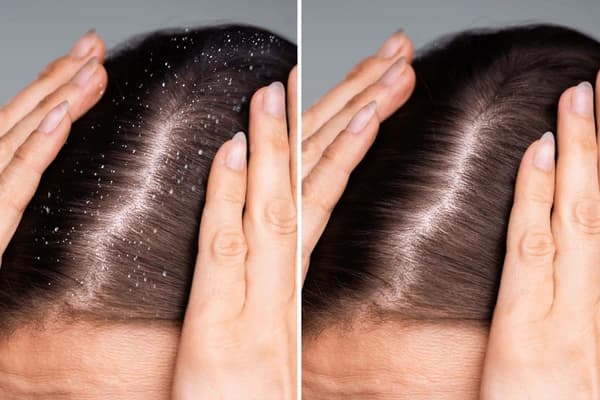
There is no reliable way to tell, from how your scalp feels, whether you are dealing with residue you could wash away or a condition that needs treating. Flaking, itching and an oily scalp are symptoms, and the documented causes — seborrhoeic dermatitis, fungal overgrowth, scalp psoriasis and simple dryness — look similar and are treated differently. Notice what is not on that list: "build-up" is a theory people arrive with, not a finding.
That is not a reason to feel foolish for having assumed it. It is a reason to stop spending months on a wash routine chosen for a cause nobody has established.
What does an oily, congested scalp actually point to?
To any of several things, which is exactly the problem. An oily scalp is one of the presenting symptoms of the picture that anti-dandruff treatment is built to sort out, and a doctor examines your scalp before anything is prescribed.
The practical distinction worth understanding is between a symptom and a diagnosis. Oiliness, flaking and itch are the symptoms. Which of the four causes is producing them is the diagnosis, and it changes the prescription entirely — a fungal overgrowth and scalp psoriasis are not the same problem treated at different strengths, they are different problems.
It follows that the thing to bring to a first appointment is a description, not a conclusion. When did it start, does it flare in a particular season, is it confined to the scalp or does it appear behind your ears or at your hairline, and what have you already tried and for how long.
Is it worth changing my wash routine first?
Home care genuinely matters — but a routine chosen without knowing the cause is still guesswork, and that is the part worth being clear-eyed about.
Here is how the clinic's own model actually splits the work: in-clinic scalp sessions do the heavy work, and the routine you follow at home between visits is what stops it returning. Home care is not an afterthought in that plan, it is half of it. The difference is that the products are chosen for what you have.
That also explains the experience almost everyone reports with shop-bought medicated shampoos. A doctor identifies which cause you actually have and prescribes an active ingredient, a strength and a frequency for it. Over-the-counter shampoos cover a general case — which is why they often help briefly and then stop working. If you have been cycling through bottles and each new one works for a fortnight, that pattern is information: it suggests you have been treating a general case rather than yours.
One local aside, because it comes up in almost every consultation here. If you oil your hair weekly, or you are showering twice a day through a humid stretch, or you spend the commute under a helmet in Bangalore traffic and your scalp is damp for an hour at a time — say all of that out loud at the appointment. Not because any of it is a diagnosis, but because it is the sort of detail that shapes what a workable routine looks like for you rather than in the abstract.
Why is the itching treated separately from the flaking?
Because scratching does its own damage, and it drives the cycle rather than relieving it. Calming the irritation is treated as part of the plan and not as an afterthought.
This is worth naming because patients tend to under-report it. Flaking is what people book an appointment about, since it is visible on a dark shirt. Itching is what they mention on the way out. If the itch is what is actually disrupting your sleep or your workday, lead with that — it is a treatment target in its own right, not a side complaint.
Does my scalp need sorting before hair fall treatment?
Often, yes, and this is the point most likely to change the order you do things in. An inflamed, flaking scalp limits what any hair fall treatment can achieve, which is why sorting the scalp is frequently the first step before regrowth therapies are started.
If you came looking for something for shedding and leave with a scalp plan first, that is not being fobbed off. It is sequencing. Starting a regrowth course on an inflamed scalp spends your money against a handicap you could have removed first.
On the related question people ask in the same breath: persistent scalp inflammation and heavy scratching can contribute to shedding, and an inflamed scalp limits what regrowth treatment can do. But hair fall usually has its own separate cause, which a doctor assesses rather than assumes. Treating the dandruff is not a substitute for finding out why you are shedding.
Where does high-frequency therapy fit?
Hair High-Frequency Treatment passes a low-current, high-frequency electrical current over the scalp through a glass electrode. It is used to support scalp circulation and condition, and it is most often combined with a wider hair fall or dandruff plan rather than used on its own.
Two reasons it comes up specifically for the oily, congested scalp this post is about. The current has an antibacterial action, which is why it is often paired with treatment for an oily, flaky or breakout-prone scalp. And sessions are usually sequenced with topical scalp treatments, because the current can aid the penetration of what is applied afterwards — so it is doing work for the rest of the plan rather than standing alone.
Practically: around fifteen to twenty minutes, no needles, nothing injected, most patients feel only a gentle tingling or warmth, and no downtime. It is not suitable for everyone, and a doctor screens for the contraindications before a session is booked rather than after.
How long before it improves, and does it come back?
Itching often eases first, within the first week or two. Visible flaking usually takes a few weeks to settle. An in-clinic scalp session runs around thirty to forty-five minutes with no downtime, and the usual shape is a short in-clinic course plus prescribed home care, with the scalp reviewed and the routine adjusted rather than left running indefinitely.
As for recurrence: most dandruff is a chronic, relapsing condition rather than a one-off infection. Treatment settles a flare; a maintenance routine is what keeps it settled. Stopping everything the moment the flaking clears is the most common reason it comes back — so you should leave with a maintenance plan, not only a course that ends. If nobody has given you one, ask for it.
That is the honest shape of this: not a fix, but a condition managed well, with the treatment matched to what you actually have.
If your scalp is oily, itching or flaking and you would rather know which of the four causes you are dealing with than keep guessing at it, book a consultation at our Bellandur or Indiranagar clinic. Bring the list of what you have already tried — it genuinely shortens the conversation.