
Dandruff & an Itchy Scalp: What Actually Works, and What Only Sounds Like It Does
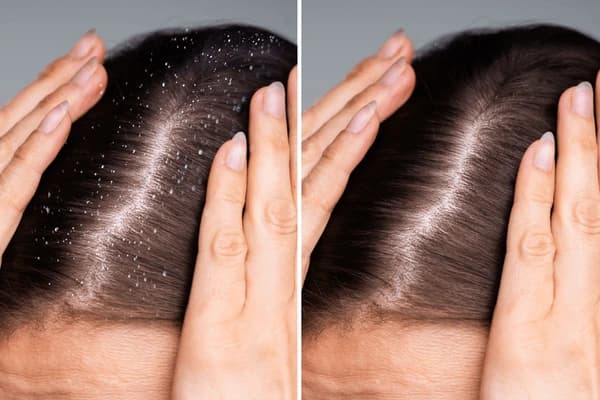
A flaking, itching scalp settles when the specific condition behind it is treated — and there are four common candidates that look almost identical: seborrhoeic dermatitis, fungal overgrowth, scalp psoriasis and plain dryness. What reliably disappoints is cycling through supermarket shampoos, scrubbing harder, and stopping the moment the flakes clear. What works is a diagnosis first, then an active chosen for it.
Nothing on this page can tell you which of the four you have. It can tell you which questions decide the answer, why the shelf keeps failing you, and what an honest plan looks like once someone has actually examined your scalp.
Why does it always come back after a fortnight?
Because two different things are usually happening at once, and the shelf only addresses one of them by accident.
The first is a matching problem. Over-the-counter medicated shampoos are formulated for a general case — a reasonable guess at the average scalp. If the active ingredient in the bottle happens to suit the condition you actually have, it works; if it does not, you get a brief improvement from the wash itself and then nothing. That is why the pattern is so consistent: a fortnight of progress, then a return to where you started, then a new bottle.
The second is that most dandruff is a chronic, relapsing condition rather than a one-off infection. Treatment settles a flare. What keeps it settled is a maintenance routine afterwards. Stopping everything the day the flakes disappear is the single most common reason they come back — and it is routinely mistaken for the treatment having failed, when in fact it worked and was then withdrawn.
What actually causes flaking and itching?
Four things, commonly, and they are treated differently from one another:
Seborrhoeic dermatitis. The classic presentation people call dandruff — flaking with an oily, inflamed scalp underneath, often itchy, often worse in patches rather than evenly across the head.
Fungal overgrowth. Not something you caught from anyone. Common dandruff is not passed from person to person; it is a reaction of your own scalp, which is why treatment is aimed at the scalp rather than at avoiding contact.
Scalp psoriasis. Produces flaking that can look like severe dandruff to anyone but a doctor, and needs a quite different approach.
Simple dryness. The least dramatic cause and the one most often over-treated — a dry scalp responds badly to the harsh, frequent washing people reach for when they think they have dandruff.
Notice how much overlap there is in what you can actually see. Flakes on a dark shirt look the same in all four. That is the whole reason Anti-Dandruff Treatment at our clinics begins with an examination rather than a product: your doctor tells the four apart before anything is prescribed, so the active ingredient, its strength and its frequency are chosen against what you have rather than against the average.
What only sounds like it works?
Scrubbing harder. The most understandable instinct and the most counterproductive. Scratching damages the scalp and worsens the cycle, which is why calming the irritation is treated as part of the plan and not as an afterthought.
Washing less to "let the oils balance". An oily, inflamed scalp does not settle by being left alone, and a dry one does not benefit from a longer gap between washes either. Frequency should follow a diagnosis, not a theory.
Heavy oiling before a wash. Comforting, and it does temporarily flatten visible flakes. On a scalp that is already oily and inflamed it is more likely to sit on the problem than to help it.
Switching brands every month. This is the loop most people arrive in. Each new bottle gets a fortnight of apparent success, which is roughly how long the wash-and-novelty effect lasts, and the underlying condition is never addressed by any of them.
Blaming the water and stopping there. Hard water genuinely changes how hair feels and can aggravate an already irritated scalp. It is one contributing factor among several — not a diagnosis, and not a reason to postpone getting the scalp looked at.
What does an in-clinic plan actually consist of?
Four stages, and the order is the point.
It begins with a scalp examination — your doctor looks at the scalp and hair and identifies what is causing the flaking and the itching. That leads to a diagnosis-led prescription: a medicated shampoo and topical routine for that specific cause, with clear instructions on frequency, rather than a general-purpose product used whenever you remember.
Where it is needed, in-clinic scalp sessions combine cleansing, a medicated application and the gentle removal of loose flakes. These run around 30 to 45 minutes with no downtime, and they are topical rather than injectable — an actively inflamed or scratched scalp can feel tender during cleansing, and the approach is adjusted if you say so. Where the scalp is oily or congested, a short course of high-frequency therapy is sometimes sequenced alongside: 15 to 20 minutes, no needles, nothing injected, and used as part of a wider plan rather than on its own.
Finally, review and maintenance. Once the flare settles, the scalp is reassessed and the routine is stepped down to something sustainable. You leave with a plan for recurrence, not only a course that ends. Consultation is ₹500, waived off against treatment, and everything is done under medical supervision.
How soon should I expect a difference?
Itching usually eases first, often within the first week or two. Visible flaking generally takes a few weeks to settle. The scalp is then reviewed and the routine adjusted, rather than being left to run on the same regimen indefinitely — and if colouring or styling matters to you, that is usually possible again once the scalp has settled, though it is better to wait through an active flare.
Two other things worth knowing. Persistent inflammation and heavy scratching can contribute to shedding, and an inflamed scalp limits what any regrowth treatment can achieve — which is why settling the scalp is often the first step before hair fall therapies are started. But hair fall usually has its own separate cause, and a doctor assesses that rather than assuming the dandruff explains it.
Contact the clinic sooner if the itch is constant, if scratching has broken the skin, if a prescribed routine has stopped working, or if flaking comes with soreness or noticeable shedding. Those are signs that the plan needs reviewing, not that you need another bottle.
Get it identified rather than guessed
If you have been through three shampoos and two seasons, the missing step is not a fourth shampoo. Book a consultation at The Aesthetic Edge in Indiranagar or Bellandur, and start with someone actually looking at your scalp.