
What Are Exosomes for Hair Loss, and Who Are They Actually For?
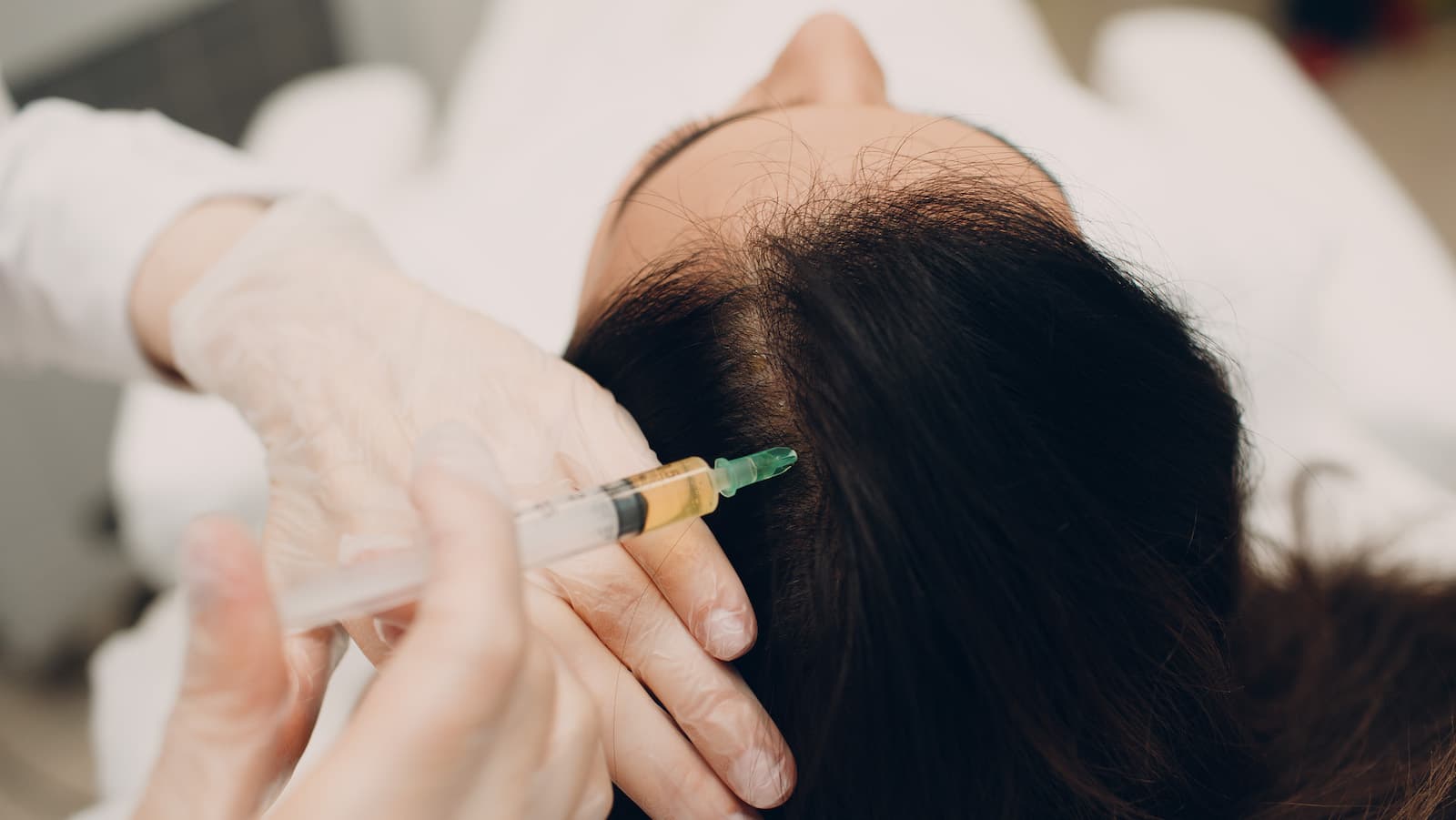
Exosomes are tiny vesicles that carry growth factors and signalling molecules between cells — messages, not cells themselves. In hair treatment, lab-prepared exosomes are delivered into the scalp through fine micro-injections to signal follicles that are thinning but still active. That single fact — that the treatment is a message rather than a transplanted material — is what separates it from almost everything else on a clinic's hair menu, and it is also what decides who it genuinely suits.
What is an exosome, in plain language?
Think of cells as talking to each other constantly. An exosome is one of the parcels they send: a membrane-wrapped bundle of growth factors and signalling molecules, small enough to slip between cells and be read by whatever receives it. Nobody is injecting stem cells into your scalp. What is being delivered is the instruction set those cells would normally send out.
The preparations used in Exosome Hair Treatment are made in a laboratory, most commonly from stem-cell culture lines, then processed and screened by their manufacturer. Because the source is a culture rather than your own body, there is no blood sample and no centrifuge step in the room. A session runs about 45 to 60 minutes including numbing time, and it is delivered through fine needles after anaesthetic cream — nothing surgical, and nothing to recover from afterwards.
That practical difference matters more than it sounds in a city like Bangalore. A treatment with no downtime is one you can take on a weekday and still get back across town for an afternoon at work, whether you are coming to the Indiranagar clinic between meetings or to Bellandur from the tech corridor. The appointment is the commitment; the recovery is not.
How is exosome treatment different from PRP or GFC?
Mechanically, the difference is where the material comes from and how concentrated it is.
PRP Hair Regrowth Treatment and GFC Hair Loss Treatment both begin with a sample of your own blood. It is processed in the clinic and returned to your scalp, so what goes back in is derived from you, at whatever concentration your own blood yields on the day. Exosomes skip that entirely. The preparation is lab-derived, so there is no draw, and the concentration of growth factors and signalling molecules is higher than a blood-derived preparation typically reaches.
The trade-off runs the other way, and it deserves saying plainly rather than being buried under marketing. PRP and GFC have been in clinical use for longer. The research base for exosomes is newer and still growing — promising, not settled. A clinic that presents exosomes as a straightforward upgrade over everything before it is overselling a genuinely interesting treatment.
Which of the three suits you is not something to decide from a webpage. It depends on your scalp, the stage of your thinning, and your own preferences — including whether you would rather avoid a blood draw altogether, which is a perfectly reasonable thing to weigh. That decision belongs in a consultation, after an assessment, not before one.
Who is a good candidate, and who is not?
Exosome signalling acts on follicles that are weakened but still active. That sentence contains the entire candidacy question.
If your hair is shedding more than it used to, your parting has widened, or density has thinned across the crown while the follicles are still producing hair — even fine, short, unconvincing hair — there is something present to signal. This applies to both men and women, and the earlier stages of thinning are where the approach makes most sense.
If an area has been completely bare for years, the follicles there are not waiting for a better instruction. No amount of signalling brings back what is no longer present, and a doctor who examines your scalp will tell you so at the assessment rather than after you have paid for a course. That honesty is the reason every course here starts with a scalp assessment by a doctor rather than a package quote.
Bangalore adds its own complications to the picture. Hard water, long commutes in dusty air, irregular sleep on tech-sector schedules, and the nutritional gaps that come with eating out five days a week all show up on the scalp. Some of what looks like patterned thinning is diffuse shedding with a cause that can be identified and addressed. Working that out is the point of the assessment — signalling a follicle that is struggling for an unrelated reason treats the symptom and leaves the cause running.
When will results actually show?
Reduced shedding is usually the first change patients notice, and it comes before anything visible in the mirror.
Visible density takes months, and the reason is simple biology rather than clinic caution: hair grows roughly a centimetre a month, whatever the follicle has been signalled with. Nothing changes that rate. This is why scalp photographs are taken before the first session and compared at a review around the three-month mark — so any change is measured against a baseline rather than recalled from memory, which is notoriously unreliable when you look at your own hair every day.
A typical course runs three to four sessions spaced around four weeks apart. The number is not fixed at the outset. The plan is reviewed against those baseline photographs at three months and adjusted from there, which sometimes means continuing, sometimes means changing approach, and occasionally means concluding that the response has not justified further sessions.
What to ask before you book anywhere
Three questions are worth asking any clinic offering this treatment. What specific product is being used, and who manufactures it? How is it sourced and screened? And who physically performs the injections?
At The Aesthetic Edge those answers are discussed openly at consultation, and every session is performed by a doctor. The consultation itself is ₹500, waived against treatment if you go ahead. Bring your questions about the evidence base in particular — a newer treatment deserves a franker conversation, not a vaguer one.
If thinning has been on your mind long enough that you are reading about vesicle biology on a Tuesday evening, that is usually a sign it is worth a proper look under a doctor's light rather than another six months of watching the drain. You can book an appointment at either the Indiranagar or the Bellandur clinic, and start with the assessment — not with a course.