
Tooth-Coloured Fillings vs Old Metal Fillings: What Changed
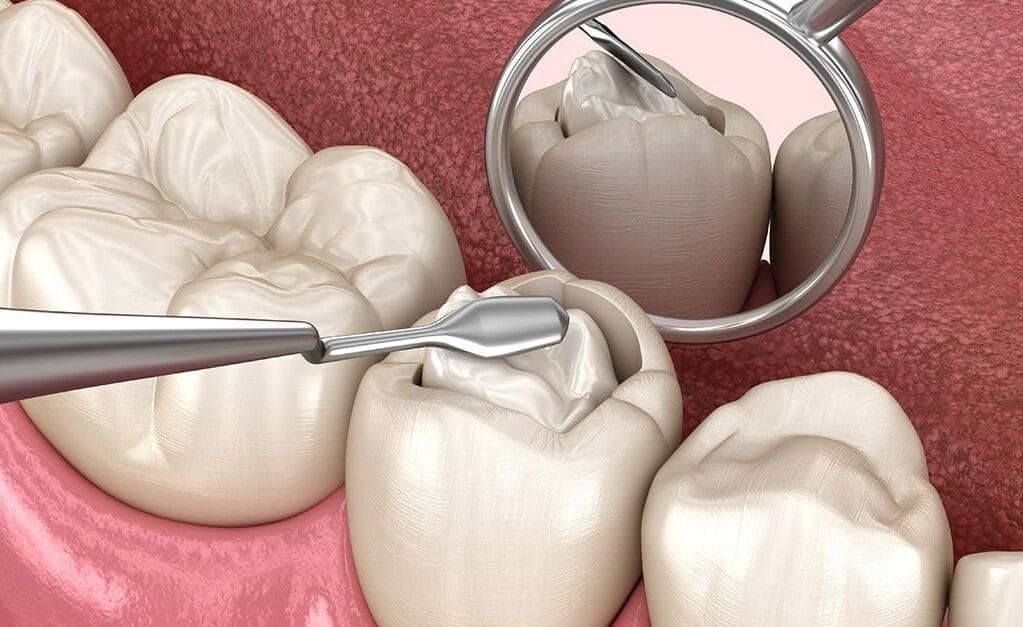
The headline difference is visibility and how the material attaches. Tooth-coloured composite resin is shade-matched to the surrounding enamel and bonded to the tooth, so a repaired tooth does not announce itself the way a metal filling does. Amalgam — the traditional silver material — is still one of the options a dentist may recommend, alongside composite and glass ionomer, with the choice driven by the size and position of the cavity rather than by fashion.
What has genuinely changed is that a repair no longer has to be visible. What has not changed is the purpose: a filling repairs a tooth damaged by decay or a fracture, and choosing the material is the last step of that job, not the first. Here is how Dental Fillings / Teeth Fillings work, how the materials compare, and the question most people are really asking — whether the old silver ones need to come out.
Should I replace my old metal fillings?
Not automatically. A filling that is intact and doing its job is not a problem waiting to happen, and the honest reasons to replace one are clinical: fillings last several years on average, varying with the material, where the tooth sits, how heavily you chew and how well you clean, and they are checked at routine appointments and replaced when they wear or leak. Wear and leakage are things a dentist finds by examining and sometimes imaging the tooth — not things you can judge from the mirror or from how old the filling is.
That leaves the other reason people ask: appearance. Wanting a visible silver filling in a tooth that shows when you laugh replaced with something invisible is a legitimate preference, and it is a cosmetic decision — which is fine, as long as it is named as one. The difference matters because every replacement involves removing the old material and some tooth structure with it. Where several front teeth are involved and the goal is largely how the smile looks, the conversation often belongs under a planned Smile Makeover rather than being done piecemeal, one filling at a time.
So the useful sequence is: get them assessed, find out whether any are actually failing, and then decide separately whether you want the still-sound ones changed for looks.
How do the materials actually compare?
Three are in regular use, and each is chosen for where it has to sit.
Composite resin is the usual choice. It is tooth-coloured and bonded in place rather than merely packed in, which is what allows a repair to disappear into the tooth. It sets immediately, so you can eat once the numbness wears off — no waiting period.
Glass ionomer is used in specific situations your dentist will explain when it applies.
Amalgam is the traditional silver material, and it remains on the list of options a dentist may recommend based on the size and position of the cavity.
The practical point is that the material is matched to the job. Fillings repair molars, premolars and front teeth, including chipped edges, with the material chosen to suit the position and the chewing forces there — a back molar taking heavy load and a chipped front edge are different engineering problems. What every option shares is the underlying principle: only the decayed tissue is removed, so the healthy part of the tooth is preserved and reinforced rather than the whole tooth being cut down.
What happens if I leave a cavity alone?
It gets more expensive, in every sense. Decay does not stop on its own — removing it and sealing the cavity prevents it reaching the pulp, which is the point at which a filling is no longer enough. A cavity caught early is a filling. The same cavity left alone becomes a Root Canal Treatment (RCT) and a crown, or an extraction. That escalation is the entire argument for treating it now, and it is why the appointment you keep postponing is the cheap one.
The complication is that early decay causes no symptoms, which is why routine check-ups find it and you usually cannot. Sensitivity, a dark spot, food catching in a tooth or a rough edge you keep touching with your tongue are all worth getting looked at — and in a Bangalore working week, "I'll deal with it next month" is how a twenty-minute appointment turns into a multi-visit one.
What is the appointment like?
Short. Usually one visit per tooth, performed by a dentist, always. Local anaesthesia is used where the cavity is deep or near the nerve, so the procedure itself should not be painful; small, shallow fillings can sometimes be done without it. With composite the material sets immediately, so there is no waiting period before you eat — just the numbness to wear off if anaesthesia was used. Beyond the repair itself, rebuilding the tooth's shape and biting surface means it takes load properly again, and food stops packing into the cavity — the thing that had been quietly annoying you at every meal.
Get them looked at before deciding
If you have old metal fillings and have been wondering whether they need doing, the answer starts with an examination rather than a decision. Book an appointment at The Aesthetic Edge — Indiranagar or Bellandur — and you will find out which fillings are genuinely worn or leaking, which are perfectly fine as they are, and what your options look like if you would still rather they were invisible.