
Aligner Timelines: How Your Dentist Arrives at a Number
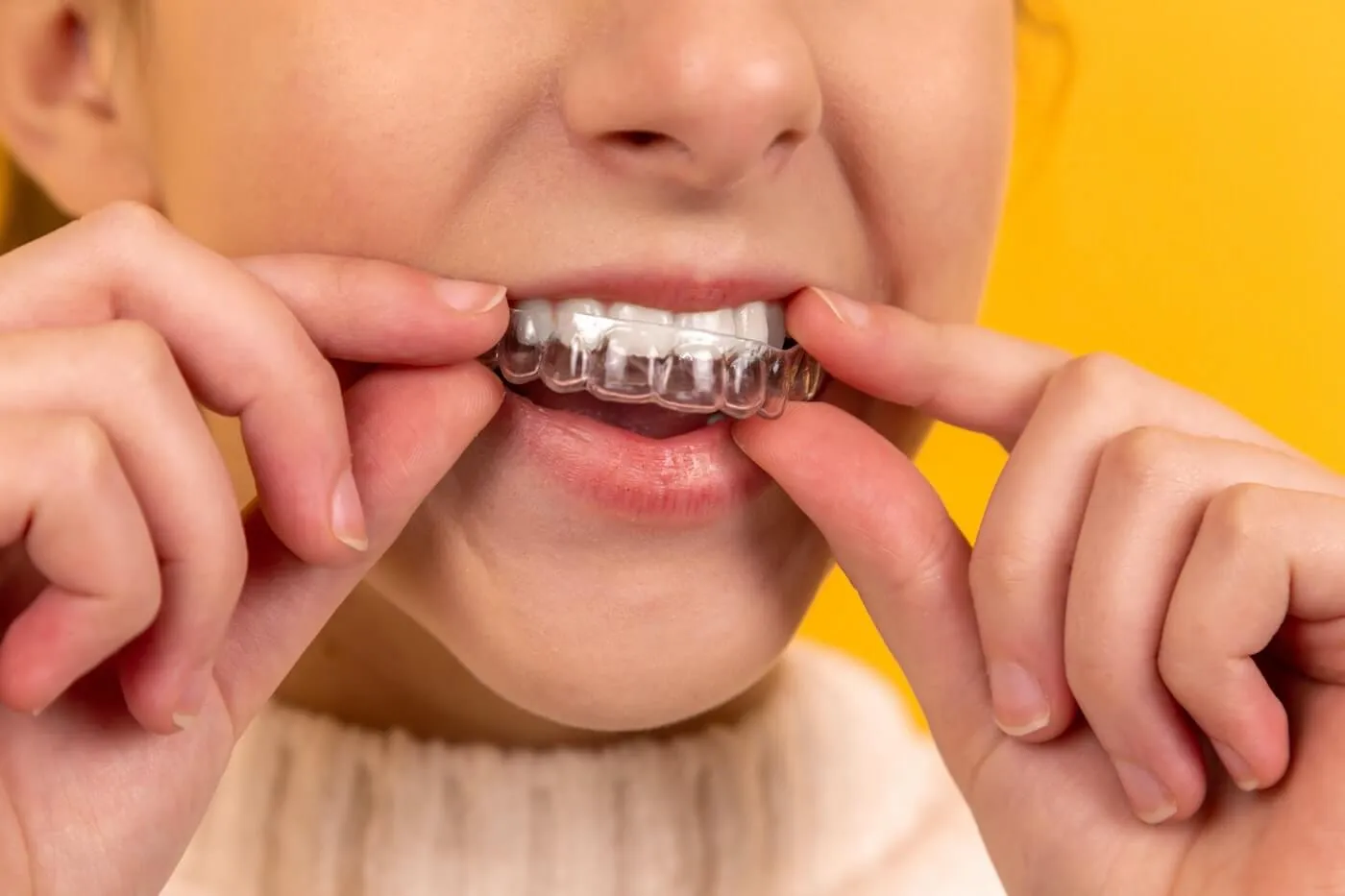
An aligner timeline is not read off the front of your teeth. It comes out of a planning appointment that measures how much movement is actually needed, how your teeth meet when your jaw closes, which appliance suits the case, and how consistently you are likely to wear the trays. For suitable cases aligner treatment runs roughly six to eighteen months; fixed braces are typically eighteen to thirty-six. The distance between those two ends of the range is where most of the confusion lives.
Which is why a friend with teeth that look much like yours can be quoted eight months while you are quoted sixteen — without either estimate being wrong.
Why do two similar-looking cases get different timelines?
Because crowding is the part you can see, and the bite is the part that decides the work. Braces and aligners both move teeth with steady, gentle pressure over months, and the amount of movement required is only one of the inputs.
Overbite, underbite, crossbite and open bite are bite problems rather than cosmetic ones — how the upper and lower teeth meet each other, not how the front ones line up in a mirror. Correcting them is different work from unwinding crowding, and it is invisible to you when you look at your own smile. Two arches can look comparably crooked and sit on completely different bites.
So when you compare quoted timelines with someone else, you are usually comparing two things you cannot see.
What is actually being measured at the planning appointment?
A full orthodontic examination: X-rays, photographs, and impressions or a digital scan, used to map your current tooth positions and your bite. The plan that follows sets out which appliance suits the case, the expected duration, and what the finished result should look like.
That is the sequence worth insisting on. The number comes after the mapping, not before it. If you have been given a duration by someone who has not examined you — from a photograph, over a chat, from a price list — that is a marketing estimate rather than a clinical one, and it is not the same thing at all.
Two things to take away from that appointment: the expected duration, and what the finished result is supposed to look like. Both should be stated, and both should be stated by a dentist.
Why might aligners take longer for my case — or not be offered at all?
Because the two appliances are not equally capable. Braces handle a wider range of complex movements; aligners are discreet, but they only work while they are actually in your mouth. Some cases can only be treated properly with fixed braces, and your dentist should tell you honestly if aligners are not suitable for yours.
This is where the decision often gets made backwards. People arrive having chosen aligners and hoping the case fits, when the order runs the other way: what needs correcting decides the appliance, not preference alone. A case pushed onto aligners because that is what was wanted can end up taking longer than braces would have, which is the opposite of the reason most people ask for them.
Worth asking directly: is my case one that aligners can finish, or one they can only partly address?
Does my own routine change the number?
Yes, and more than anything else on this list. Aligner trays are removable — taken out to eat and to brush — and they must be worn for most of the day to work. Each tray is worn for a week or two before the next one in the series, and the movement only happens while it is in.
That is a straightforwardly behavioural variable, and in this city it is worth being honest with yourself about it. If your week involves client lunches, chai with the team, and a long commute where you snack in the car, every one of those is a removal, and time out of the tray is time off the clock. People with otherwise identical cases finish months apart on wear time alone.
Nobody is going to police it. But the estimate you were given assumed a level of wear, and the plan is the honest place to say what your day actually looks like — before the timeline is set rather than after it has slipped.
Can the estimate change once treatment starts?
It can, and a good plan expects it to. Progress is reviewed throughout, and the plan is adjusted where teeth move differently than expected. Teeth are being moved through bone, and biology does not follow a spreadsheet uniformly.
Take that as reassurance rather than a warning. A dentist who revises a timeline at a review appointment is reading your actual progress; one who insists on the original number regardless is reading the sales document. The appointments themselves — regular adjustments for braces, tray changes and progress checks for aligners — are what make the revision possible.
And expect some soreness along the way: tenderness for a day or two after each new tray, and after braces are fitted or adjusted. It settles on its own.
Is the timeline the whole commitment?
No — and this is the part most often left out of the conversation. After treatment a retainer is needed to hold the result. Retainers are not optional; teeth drift back toward their old positions without them, and that is the single most common reason results are lost.
So when you are comparing "six months" against "sixteen", you are comparing the active phase only. The retainer is the part that runs afterwards, indefinitely, and it is worth knowing that before you pick a plan on duration alone.
One related point, since people often arrive with more than alignment on their list. If what bothers you is several things at once — the colour, a chip, a gap, a mismatched old crown — then alignment may be one component of a smile makeover rather than the whole answer. That is a plan combining several treatments, sequenced, and which treatments are involved is decided at assessment rather than in advance.
What to ask before you commit
Three questions, and the answers tell you how the estimate was built.
Ask what the examination showed about your bite, not just your crowding. Ask whether your case is one aligners can complete, and what the alternative is if not. And ask what wear time the estimate assumes — because that is the number you are being asked to deliver.
If you would like a timeline built from an actual examination rather than a comparison with someone else's teeth, book a consultation at our Bellandur or Indiranagar clinic. Ask for the expected duration and the expected result in the same conversation; they belong together.