
Tan and Uneven Skin Tone: What Actually Works, and What Only Sounds Like It Does
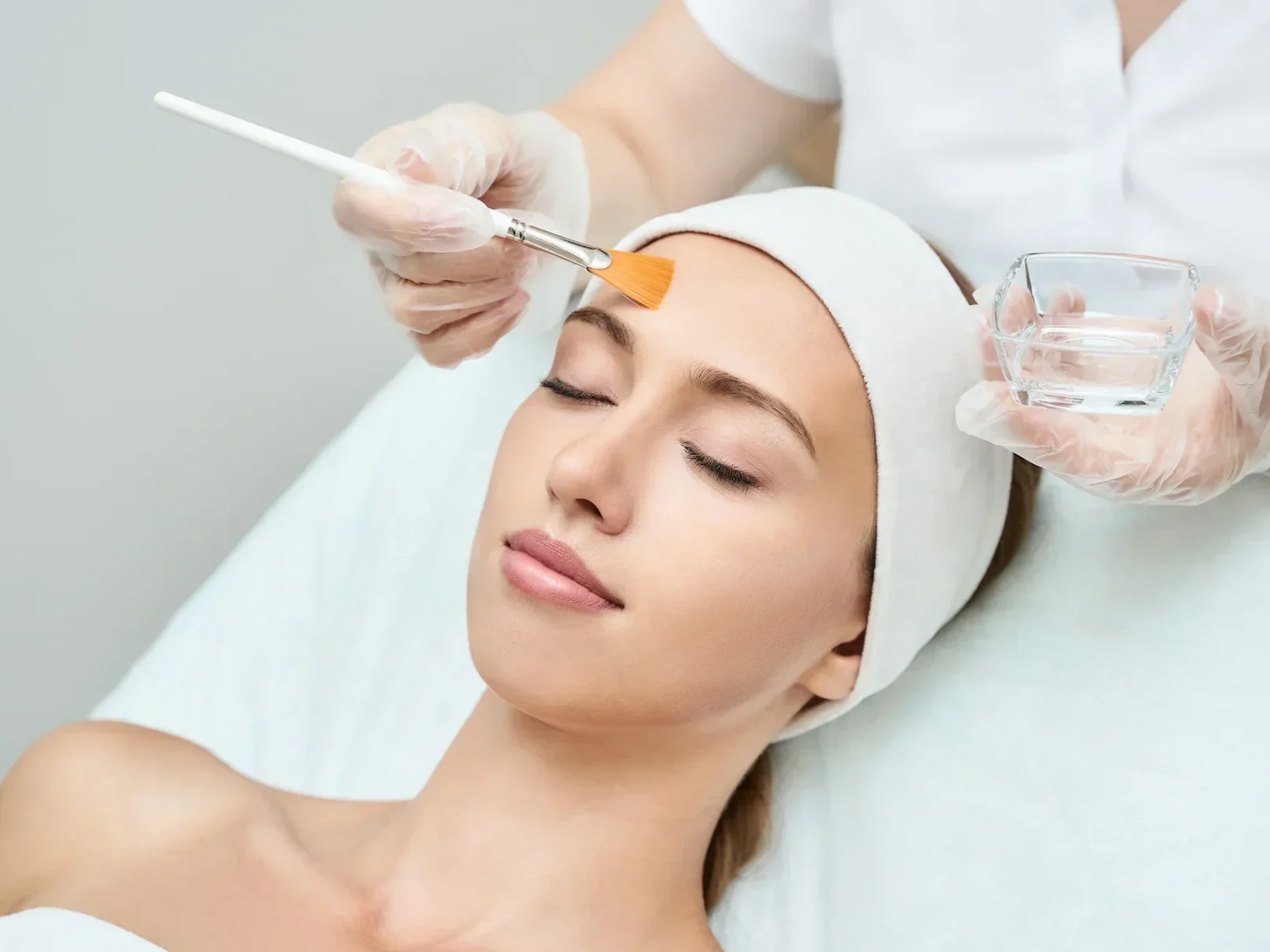
A tan is extra melanin your skin produced in response to ultraviolet light, so it fades slowly on its own and returns with the next exposure. Treatments that speed up surface turnover can shorten how long it hangs around, but none of them stop your skin making melanin again. Whatever you have done, daily sun protection is what decides whether the result holds.
That is the unglamorous version, and it is worth having straight before you start comparing treatments. What follows is a look at what "uneven tone" actually turns out to be, and which of those things respond to what.
Why does a tan look patchy rather than even?
Because the exposure was not even, and neither is the skin receiving it. The parts of your face that catch the most light — the forehead, the bridge of the nose, the tops of the cheeks — pick up more colour than the areas that sit in shade, and the difference is what reads as patchiness rather than a tan.
Layered on top of that, a lot of what people call unevenness is not tan at all. It can be flat marks left behind after breakouts, a dull surface scattering light badly, or oil and congestion changing how skin reflects. Those have different causes and different answers.
Working out which of them is on your face is not something an article can do, and it is not something a mirror is very good at either. It is the actual purpose of an examination.
Will a tan fade on its own?
Yes, gradually, as the pigmented cells at the surface are shed and replaced. That is the natural cycle running at its own pace.
The catch is arithmetic rather than biology. If your daily routine keeps putting you in strong light — a commute on two wheels, an outdoor lunch, a weekend match — you are topping the pigment up at roughly the rate you are losing it, and the tan appears permanent when it is really just being continuously renewed.
This is why sun protection is listed first here rather than last. It is not the finishing touch on a treatment plan; it is the thing that lets a treatment plan show a result at all.
What genuinely helps an uneven tone?
Approaches that either accelerate surface turnover or improve how the surface reflects light. Three worth knowing about, and they do different jobs:
A chemical peel applies a controlled solution that lifts spent surface cells so newer skin comes through. Because those cells carry pigment, tone and clarity improve as they go, and it is used particularly where skin looks sun-dulled. Flat marks left after acne respond over a course too. A chemical peel is a course rather than an event — superficial peels are usually repeated across a few months — and the depth is chosen by a doctor for your skin type after a patch test.
A Hydra Medi Facial cleanses and infuses the skin, exfoliates and then oxygenates so the actives absorb properly. Most patients see refined texture and a more even, radiant tone from the first session, which is why it is a common pre-event booking. It is honest about what it is: Hydra Medi Facial is a maintenance treatment rather than a corrective one, run about monthly, and it suits sensitive skin.
A carbon laser peel is aimed at a different cause. A carbon lotion is drawn into the pores and vaporised with a laser, lifting oil and debris out from inside the pore rather than off the surface. If what looks like unevenness to you is really shine and congestion — skin that turns oily within hours and pores that look enlarged because of it — then carbon laser is addressing the actual driver, and it has little to no recovery time.
Which of those is right for me?
That depends entirely on what is producing the appearance, which is why the three descriptions above are deliberately written as different jobs rather than ranked.
Broadly, and as a way to organise the question rather than answer it: dullness and sun-dulled tone point towards resurfacing; oiliness and congestion point towards deep pore cleansing; and wanting your skin to look even and fresh on a particular date points towards maintenance. Plenty of people have more than one of those going on.
Nothing here is a diagnosis, and no page can give you one. Bring the appearance that bothers you to an appointment and let the mechanism be matched to it.
Does a facial or a scrub fix a tan?
A scrub abrades the surface, which can make skin feel smoother briefly, and enthusiastic scrubbing on melanin-rich skin can irritate it — and irritated skin is skin that makes more pigment, not less. A salon facial cleanses, massages and hydrates, and skin that is well hydrated does look brighter, but that is a change in condition rather than in pigment.
The other thing worth naming plainly: no cream, treatment or course changes your natural skin colour, and any product promising to is selling something other than skincare. The realistic goal is your own tone, more evenly distributed and less dulled — not a different one.
Why does sun protection get the last word?
Because it is the only part of this that stops new pigment being produced, and everything else on the list only addresses pigment that already exists.
It matters more here than the seasonal framing most advice uses. In Bangalore the exposure is a year-round, everyday affair rather than something concentrated into a couple of months, and the ultraviolet that drives pigmentation is not stopped by cloud cover. A grey morning is not a day off.
It matters more still immediately after any resurfacing treatment. After a peel, skin needs to stay out of direct sunlight for about a week, with broad-spectrum sunscreen daily — and the treated area can look temporarily lighter or darker while it settles, with that daily protection being the main thing determining whether it evens out cleanly. Skipping it does not just waste the session; it can leave you further back than you started.
What does this cost, and where do I start?
Peels start from ₹2,999 per session, carbon laser from ₹2,999 per session, and Hydra Medi Facial from ₹2,999 per treatment — that last one includes a complimentary chemical peel with every session. What a plan comes to depends on which of these your skin actually needs and for how long, and that is settled after an assessment.
The consultation is ₹500, waived against treatment. If you want the appearance you have been looking at in the mirror sorted into its actual causes before you spend anything on it, book a consultation — and expect the sunscreen conversation, because it is the part that makes the rest worth paying for.