
Acne & Breakouts: What Actually Works, and What Only Sounds Like It Does
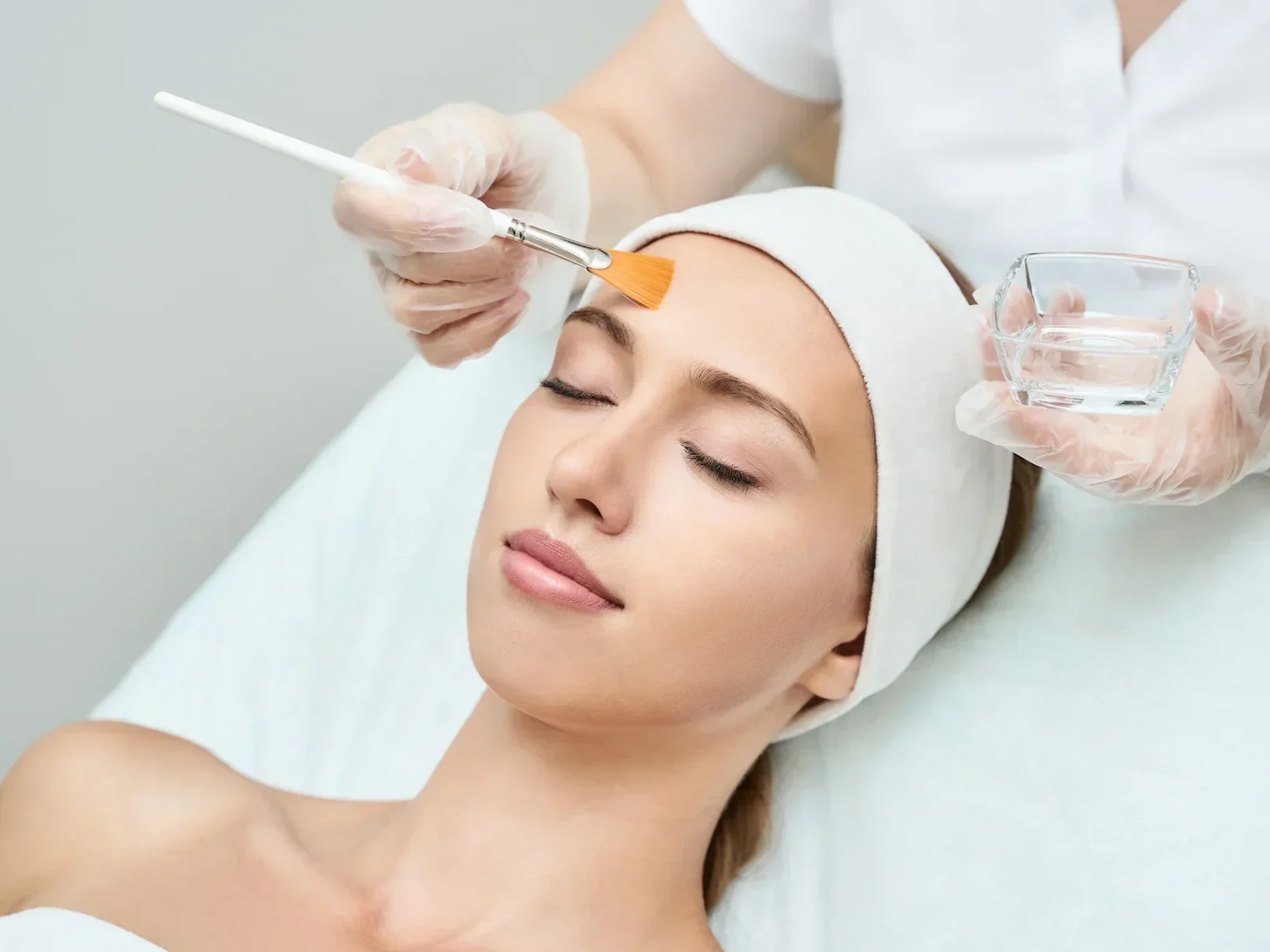
Breakouts improve when whatever is driving them is addressed, which is why a routine that transformed a friend's skin can do nothing for yours. In clinic, the approaches with real mechanisms behind them work on the same two things: the blocked pore lining and the oil sitting on and in it. What reliably disappoints is scrubbing harder, picking, and choosing a treatment by name before anyone has examined the skin.
Nothing on this page can tell you what your breakouts are. It can tell you which questions decide the answer, and what the honest options look like once someone has asked them.
Why do breakouts keep returning when nothing about my routine changed?
Because your routine is only one of the inputs, and usually not the loudest one. Skin that produces a lot of oil, pores whose lining is congested, hormonal patterns, friction, heat and humidity, and medication can all be in play — and several are commonly in play at once.
That is the unsatisfying part of breakout advice generally. A product review can tell you what a cleanser did for the reviewer. It cannot tell you whether your congestion is mostly an oil problem, mostly a lining problem, mostly something being managed medically already, or a pattern that only looks like acne. Those distinctions change the answer completely, and they are made by looking at skin, not by reading about it.
So take everything below as a description of the toolkit rather than a prescription for you.
Which in-clinic treatments genuinely target congestion?
Three, working by different mechanisms, and the choice between them is not interchangeable.
Keratolytic peels. Salicylic and similar peels clear the pore lining, which is what helps congested, oil-prone skin settle between sessions. A chemical peel also lifts the accumulated dead layer, so texture usually improves alongside. Superficial peels are repeated across a few months to build the effect; depth and solution are matched to your skin type after a patch test, never picked from a list.
Carbon laser. A carbon laser peel takes a different route: a carbon-based lotion is drawn down into the pore and then vaporised by the laser, carrying trapped oil, dead cells and debris out from the inside rather than off the top. Sessions run about 30 to 45 minutes, a course is typically four to six spaced a few weeks apart, and there is little to no recovery — mild redness usually gone within hours. Patients often see something after one session, which is why it gets booked before events.
Medical facials. A Hydra Medi Facial is maintenance rather than correction, and it is honest about that. It cleanses and infuses actives, exfoliates, then oxygenates so those actives absorb past the dead surface layer. The protocol has anti-inflammatory and anti-bacterial elements, which is why sensitive and breakout-prone skin usually tolerates it well. One session a month is the rhythm; there is nothing to recover from.
Which of the three, or which combination, depends on whether oiliness, congestion, sensitivity or the marks afterwards is your actual complaint.
Are the marks left behind the same problem as the breakout?
No, and confusing the two is one of the most common reasons people feel that nothing is working.
Flat brown or red patches left where a spot used to be are pigment. They sit in the surface, and peels are used for them across a course, lifting pigmented cells and encouraging turnover underneath so the marks read progressively lighter. True acne scarring is different — the shape of the skin has changed, not just its colour — and a peel on its own is not the usual answer there.
You can be doing everything right for the active breakouts and still see no movement in old marks for months, because those are two separate timelines running at once. Your doctor will tell you which of the two you have, which is worth knowing before you judge whether a course is working.
What only sounds like it works?
Four things come up almost every week in consultations.
Exfoliating harder at home. A very common opening line is that skin looks dull and rough no matter how much it is scrubbed. Mechanical scrubbing irritates without reaching the pore lining, and irritated skin in a person prone to marks is not a neutral outcome.
Picking. Whether it is an active spot or flaking after a treatment, this is the single behaviour that most reliably converts a temporary problem into a mark that outlasts it by months.
Buying a peel by name. A peel that is too strong for your skin type produces pigmentation instead of clearing it, and that risk rises with the amount of melanin the skin carries. Depth and solution are a medical decision, taken after an assessment and a patch test — not a menu item.
Assuming stronger means faster. A deeper treatment front-loads the downtime and widens the margin for error. It is the right answer when the concern needs it, and a poor trade when it does not.
Does any of this replace what my doctor has already prescribed?
It does not, and this is the point where a page has to stop being clever. If you are on isotretinoin or another acne treatment, that materially changes what can safely be done to your skin, and it is one of the histories that means a peel should wait. Pregnancy and breastfeeding, diabetes for certain peels, and recent cosmetic surgery sit in the same category.
None of that is visible in a photograph of your face, which is why the conversation happens before anything is chosen.
So where does someone actually start?
With an assessment, and with modest expectations of the first appointment. A doctor examines skin type, tone and texture, takes the history that decides what is safe, and patch tests before committing to a peel. Chemical peel sessions start from ₹2,999 per session; carbon laser from ₹2,999 per session; a Hydra Medi Facial from ₹2,999 per treatment. What a course adds up to depends on what your skin needs, which is settled after someone has seen it.
The consultation is ₹500, waived against treatment. If you have been cycling through products for a year without a clear idea of what you are treating, book a consultation — the useful outcome may well be being told which of these is not your problem.