
Radio-Frequency Cautery for Skin Tags and Moles: What the Procedure Involves
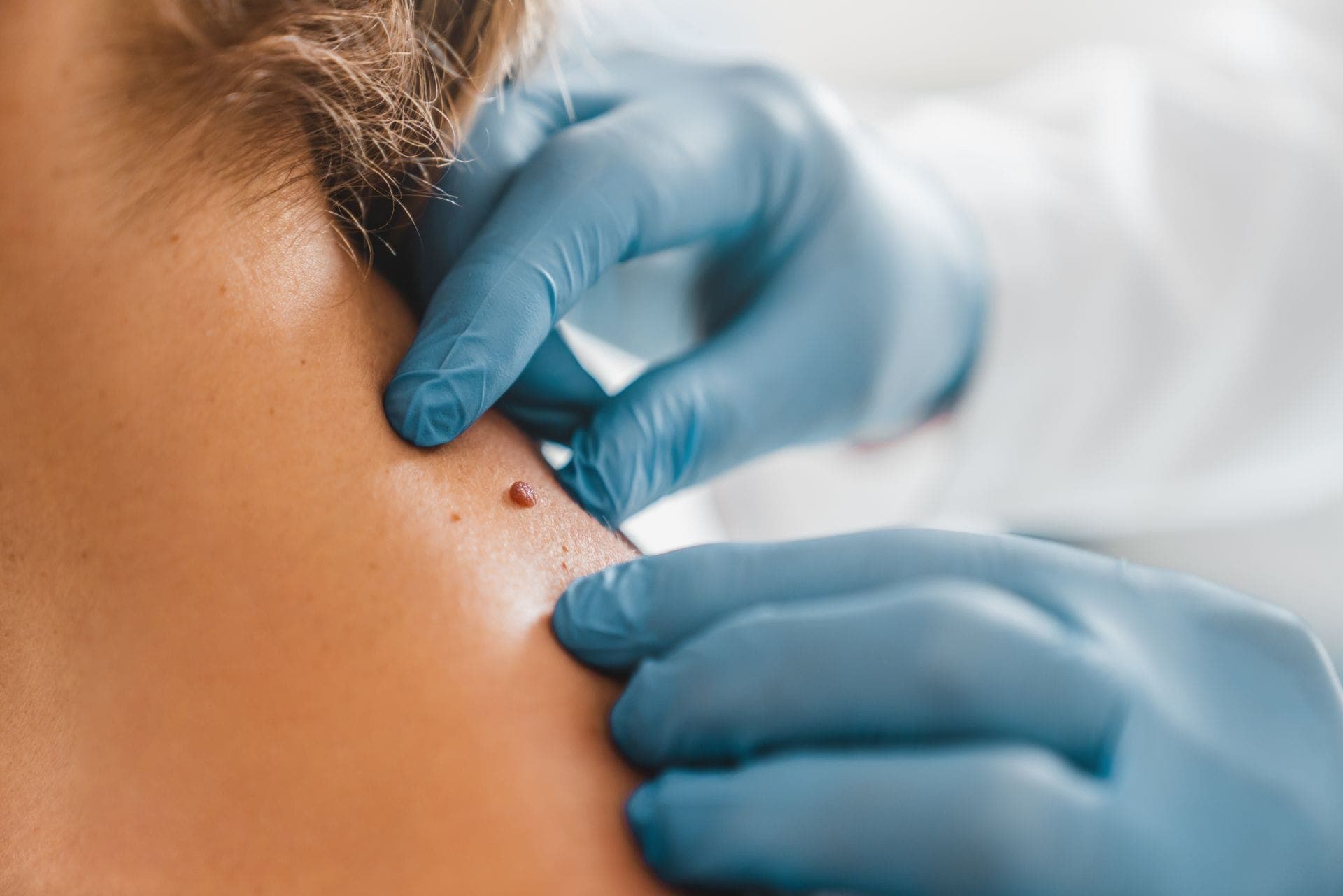
Radiofrequency cautery removes small skin growths — skin tags, warts, raised moles, milia and similar lesions — using a fine electrode that delivers high-frequency energy directly at the lesion. It is done under local anaesthetic by a doctor, takes only minutes per lesion, and leaves a small scab that typically separates over one to two weeks.
It is an unglamorous, practical procedure, and that is rather the point. Most people booking it have had the same skin tag catching on a collar for two years, or a scattering of milia they have stopped trying to squeeze.
What can actually be removed this way?
Small, superficial growths: skin tags, warts, raised moles, milia and similar lesions. Your doctor confirms at examination whether what you have is one of them.
That confirmation is not a formality, and it is the thing worth understanding before you book. Any growth that is being removed should be looked at properly before it is treated. That assessment is exactly what a salon or a home kit cannot provide, and it is the reason Radio Frequency Cautery is a medical procedure rather than a cosmetic one.
So the honest framing is this: you are booking an examination that may be followed by removal in the same visit, not booking a removal. If the doctor looks at a growth and does not consider it suitable for this treatment, it is not treated this way. A growth that has changed in any respect — and you are far more likely to notice that than anyone else — should be mentioned specifically, because it belongs in the examination rather than being quietly added to the list.
How does the procedure itself work?
The energy is delivered through a fine electrode directly at the lesion, so the surrounding skin is disturbed as little as possible. On the face, that precision is the main argument for the technique.
Radiofrequency also seals as it works, which controls bleeding at the site and keeps the field clean. That is a large part of why it suits small, superficial lesions particularly well.
Each lesion takes only minutes, so a scattering of skin tags or milia can usually be dealt with in one appointment. Most patients need one visit per lesion; some need a second.
Does it hurt?
The area is numbed with local anaesthetic first — applied or injected at the site — so most patients feel pressure and perhaps some warmth rather than pain.
If you feel anything sharp, say so immediately rather than waiting it out. More anaesthetic can be given, and there is no reason to sit through discomfort during a procedure this short.
Will it leave a mark?
A small scab forms and separates over one to two weeks, often leaving skin that is pink or slightly darker for some weeks after that. A permanent mark is possible but is usually small.
Two things make the biggest difference, and both are yours to control: not picking the scab, and protecting the area from the sun.
The second deserves more than a passing mention here. Bangalore's UV load is steady through the year rather than seasonal, and a healing patch of skin on your face or neck is exposed on every commute — more so if you ride, and more so again if you are waiting outdoors at the wrong time of day. For deeper skin tones in particular, that settling period is when the area is most worth shading, since it is the difference between a mark that fades quietly and one that lingers longer than it needed to.
Neither instruction is difficult. Both are easy to forget by the third day, which is precisely when they still matter.
How long is the appointment?
Short. Each lesion takes a few minutes, so most appointments are brief even when several are treated in the same visit.
This is genuinely a same-day, get-on-with-your-afternoon procedure for most people. There are no stitches to remove for most lesions treated this way, which is one less follow-up to schedule and one less trip across the city in the evening. Plan the appointment for a day when you can keep the area clean and leave it alone afterwards, rather than one that ends with a long ride home in the dust.
A sensible way to approach it
Make a list before you come, and be complete about it. It is common to book for one growth that has become annoying and then remember three more while sitting in the chair. Since several can usually be handled in one visit, the full list is worth having in advance rather than booking twice.
Note anything that has changed — in size, colour, shape or sensation, or anything that bleeds or will not settle — and mention those first rather than last. Those are the ones that most need the examination, whatever is decided about them afterwards.
If your interest runs the other way, towards adding definition rather than removing it, Beauty Spot is a separate treatment with its own page. It is a different conversation and a different procedure; do not assume anything here applies to it.
Before you book
A reasonable expectation to arrive with: this is a short, precise procedure with a fortnight of quiet healing afterwards, performed by a doctor who looks at what is being removed before removing it.
To have the growths you are wondering about examined properly, book an appointment at our Indiranagar or Bellandur branch. Bring the whole list, and mention anything that has changed.