
Are You a Good Candidate for a Chemical Peel? An Honest Checklist
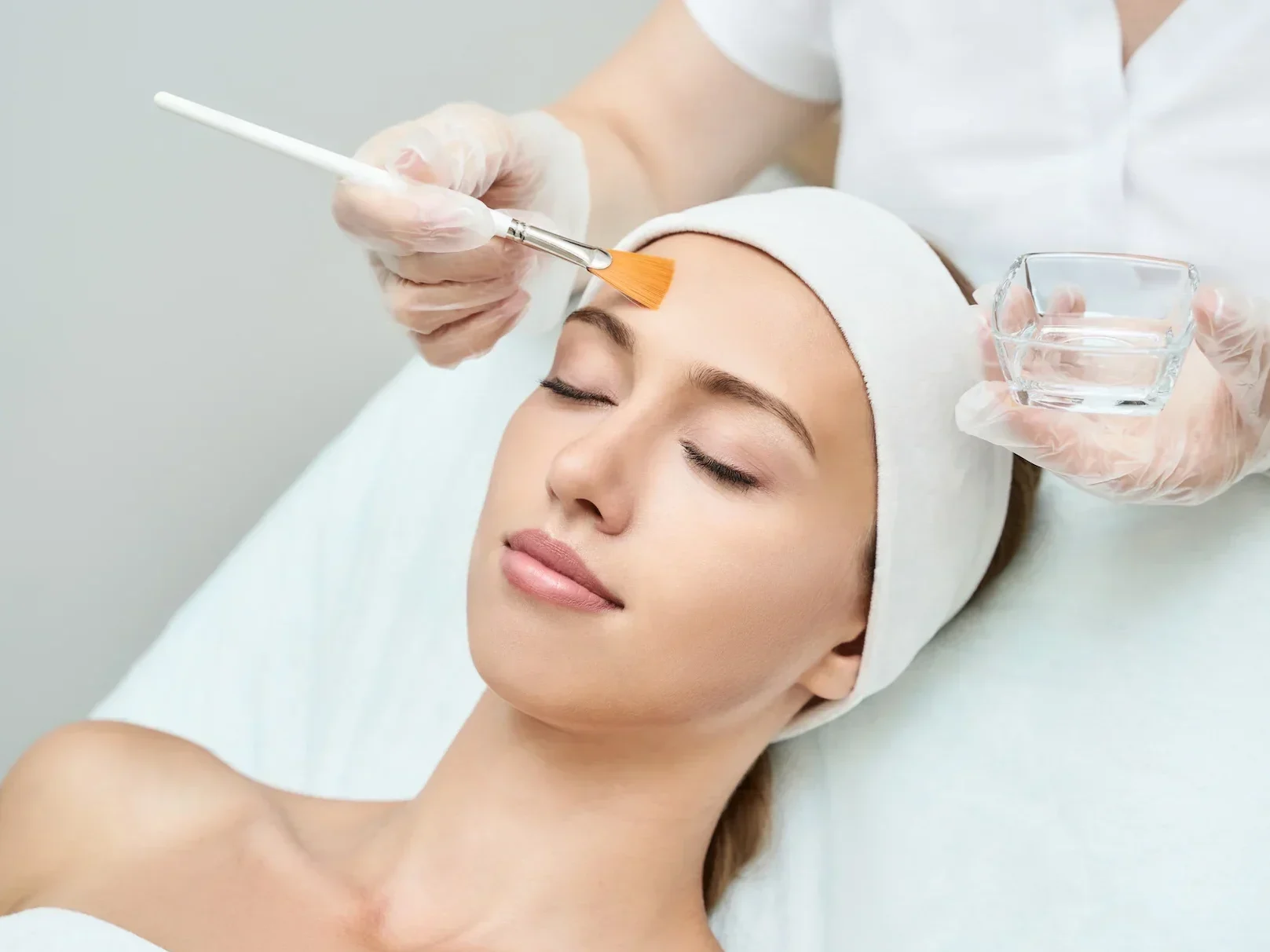
You are likely a reasonable candidate for a chemical peel if your skin looks dull and rough despite exfoliating at home, if old acne marks have faded partially but never fully, or if you want something gentler than laser as a starting point. You should postpone or reconsider if you are pregnant or breastfeeding, have recently taken isotretinoin, have had recent cosmetic surgery, or are managing diabetes — each of those changes what can safely be used.
That second list is the one most pages leave out, and it is the more useful of the two.
What does a chemical peel actually suit?
Concerns that live in or near the surface of the skin. A peel uses a controlled solution to lift away dead surface cells so fresher skin comes through, which makes it a reasonable answer for a specific set of problems and a poor one for others.
The concerns it addresses directly:
- Dullness and rough texture that home exfoliation has stopped improving. Removing the built-up dead layer is what makes skin feel and photograph smoother, and it is often the first change people notice.
- Post-acne marks and shallow discolouration. Peels lift pigmented surface cells and encourage turnover underneath, so marks read lighter across a course.
- Congested, breakout-prone skin. Salicylic and other keratolytic peels clear the pore lining, which helps oil-prone skin settle between sessions.
- Uneven tone on sun-dulled skin, by speeding up turnover at the surface.
- Fine lines, but only with medium-depth peels and only over a course — the mechanism there is new collagen forming as the skin repairs.
If your concern is none of those, a peel is probably not the tool, and a good consultation will say so rather than sell you one anyway.
When should a chemical peel wait?
There are four documented situations where the answer is to postpone or to choose differently, and they are worth knowing before you book rather than after.
Pregnancy and breastfeeding. Some peel agents are avoided during pregnancy and while breastfeeding. This is usually a timing question rather than a permanent no, and it is one your doctor will raise directly.
Recent isotretinoin or other acne treatment. Skin that has recently been on isotretinoin behaves differently and heals differently. Peeling it on the usual schedule is how a routine treatment turns into a prolonged recovery. There is a waiting period, and it exists for a reason.
Diabetes. Some peels are not appropriate where diabetes is in the picture, because healing is the variable that a peel depends on entirely.
Recent cosmetic surgery. Skin that is still remodelling from a procedure is not skin you want to resurface on top of.
None of these mean a peel is permanently off the table. They mean the sequence matters, and that a form asking "any medical history?" is not bureaucracy.
Does my skin tone change whether I am a candidate?
It changes which peel, not whether. Deeper skin tones respond well to peels performed at an appropriate depth — but a peel that is too strong for your skin type causes pigmentation rather than clearing it, and that risk rises the more melanin the skin carries.
This is the single practical reason the patch test is non-negotiable, and the reason depth is chosen after an assessment rather than from a price list. A clinic that offers you a peel without asking about your skin type or testing it first is skipping the step that protects you.
It is also why "I had this peel in another city and it was fine" is weaker evidence than it sounds. Sun exposure between sessions changes how skin responds, and in Bangalore that exposure is year-round rather than seasonal.
What if I have active acne right now?
Then the peel may still be appropriate, but the conversation changes. Congested and breakout-prone skin is one of the concerns peels genuinely help, and keratolytic peels are chosen precisely for it.
What matters is whether the acne is being managed medically at the same time, and with what. That is the isotretinoin question again, and it is why the assessment covers current medication rather than just current appearance.
How is candidacy actually decided?
At an in-person consultation, and not before. Your doctor examines skin type, tone and texture, takes a history of acid allergies and recent treatments, and patch tests before committing to anything. The consultation at The Aesthetic Edge is ₹500, waived against treatment.
Nothing on this page — or any page — is a substitute for that. An article can tell you which questions decide the answer. It cannot look at your skin.
What if a peel turns out not to be right for me?
Then there are other routes, and the useful thing is knowing that up front so a "no" does not feel like a dead end.
If the goal is a brighter, more even-looking complexion rather than resurfacing, BB Glow approaches that differently. If what is bothering you is a single raised or pigmented spot rather than an overall texture concern, that is closer to beauty spot removal than to anything a peel does. And if the concern turns out to be deeper than the surface — set scarring rather than marks — a peel is the wrong depth of tool entirely.
You can read more about how the treatment itself works on our chemical peel page. If you would rather have someone assess your skin and tell you plainly whether you are a candidate, book a consultation — including for the answer that you should wait.