
What Actually Happens During a Chemical Peel: A Step-by-Step Walkthrough
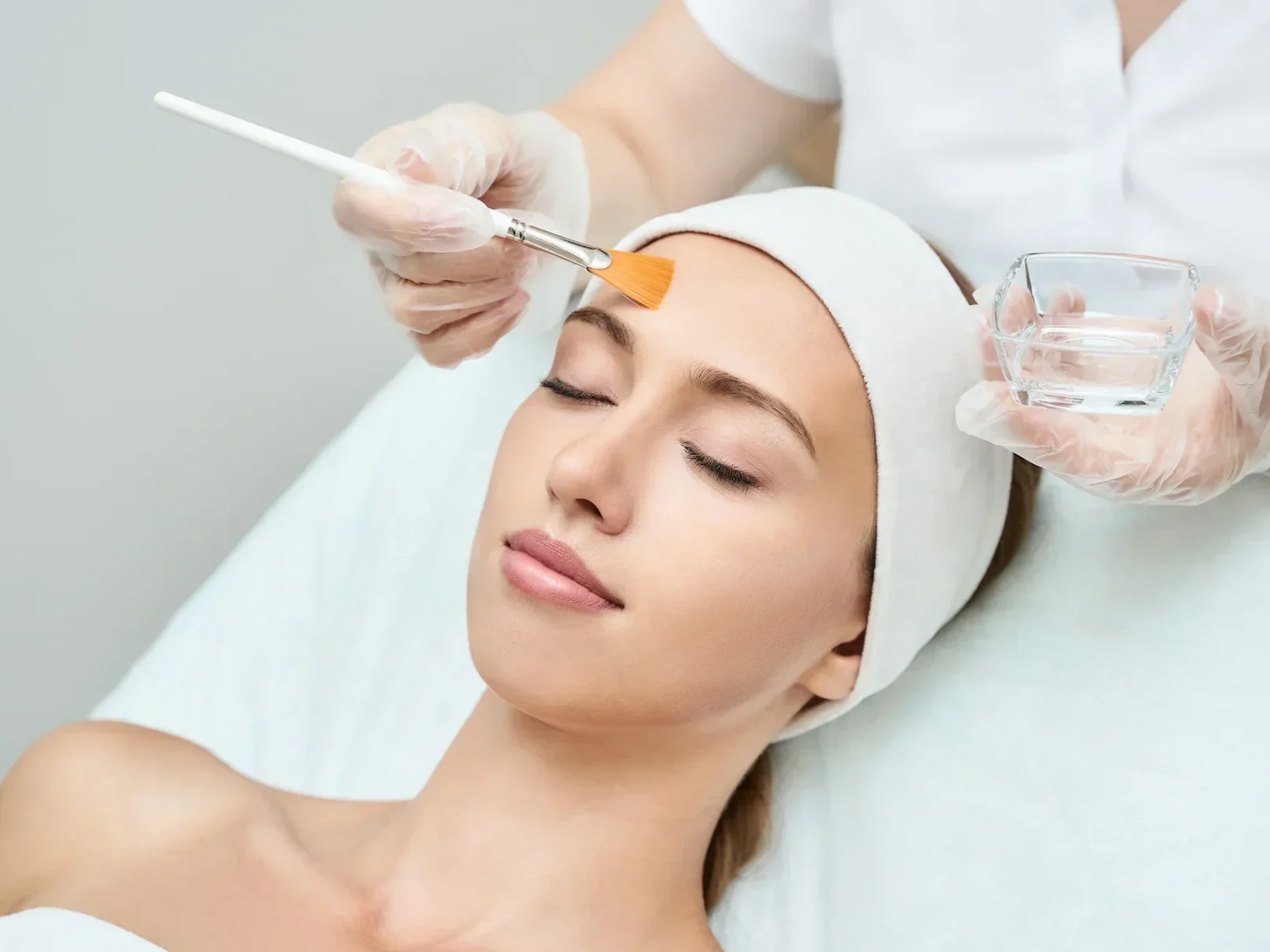
A chemical peel appointment runs roughly like this: your doctor assesses your skin and patch tests it, chooses a depth and a solution for your skin type, brushes that solution on for about three to five minutes, then neutralises it and finishes with a cool compress, a hydrating cream and sunscreen. The appointment is short. The decisions made before the solution touches your face are the part that matters.
That gap — between how quick the procedure is and how much thought goes into choosing it — is what surprises most first-timers. This walkthrough covers the whole sequence, including the parts nobody photographs.
What happens before anything is applied to my skin?
An assessment and a patch test, and neither is a formality. Your doctor examines your skin type, tone and texture, takes a history of any acid allergies and recent treatments, and patch tests a small area before committing to a full peel.
The history matters more than people expect. Recent isotretinoin or other acne treatment, recent cosmetic surgery, pregnancy and breastfeeding, and diabetes all change what can safely be used — and in some cases mean a peel should wait. None of that is visible by looking at your face, which is why the conversation happens before the peel rather than during it.
The patch test exists because skin does not always behave the way a chart says it will. A chemical peel that is too strong for your skin type can leave pigmentation rather than clearing it, and on Indian skin tones that risk is real enough to be worth a few days' delay. Testing a small area first is how that gets caught before it happens on your cheek.
How does the doctor decide which peel I get?
From your concern and how your skin responded to the patch test. Peels come in superficial, medium and deep, using different acids, and the choice follows what is being treated rather than a menu.
Broadly: superficial peels lift the built-up dead surface layer and are the usual starting point for dullness, rough texture and congestion. Salicylic and other keratolytic peels clear the pore lining, which is why oil-prone, breakout-prone skin often settles between sessions. Medium-depth peels reach further and prompt new collagen as the skin repairs, which is what softens the look of fine lines and shallow age spots over a course.
Deeper is not better. A deeper peel is a bigger recovery and a larger margin for error, and it is only the right answer when the concern genuinely needs it.
What does it feel like while it is on?
Most people describe a warm, tight, stinging sensation that builds over the few minutes the solution is on and stops when it is neutralised. It is not usually painful enough to need numbing for a superficial peel.
The timing is short and deliberate. The solution stays on for roughly three to five minutes, varying by peel, and is watched the entire time — the neutralising step is not a fixed timer so much as a judgement about what your skin is doing. A cool compress, a hydrating cream and sunscreen finish the appointment.
You will not walk out looking peeled. Immediately afterwards the skin usually looks slightly pink, as if you have been in the sun for an hour.
What do the days afterwards look like?
Redness, dryness and flaking, mostly settling within a few days after a superficial peel. Deeper peels flake more, and for longer.
The single most useful thing to know: picking at flaking skin is what turns a normal recovery into a mark. The flaking is the treated surface leaving on its own schedule, and helping it along mechanically is how people end up with a patch that stays discoloured for months.
The treated area can also look lighter or darker than the surrounding skin while it settles. Daily broad-spectrum sunscreen is the biggest single factor in whether that resolves cleanly — which in Bangalore means wearing it on overcast days too, because the UV that drives pigmentation does not stop for cloud cover.
Rare complications do exist: scarring, infection and prolonged swelling are uncommon but possible. That is precisely why depth is a medical decision and why the aftercare instructions are not optional.
How many sessions before I see a difference?
Texture is often the first change people notice, and frequently after a single superficial peel. The marks take longer.
Superficial peels are usually repeated several times across a few months to build a result, because each one lifts pigmented surface cells and encourages turnover underneath. Medium and deep peels need fewer sessions. Your doctor sets the schedule after seeing how your skin responds to the first one, which is why a course is planned rather than pre-sold.
If you are treating post-acne marks, expect the timeline to be measured in months rather than sessions. Marks fade progressively; they do not switch off.
What does a chemical peel cost in Bangalore?
At The Aesthetic Edge, chemical peels start from ₹2,999 per session. What a full course costs depends on the depth, the number of sessions your skin actually needs and the area being treated, which is settled at the consultation rather than quoted from a page.
The consultation itself is ₹500, waived against treatment.
Is a peel the right starting point at all?
Often, yes — a lot of people come to peels precisely because they want something gentler before considering laser, and that is a reasonable place to begin. But it depends on what you are treating.
If your concern is an uneven-looking complexion you want brightened rather than resurfaced, treatments like BB Glow work differently and may suit better. A single raised or pigmented spot is a different question again, closer to beauty spot removal than to a peel. The honest answer is that "which treatment" is not a decision to make from a website, yours or anyone else's.
That is what the assessment at the start of this article is for. If you want someone to actually look at your skin and tell you whether a peel is the right tool, you can book a consultation — and if the answer is that a peel is not what you need, you will be told that instead.