
Questions to Ask Any Clinic Before BB Glow Treatment
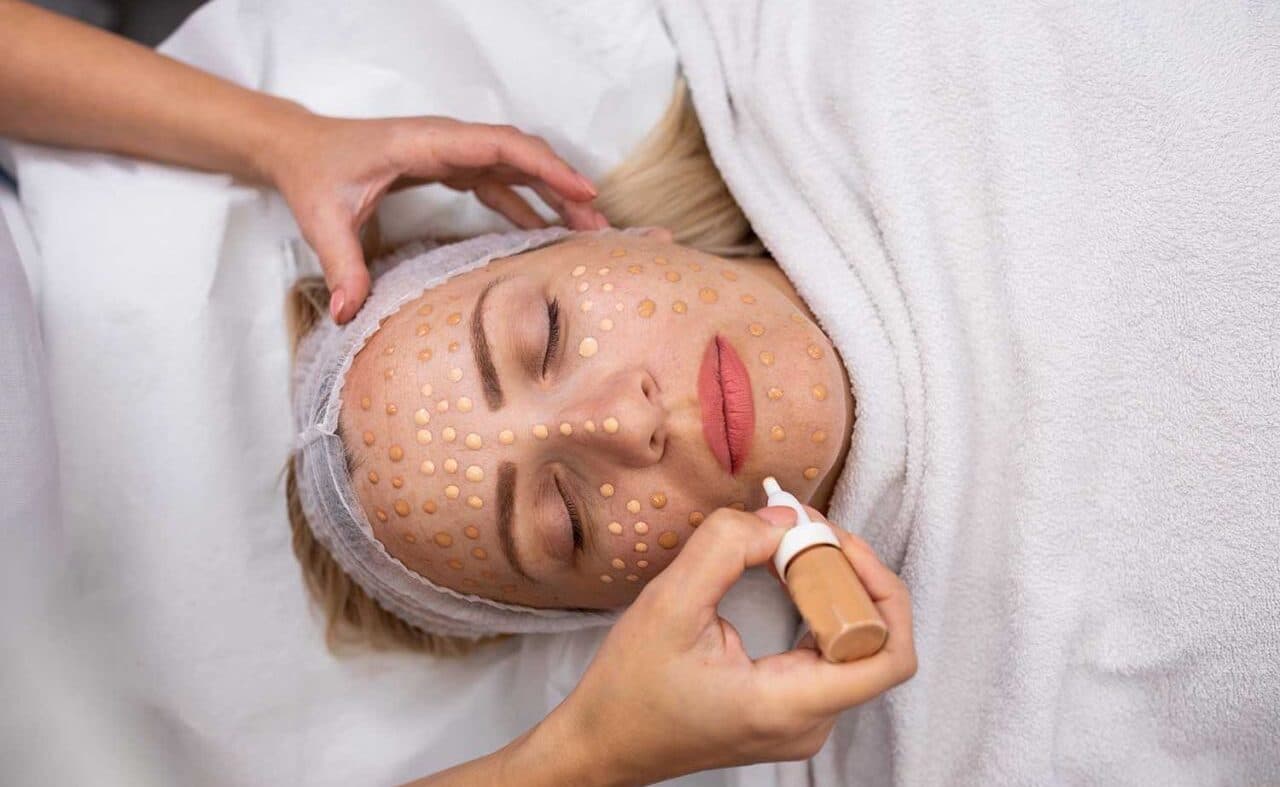
Ask five things before you book anywhere: who performs the treatment and what they are medically qualified as, what is in the serum, whether the needling cartridges are single-use, how many sessions you need and who decided that number, and what happens if the colour settles unevenly. A clinic that cannot answer all five comfortably is not somewhere to have needles put in your face.
BB Glow is a treatment where outcomes vary widely between providers, and not for mysterious reasons. Technique, product quality, hygiene and whether anyone assessed your skin first are all things you can ask about directly. Use this as a checklist. Take it to every clinic you are considering, including this one.
Who is actually performing it, and what are they qualified as?
Ask for the qualification, not the job title. "Specialist", "expert" and "certified" are not regulated words, and a weekend certificate from a product supplier is not a medical qualification.
The reason this matters is not credentialism. Needling breaks the skin barrier, which brings infection risk, and pigment placed at the wrong depth is difficult to undo. Someone medically qualified is also someone who can recognise when your skin should not be treated at all — and who is professionally accountable if something goes wrong.
Ask whether the same person will do every session in your course, or whether it gets handed around.
What is in the serum, and can I see it?
Ask for the product name and to see the actual bottle or sachet, sealed, before it is opened.
You are entitled to know what is being put into your skin. A reasonable answer names the product, describes what is in it beyond the pigment — a good formulation carries hyaluronic acid and skin-nourishing ingredients alongside the tint — and does not treat the question as suspicious.
What should give you pause: a serum that cannot be named, an unlabelled container, product decanted into a syringe or pot in advance, or a shade chosen from a chart without anyone looking properly at your skin in natural light.
Am I being screened for allergies?
A known allergy to any ingredient in the serum rules the treatment out entirely, so this question should already have been asked of you before you ask it.
If nobody has asked about your allergies, that tells you something about the rest of the process. Ask, too, what the clinic does for someone with reactive skin or a history of reacting to cosmetic products.
Are the needling cartridges single-use?
They should be, and you should be able to see the packet opened in front of you.
This is the single clearest line between a clinic and a shortcut. Fine channels in the skin are an entry route for whatever is on the needle. Cartridges are inexpensive and disposable; reusing them across patients is indefensible, and "we sterilise them" is not an acceptable answer for a single-use item.
Look also at the ordinary things: gloves, a clean treatment couch, hand hygiene, where the products are stored.
How is the depth decided for my skin?
There should be a considered answer that references your skin specifically, not a fixed setting applied to everyone.
Depth is what separates a comfortable, evenly settling treatment from one that marks. It is also the reason a proper assessment happens first. BB Glow is not an energy-based treatment — there is no laser and no wavelength to discuss — so anyone answering this question in laser language has misunderstood what they are selling.
Has anyone assessed the cause of my pigmentation?
This is the question most likely to change what you actually book, and the one least often asked.
BB Glow softens how uneven tone reads. The tinted serum sits in the upper layers and fades as the skin renews itself, so it is not working on whatever is producing the unevenness underneath. If your patches keep coming back, the useful conversation is about the pigment itself — a course of chemical peels addresses surface pigment and texture, and lip colour is assessed separately as lip micropigmentation.
A clinic that never raises this distinction is selling you a product rather than solving your problem. A doctor should be willing to tell you that a different route suits you, or that nothing does.
Does my skin tone change anything?
It should be part of the conversation without you having to raise it.
Deeper skin tones are more prone to post-inflammatory pigmentation — the skin responding to injury by producing more pigment and leaving a mark darker than the one you came in for. Most BB Glow marketing is photographed on fair skin, and a provider whose experience is all from that material may not have thought about it. Tell them if you mark easily after spots or minor injuries, and listen carefully to what they do with that information.
How many sessions do I need, and who decided?
The number should come from a doctor after examining your skin, not from a price list.
A typical course is four to six sessions spaced about two weeks apart, but where you sit in that range depends on your skin type and how much unevenness is being treated. If a session count arrives before an assessment does, the answer was decided before the question was asked.
Ask what happens if you need fewer than the block you are being sold, and what happens if you need more.
What am I being asked to pay for, and when?
Ask whether a quoted figure is one session or a whole course, and how many sessions that course is. A number with no session count attached is not comparable to anything.
Ask about maintenance separately. Results from a completed course hold roughly four to six weeks, with a top-up every four to five months — that ongoing rhythm is part of the real cost and belongs in the conversation at the start rather than arriving later.
Be wary of pre-paid blocks sold before an assessment, of pressure to decide the same day, and of discounts that expire by the evening. None of those are about your skin.
What are the contraindications, and have I been screened?
The clinic should volunteer these. BB Glow is not offered during pregnancy or breastfeeding, over active infections, open wounds or skin cancer, or where there is a known allergy to any ingredient in the serum.
Ask directly what they would refuse to treat, and whether they would turn you away on the day if you arrived with an active breakout or a cold sore. The right answer is yes. A provider who treats regardless is one who will treat you regardless.
Will I get written consent and written aftercare?
Both should exist on paper, before and after.
Consent means a documented conversation about what the treatment does, what it does not do, and what can go wrong — not a signature collected at speed. It also means realistic expectations: this is a semi-permanent, gradual, subtle change that fades, and any outcome described in absolute terms cannot be promised by anyone.
Aftercare should arrive written down, because the first 24 hours matter and are easy to get wrong from memory: nothing on the skin, no washing or scrubbing, no makeup, and sunlight, steam rooms and saunas avoided for two weeks with daily sunscreen throughout.
What happens if something goes wrong?
Ask this out loud, and pay attention to whether it is welcomed or deflected.
Specifically: who do you telephone, at what number, outside working hours? Is there a review appointment built in? Is there a doctor who can assess and manage a reaction, or would you be sent elsewhere? Is a follow-up charged for?
You should be told what is ordinary — tightness, redness and mild irritation settling over three to four days — and what is not. Redness or heat that spreads rather than fades after day two, swelling that worsens instead of settling, any weeping or crusting, or a fever all mean contacting the clinic promptly rather than waiting to see. You should not be expected to judge those yourself, and a provider who tells you to "give it a week" for any of them has answered the question badly.
Can I see results on skin like mine?
Ask for photographs of patients with your skin tone, taken in consistent lighting, and ideally at the same stage of a course.
Results photographed on fair skin under flattering light tell you very little about what to expect on brown or olive skin. Ask how long after the final session the "after" was taken, too — a photograph taken at the peak of a course is not a picture of what you will see in month three.
Am I being sold something, or advised?
The final question is one you answer yourself, by how the rest of the conversation went.
Advice sounds like a plan built around your skin, including the possibility that this treatment is not for you. Selling sounds like a package, a discount and a deadline. You are allowed to leave, think, and come back.
At The Aesthetic Edge, BB Glow is performed by a doctor, always, and the assessment comes before the plan. The consultation is ₹500, waived off against treatment, and you can book an appointment at Indiranagar or Bellandur — with this checklist in hand.