
Open Pores & Uneven Texture: What Actually Works, and What Only Sounds Like It Does
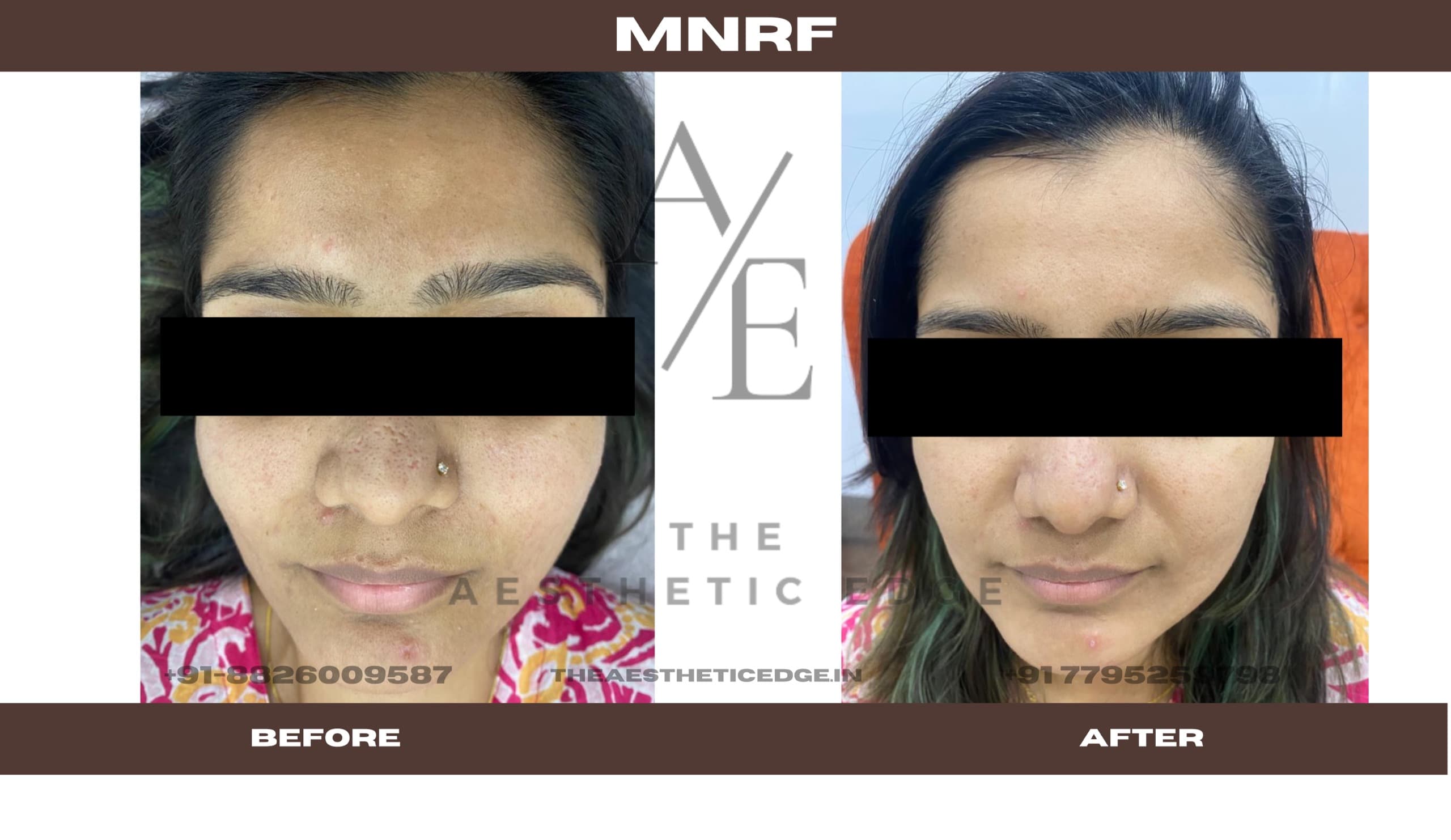
Pores do not open and shut. What varies is how obvious they are, and that turns on two things: how much oil and debris is packed inside them, and how much structural support the skin immediately around them still has. Emptying them addresses the first. Rebuilding collagen around them addresses the second. Nothing available anywhere permanently makes a pore smaller than it was built.
Once you accept that framing, the market for pore products stops being confusing and starts being obvious.
Why does a pore look bigger on some days than others?
Because you are mostly looking at its contents and its shadow, not its walls.
A pore filled with oil and dead cells reads as a dark dot with an edge. The same pore, emptied, reflects light differently and becomes far harder to see — which is why skin looks smoother right after a proper clean-out and why the effect does not last for ever.
Several things commonly influence how prominent pores appear. Oil production, which runs higher in a warm climate and on some skin types than others. Sun exposure accumulated over years, which weakens the scaffolding around the opening. Age, for the same reason. Previous acne, which can leave the openings stretched and the surrounding surface uneven. And genetics, which sets the baseline nobody gets to negotiate.
Which of those is doing most of the work on your face is something an examination establishes. This page is not in a position to tell you.
Is uneven texture the same problem?
Overlapping, but broader. "Texture" is a bag that patients reasonably use for several different things at once: roughness you can feel, small bumps of congestion, shadowed dips left by old breakouts, and skin that simply does not catch light evenly across a cheek.
Sorting that bag out is the useful first step, because congestion and set scarring look similar in a bathroom mirror and respond to completely different treatments. Side lighting helps — congestion sits on the surface and catches light, while a dip throws a shadow.
What works when oil and congestion are driving it?
A treatment that removes what is inside the pore rather than working on the skin around it.
A carbon laser peel is built for exactly this: a carbon-based lotion is drawn into the pores and then vaporised with a laser, carrying oil, dead cells and debris out with it. It is non-invasive, takes around half an hour, and is aimed squarely at oiliness, acne and enlarged-looking pores.
The honest limitation is that this treats the contents and the surface. If your pores look large because the skin holding them has lost firmness, emptying them improves matters temporarily but does not address the reason they read as stretched.
What works when the surrounding skin is the problem?
Stimulating collagen in the layer underneath, so the skin around each opening tightens and the pore appears less prominent.
That is what MNRF is doing. Fine needles carry radiofrequency into the deeper layers, and the collagen response that follows firms the skin around enlarged pores, softening how they read over the course of the sessions. The same response is what makes it a treatment for early laxity and for rough texture and stretch marks, which is often why one plan covers several complaints a patient arrived with separately.
Microneedling with a Dermapen works on the same principle through controlled micro-channels, prompting the skin to repair itself with new collagen and elastin. Which one suits you is a question of what is being treated and how deep it sits, decided at an assessment rather than from a menu.
Neither is instant. With MNRF, most plans run to three or four sessions spaced by the doctor, and while some change can show after the first, the result that counts accumulates over weeks as collagen remodels.
What only sounds like it works?
Pore strips. They remove the visible plug and nothing else. The opening is unchanged, refills within days, and repeated aggressive stripping irritates skin that would rather not be irritated.
Cold water, ice cubes and "pore-closing" rinses. Cold causes brief constriction of the surrounding tissue. It is not a treatment; it is a temperature.
Astringent toners used daily. Stripping oil aggressively often provokes more oil, and on skin that pigments easily, sustained irritation carries its own cost.
Scrubs with grit. Abrasion on already-uneven texture tends to inflame more than it smooths.
Blurring primers and filters. They are excellent at what they do, which is optical and lasts until you wash your face. Nothing wrong with using them — just do not mistake them for progress.
Steaming every night. Occasionally useful, routinely drying, and not a substitute for actually clearing the pore.
How long before anything looks different?
Longer than the marketing implies, and the timeline differs by mechanism.
A clean-out shows an immediate difference that fades as oil returns, which is why it tends to be repeated. A collagen treatment shows almost nothing on day one and keeps improving for weeks after each session, which is why the visits are deliberately spaced rather than clustered.
Judging either at the wrong point is the common mistake. People conclude the laser did nothing a fortnight later, or that the needling failed after a single session. Photographs taken at each visit, in the same light, settle arguments that memory cannot.
So which one do I need?
Possibly both, in a sequence — and that ordering is the part worth paying a doctor for.
Bring these questions: is my pore appearance mainly oil or mainly support, is what I am calling texture actually congestion or actually scarring, and what does the plan look like month by month rather than session by session.
If you would like your skin assessed properly before you spend anything on it, book a consultation at Indiranagar or Bellandur. The consultation fee is ₹500 and comes off your treatment if you go ahead.