
Microneedling with Dermapen in Bangalore: What Local Conditions Change
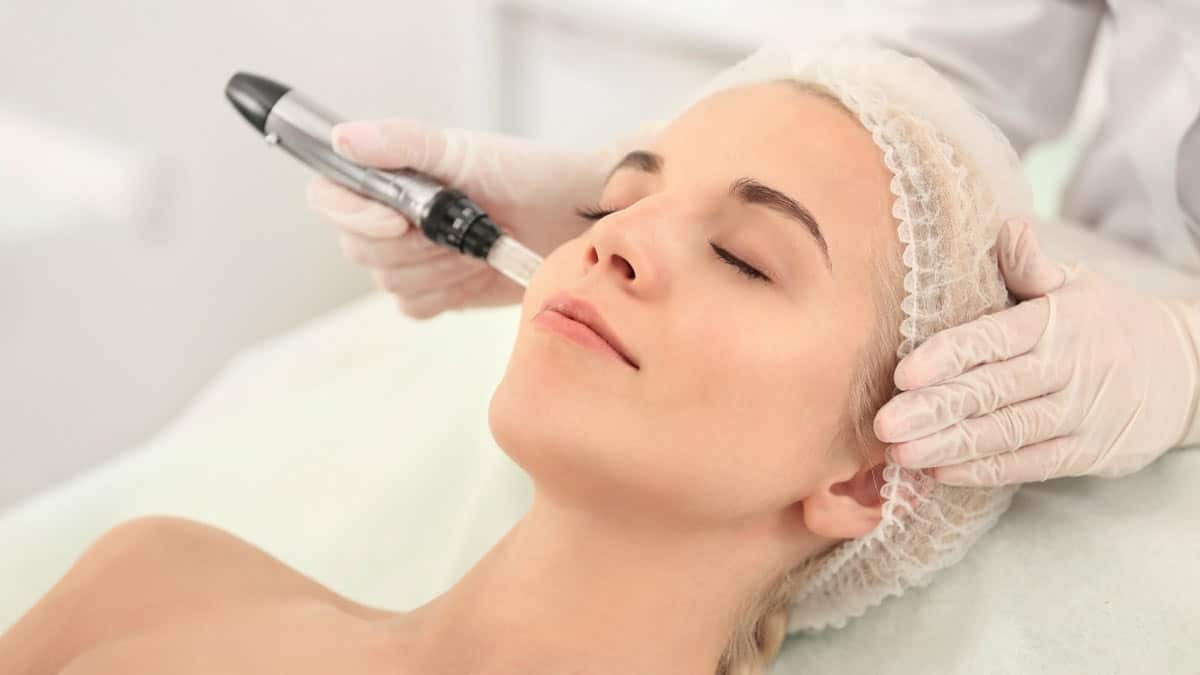
Bangalore's pleasant weather hides a genuine problem for anyone having microneedling: the city sits close to the equator and about 900 metres up, so ultraviolet levels stay high all year rather than peaking in a summer. Freshly needled skin burns easily and pigments easily, which makes daily SPF 50 or higher the part of aftercare that matters most here.
That is the local point. Most of what follows is about acting on it.
Why does the weather matter at all for a skin treatment?
Because of what the treatment leaves behind for a few days.
Microneedling with Dermapen creates controlled micro-channels so the skin repairs itself with new collagen and elastin. While that repair is happening, the skin is more sensitive than usual — our own treatment page puts it plainly: freshly needled skin burns easily and pigments easily, and SPF 50 or higher every day is the single most important part of aftercare.
Everywhere in the world that instruction is true. What changes in Bangalore is how easy it is to forget, and that is a weather problem rather than a skin one.
Isn't it too mild here to worry about the sun?
This is the trap, and it is worth naming.
Temperature and ultraviolet are two different things. Bangalore is comfortable for most of the year, which means you do not get the physical cue — heat on the back of the neck — that tells people in hotter cities to find shade. Meanwhile the latitude and the elevation both push ultraviolet levels up, and unlike a northern city there is no low-UV season to schedule around.
So a Bangalore patient can go through an entire microneedling course without once feeling as though they were exposed. That is precisely why the sunscreen instruction is written as a daily one rather than a sunny-day one.
Does a cloudy monsoon day mean I can skip sunscreen?
No. Cloud reduces glare and heat far more than it reduces ultraviolet, so an overcast June morning still counts as exposure for skin that was needled two days ago.
The monsoon has a second, more practical effect: sunscreen sweats and rubs off faster in humidity, and it comes off entirely if you are caught in rain and towel your face dry. Reapplying is what matters, not the first application. If you are out for the day during a course, take the tube.
How should I plan the first few hours after a session?
Deliberately, and this is the recommendation people most often ignore.
The micro-channels stay open for a few hours after a session. The instruction that follows is specific: the face is not washed for the first four hours, and the antiseptic cream you are given is used as instructed. That is what keeps the infection risk low.
Following that at home is straightforward. Following it in a helmet, in traffic, on a two-wheeler between Indiranagar and wherever you live, in June, is a different proposition — you will be sweating, you will want to wipe your face, and you will not want to. So the practical advice for this city is to arrange the session so that the hours immediately afterwards are spent somewhere clean, cool and stationary, rather than at the end of a long open-air commute.
Book the appointment nearer to home if you can. Both our clinics are staffed by doctors and run the same treatment, so choose the branch by geography — the one you can get home from quickly — rather than by anything else.
When in the week should I book?
Two constraints set the answer.
Redness, mild swelling and some flaking are expected and usually settle within a day, with occasional light bruising at deeper settings. And you should plan around two days without strenuous exercise.
For most people in this city that means an appointment late in the working week, so the flaking day and the two exercise-free days fall where they cost least. If you have something you are being photographed at, count backwards generously and leave more room than you think you need — this is not a treatment to schedule close to a wedding or an event.
Sessions are also spaced to let collagen remodelling complete between them, usually across several months, with a typical course of six to eight sessions depending on the concern. Worth knowing before you start: this is a plan that runs through both a monsoon and several months of your calendar, not a single appointment.
Does the monsoon change how my skin heals?
Our treatment page does not claim that it does, and we are not going to invent a mechanism so that this article has more to say about the weather.
What humidity genuinely changes is behavioural, and it is all covered above: you sweat more, sunscreen needs reapplying more often, and the temptation to rinse your face during the first four hours is stronger. Those are real and they are worth planning around. Whether your skin itself heals differently in the monsoon than in February is not something we are in a position to assert, and if it is on your mind it is a fair thing to raise at the consultation, where somebody can answer for your skin specifically.
Does Bangalore's hard water affect the result?
We are not going to tell you that it does.
You will find clinic pages in this city that build a treatment recommendation around the local water supply. Nothing in the aftercare we give turns on it — the instructions that matter are the four-hour window, the antiseptic cream, and daily SPF 50 or higher. If your skin reacts to something in your routine, that is a conversation to have with the doctor about your routine, and it will be answered by looking at your skin rather than by a general claim about the city.
Being clear about what we do not claim is part of being trustworthy about what we do.
What should prompt a call to the clinic?
Most recoveries here are uneventful. But the skin has been deliberately opened, so a few things are worth a phone call rather than a wait-and-see. This is a list of reasons to ring us, not a list to interpret yourself:
- Redness, swelling or tenderness that worsens after the second day instead of settling
- Pain that increases rather than fades
- Any discharge, or yellow crusting over the treated area
- Any clustered blistering, or tingling that comes before it
- A fever in the days after a session
- Skin that darkens beyond the expected flaking
You should not try to decide which of those matters — that takes a look at the skin. Call the branch that treated you, at Indiranagar or Bellandur, tell them what you are seeing, and put nothing new on the area in the meantime, including anything a search result recommends. If you were caught out in strong sun in the days after a session and the area looks unhappy, that is worth mentioning too.
Who is it not suitable for?
Microneedling is avoided in pregnancy and breastfeeding, and where there is active acne, active herpes, or a moderate-to-severe chronic skin condition such as eczema or psoriasis. Those are checked at the consultation before anything is planned.
What about the alternatives, locally?
If your concern is marks and dullness rather than texture, a chemical peel may be the better fit — it works at the surface, lifting away spent cells so fresher skin comes through. Note that its depth and solution are chosen by a doctor for your skin type, and that choice is what decides whether a peel helps or backfires. Peels carry their own sun sensitivity, so the year-round ultraviolet point above applies just as firmly.
If you are weighing microneedling against PRP, often called a vampire facial, that is the same session with your own platelet-rich plasma used in place of a standard serum. Whether it is worth it for your concern is a consultation question.
Booking, cost and the first step
Microneedling with Dermapen starts at ₹3,999 per session, the same at Indiranagar and Bellandur, and it is performed by a doctor, always. We publish a per-session price rather than a course total, because how many sessions your concern needs is decided after someone has looked at your skin.
The consultation is ₹500, waived off against treatment. Come with your questions about scheduling as well as your questions about skin — when in your week to book, how to manage the days after, and how a course fits around whatever your next few months look like are all reasonable things to plan properly. Book an appointment at whichever branch you can get home from most easily.