
How Microneedling with Dermapen Actually Works
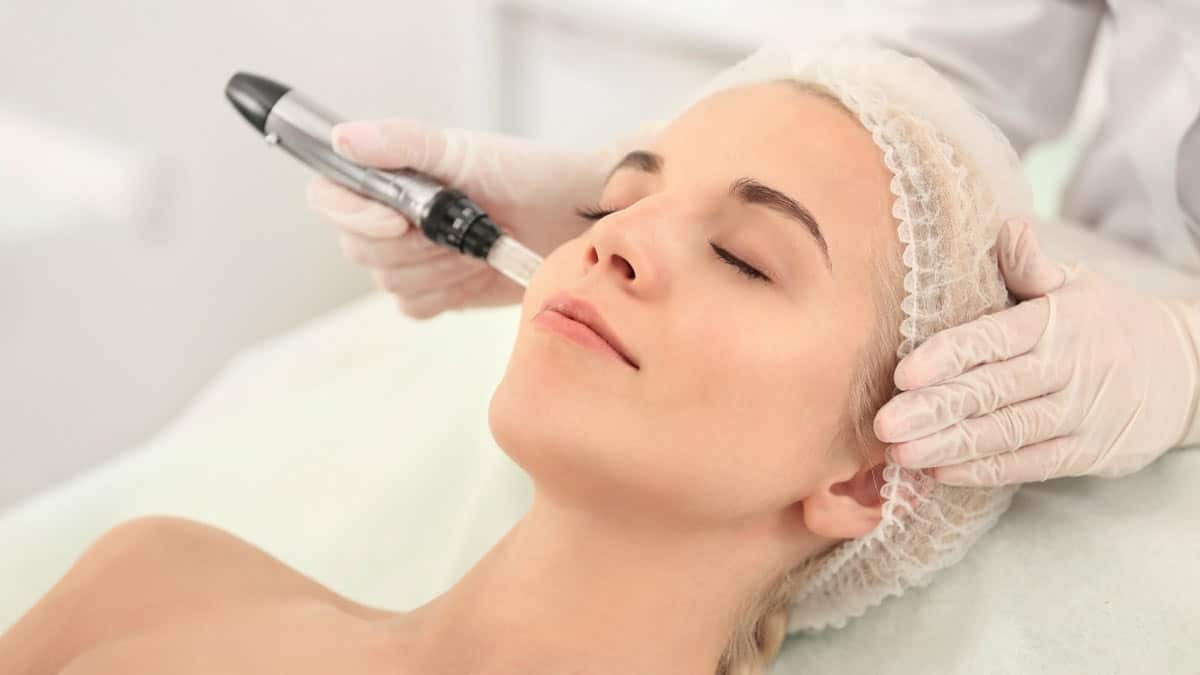
Microneedling with a Dermapen drives very fine needles into the skin at a set depth, creating thousands of controlled micro-channels. Your body treats each one as a small injury and repairs it, and that repair lays down new collagen and elastin. The change is not the needling itself — it is the healing that follows, over weeks.
That distinction matters more than any other single fact about this treatment. It explains why nothing dramatic happens on the day, why the plan is a course rather than an appointment, and why two people having Microneedling with Dermapen in the same room can be treated at completely different settings. If you understand the mechanism, the rest of the treatment stops feeling arbitrary.
What do the micro-channels actually do?
Each micro-channel is a deliberate, controlled breach of the skin, and the body's response to it is the entire treatment. The Dermapen creates thousands of these channels across the treated area. None of them is large enough to be a wound in the ordinary sense, but collectively they are enough to switch on the skin's wound-healing response.
Our own treatment core puts it plainly: microneedling works by doing controlled, deliberate damage. That phrasing is uncomfortable, and it is accurate. The needles do not scrape, sand or polish anything away. They make openings, the openings close, and the tissue laid down while they close is different from the tissue that was there before — richer in collagen and elastin, which is what gives skin its strength and its ability to spring back.
This is also why nothing synthetic is placed in the skin during the treatment. The result comes from your own repair response. That is a genuine advantage, and it is the reason the improvement builds gradually and holds rather than wearing off the way a filled or coated surface would.
Why does needle depth change the result?
Because different concerns live at different levels of the skin, and the needle has to reach the level where the problem actually is. Depth is set for the concern being treated — shallower for texture and tone, deeper for scarring. That single setting is most of what separates a session aimed at dull, rough skin from one aimed at old acne scars.
Acne scarring is the clearest case. A scar is a defect in the dermis, the layer beneath the surface. Creams work on the surface and cannot reach it, which is why years of topical products often make no difference to a scar at all. Microneedling triggers remodelling in the right layer — the skin rebuilds through the scar rather than over it.
The same logic explains stretch marks. They are dermal scars of a different origin, so the same remodelling response reduces how visible they are, on the body as well as the face. And it explains the more everyday results too: repeated collagen remodelling tightens the skin around pores and evens out rough, blackhead-prone texture, because loss of firmness in that layer is what makes pores look larger in the first place.
Your doctor chooses the depth after examining what is being treated. It is not a preference you should be asked to pick from a menu, and it is settled at consultation along with the number of sessions.
Why does it take weeks rather than showing up the next day?
Because collagen is not made instantly. Many patients see a visible change from the first session, but the real improvement is cumulative — collagen remodelling continues for weeks after each treatment and builds across the course. What you see the week after session one is mostly surface renewal. What you see after the course is the structural change.
This is why the treatment is planned as a course, not an event. Six to eight sessions is typical, though it depends entirely on what is being treated: deep acne scarring needs more sessions than general texture and tone. Sessions are spaced deliberately so remodelling can complete between them, usually over several months. Body skin heals more slowly than facial skin, so stretch mark sessions are spaced a little further apart.
Nobody can promise a specific outcome from a specific number of sessions, and a faster timeline than the one above is not something to look for. Your doctor sets your plan at consultation and revises it against how you actually respond.
What happens during a session, and what should I expect afterwards?
The session is short, and most of the discomfort people anticipate is managed before the needling starts. The area is deep cleansed and a topical anaesthetic is left on for fifteen to twenty minutes, so the pass itself is designed to be comfortable — most patients describe mild pressure or a scratchy sensation rather than pain. The Dermapen pass follows at the chosen depth.
Afterwards, expect redness, mild swelling and some flaking, usually settling within a day. Occasional light bruising is normal too, particularly at deeper settings. Plan around two days without strenuous exercise.
Two pieces of aftercare do real work. The first is sun protection: freshly needled skin burns easily and pigments easily, and SPF 50 or higher every day is the single most important part of aftercare — unprotected sun exposure is the most common reason a good course underdelivers. The second is the first few hours. The micro-channels are open for a short period, so not washing your face for the first four hours, and using the antiseptic cream you are given, is what keeps infection risk low.
When to contact the clinic rather than wait it out. Redness and flaking should be settling by around the day after your session. Get in touch with us if that pattern reverses — if redness, swelling or pain increases after the first day instead of easing, if the area becomes hot, weeps or develops crusting or pus, if you develop a cold-sore-type outbreak, or if you run a fever. Please do not try to work out what any of that means yourself, and do not treat it at home. Call the clinic and we will see you; that is what the follow-up relationship is for.
Who is microneedling not suitable for?
Several situations rule it out, and they are checked before anything begins. Your doctor examines the area, then looks for anything that makes microneedling the wrong choice: pregnancy and breastfeeding, active acne, active herpes, and moderate-to-severe chronic conditions such as eczema or psoriasis are all reasons to treat something else first or to choose another route entirely.
It is safe for most people when performed under medical supervision with sterile single-use tips. Both halves of that sentence carry weight — the supervision and the single-use tips are not incidental details.
How does it compare with the other things that renew skin?
Microneedling is one of several routes to a similar-sounding goal, and they work through genuinely different mechanisms. A chemical peel acts on the surface, resurfacing the outer layers, which suits tone and superficial pigmentation. Microneedling works at depth through your own repair response, which is why it is the option that reaches scarring. A vampire facial pairs microneedling with your own platelet-rich plasma, adding growth factors from your blood into the same channels the needling creates.
Which of these fits you is a clinical judgement, not a comparison you should have to make alone. Sometimes the answer is a combination, and sometimes it is one treatment for now and another later.
What does it cost, and what happens at the consultation?
Microneedling with Dermapen starts from ₹3,999 per session, and because it is planned as a course, the figure that matters is the session count your doctor gives you — which depends on your skin and your concern, not on a package.
A consultation is ₹500, waived off against treatment. At it, a doctor examines what you want treated, checks for anything that rules microneedling out, sets the depth and the number of sessions, and tells you honestly if something else would serve you better. Microneedling here is performed by a doctor, always.
If you would like that assessment, book an appointment at our Indiranagar or Bellandur clinic and bring your questions with you.