
Microneedling with Dermapen on Indian Skin: What Changes and Why It Matters
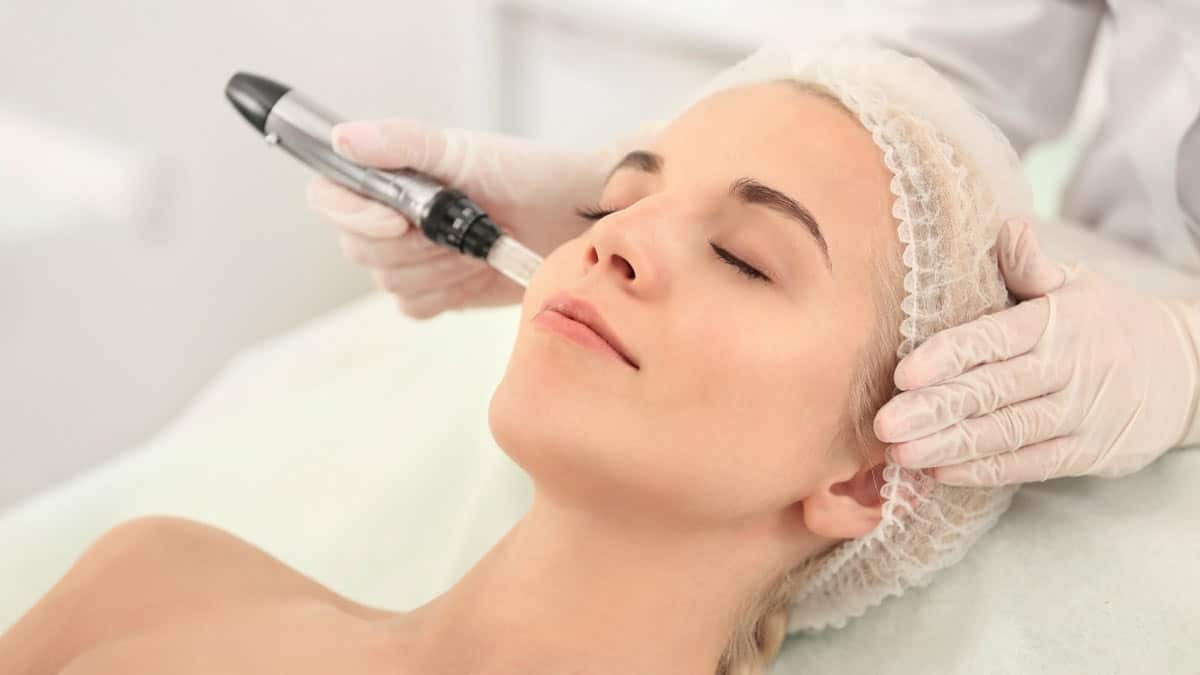
On deeper Indian skin tones, what changes about microneedling is not whether it works — the collagen response is the same — but what happens if the skin is over-treated. More melanin means inflammation is more likely to leave a darker mark behind. That single fact governs the depth chosen, how your first session is judged, and how strictly you protect the skin afterwards.
It is the most useful thing anyone can tell you about this treatment, and it is the thing international content on microneedling most often leaves out.
What does "Indian skin" mean here, in practical terms?
It means skin with more melanin in it — the range dermatologists describe as Fitzpatrick types IV to VI, which covers most people walking into a clinic in Bangalore, though not all of them and not in a way anyone should self-assign.
It does not mean a different treatment. The device is the same, the mechanism is the same, and the results it can achieve are the same. Microneedling with Dermapen creates controlled micro-channels so your skin repairs itself with new collagen and elastin, whatever your skin tone. What changes is the margin for error either side of that.
What is post-inflammatory hyperpigmentation, and why does it matter most here?
Skin with more melanin responds to inflammation by producing pigment. So a treatment intended to improve the look of your skin can, if it inflames the skin more than it needed to, leave a darker patch where it worked.
That is post-inflammatory hyperpigmentation, and on deeper skin it is the consideration that outranks every other one in this article. It is not a rare complication to be scared of; it is the ordinary behaviour of the skin you have, and it is the reason judgement matters more here than technique.
Our own treatment page states the same thing from the aftercare side: freshly needled skin burns easily and pigments easily. Both halves of that sentence are doing work.
Does that make microneedling a poor idea on deeper skin?
No — and the reason is worth understanding, because it is a genuine advantage of this particular treatment.
Microneedling with a Dermapen is a needling device. It does not emit light or energy into the skin. That matters, because much of the historical caution about resurfacing on deeper skin comes from energy-based devices, where how the skin's pigment absorbs the energy is itself part of the risk. There is no such interaction here. What is left is a mechanical, controlled injury and your own healing response to it — and the variable you and your doctor can actually control is how much injury is created.
So this is not a treatment to avoid on deeper skin. It is a treatment where the answer is judgement rather than avoidance.
What should change in the room?
The depth, chosen for the concern.
Our page is specific about this and deliberately not more specific than it can be: the device creates micro-channels at a depth chosen for the concern — shallower for texture and tone, deeper for scarring — and the doctor sets it after examining the area, checking for anything that rules microneedling out, and deciding how many sessions the concern needs. Deeper settings do more, and they also inflame more.
That is the whole trade, and it is why the same treatment at the same clinic can be a different procedure on two different people. The questions worth asking out loud are simple ones: what depth are you starting me at and why, how will you judge whether my skin tolerated it, and does the plan change if it does not.
A clinic that runs the same settings on everyone is ignoring the one variable that matters most for skin like yours.
Is the concern itself harder to read on deeper skin?
Yes, and this is the part that most often sends people to the wrong treatment.
A flat brown mark left behind by a spot and an actual indented acne scar are two different problems that need two different answers. On fair skin the difference is fairly obvious, because a scar catches the light and a mark does not. On deeper skin, where post-acne marks are darker and more persistent, they can crowd the picture — an area can look scarred in a mirror when a good deal of what you are seeing is pigment, or look mostly pigmented when there is genuine textural change underneath.
That matters commercially as well as clinically. Microneedling is a treatment for texture: acne scars, open pores, uneven texture, stretch marks and fine lines. It does improve tone as a by-product — as the surface renews, dull skin and shallow pigmentation lift, which is what patients describe as glow — but buying a course of needling for a problem that is mostly pigment is buying the wrong tool.
Only an examination separates the two, and it is not something you should try to settle from a photograph of your own face.
How much does sun protection actually matter?
More than any other single instruction on the aftercare sheet.
SPF 50 or higher, every day. Freshly needled skin burns easily and pigments easily, and sun exposure in the days after a session is the most avoidable way to convert a good result into a darker patch. In Bangalore this is a year-round instruction rather than a summer one — the ultraviolet does not take an off season here, and cloud cover is not protection.
It is also not a general wellness suggestion. It is the specific thing that prevents the specific problem this article is about.
What does healing look like, and when should I call?
Expect redness, mild swelling and some flaking, usually settling within a day, and occasional light bruising at deeper settings. Plan around two days without strenuous exercise. The micro-channels stay open for a few hours, so the face is not washed for the first four hours and the antiseptic cream you are given is used as instructed — that is what keeps the infection risk low.
Because the skin has been deliberately opened, some things deserve a phone call rather than a wait. This is a list of reasons to ring us, not a list to interpret yourself:
- Redness, swelling or tenderness that worsens after the second day instead of settling
- Pain that increases rather than fades
- Any discharge, or yellow crusting over the treated area
- Any clustered blistering, or tingling that comes before it
- A fever in the days after a session
- Skin that darkens beyond the expected flaking, or a treated patch behaving differently from the skin around it
That last one belongs on this list precisely because of everything above. Do not wait to see whether it fades, and do not start treating it with something a search result suggested — call the branch that treated you, at Indiranagar or Bellandur, describe what you are seeing, and let a doctor look. Working out what it means is their job, not yours.
Does adding PRP change the pigmentation picture?
Our pages do not claim that it does, and we are not going to imply otherwise.
PRP, often called a vampire facial, replaces the standard serum with your own platelet-rich plasma — a small blood sample, spun to concentrate the platelets, returned to your skin. Because the material is yours, there is nothing to react against. Whether it adds anything worth the extra cost for your concern is a consultation question rather than a menu choice, and the answer depends on what is being treated.
Where does a chemical peel fit?
A chemical peel works at the surface, lifting away spent cells so fresher skin comes through — which makes it the more natural fit when the problem really is marks and dullness rather than texture. On deeper skin the same caution applies with the same force: the depth and the solution are chosen by a doctor for your skin type, and that choice is what decides whether a peel helps or backfires.
Sometimes the answer for a face carrying both marks and scarring involves both treatments, in an order somebody decides. That is a plan, not a purchase.
What rules it out?
Pregnancy and breastfeeding, active acne, active herpes, and moderate-to-severe chronic conditions such as eczema or psoriasis are all reasons to treat something else first or take another route. Active inflammation is worth underlining here: needling through skin that is currently flaring is exactly the situation where the pigment response is most likely.
What to ask before you book
Three questions, and any doctor should welcome all three: is my concern texture or pigment or both; what depth are you starting me at and how does the plan change if my skin marks afterwards; and what does the aftercare require of me between sessions.
Microneedling with Dermapen starts at ₹3,999 per session at both clinics, and it is performed by a doctor, always. The consultation is ₹500, waived off against treatment — book an appointment and bring the question in the shape you have it.