
High-Frequency Treatment: How the Current Helps a Breakout-Prone Scalp
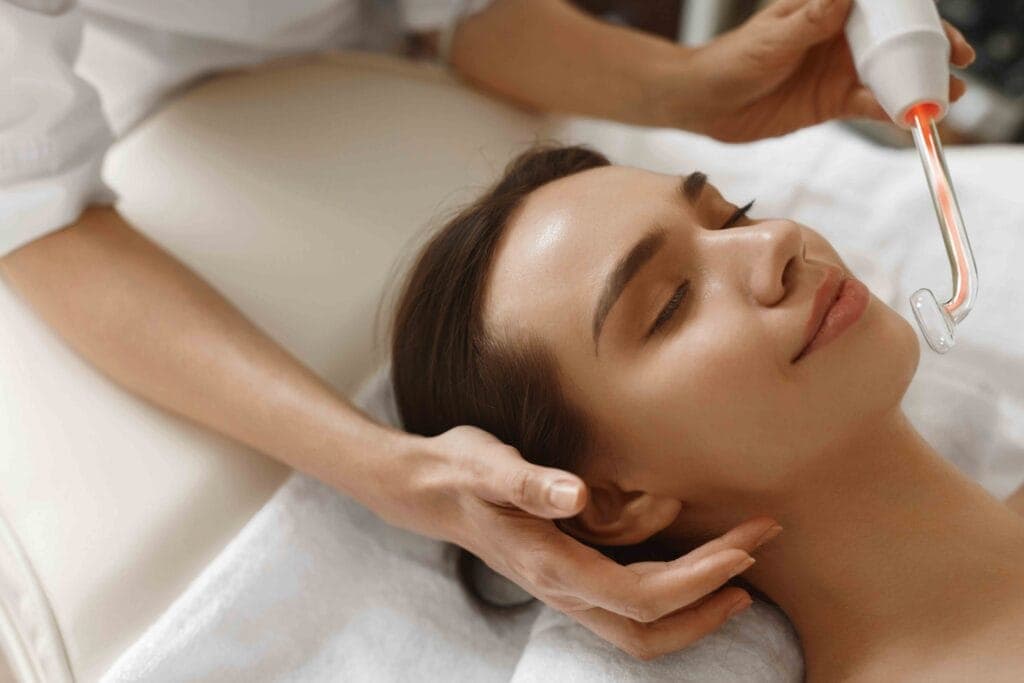
High-frequency therapy passes a low-current, high-frequency electrical current through a glass electrode moved over the skin — and the current does two useful things: it has an antibacterial action, and it stimulates blood flow where it is applied. That pairing is why the crackling glass wand became a fixture of acne facials, and it is exactly the mechanism at work at The Aesthetic Edge, where high-frequency is used on the scalp: supporting circulation and scalp condition, most often as part of a wider hair fall or dandruff plan rather than as a standalone treatment.
If you arrived here searching for the acne version, the mechanism below is the same one — and the scalp turns out to be where an oily, breakout-prone surface benefits from it most. Here is how Hair High-Frequency Treatment actually works, what a session feels like, and — just as important on any electrical treatment — who should not have it.
How does the current actually help?
Three ways, each grounded in what the current physically does.
It supports circulation. The current is applied to stimulate blood flow through the scalp — and the scalp's blood supply is the environment the follicle depends on. Everything a follicle needs arrives through that circulation, which is why "scalp condition" is not a cosmetic nicety but the ground floor of any hair plan.
It is antibacterial. This is the property that made the wand famous in acne treatment rooms, and it is why high-frequency is often paired with treatment for an oily, flaky or breakout-prone scalp. A scalp can break out for the same broad reasons facial skin does — oil, congestion, bacteria — and the current addresses the bacterial part of that triangle directly.
It helps what comes after it. Sessions are usually sequenced with topical scalp treatments, because the current can aid the penetration of what is applied afterwards. In practice that means high-frequency rarely appears alone on a treatment plan: it is the step that prepares the scalp and amplifies the serums and treatments around it.
What does a session feel like?
Gentler than the sparking-glass visuals suggest. The current is delivered through a glass electrode moved over the scalp — no needles, nothing injected, no anaesthesia — and most patients describe a gentle tingling or slight warmth as it passes. A session runs around 15 to 20 minutes, which makes it one of the easiest appointments to attach to a working day at either our Indiranagar or Bellandur clinic, and there is no downtime at all: any mild redness settles quickly and normal activity resumes immediately.
As for how many sessions: it varies with the state of your scalp and how you respond, so a fixed number is not promised at the start. A short course is typical, usually alongside a wider hair plan, and it is reviewed along with the rest of that plan rather than sold as a standalone package.
Is high-frequency safe — and who should skip it?
It is generally considered safe when carried out by a trained professional, and every session here runs under medical supervision — but it is not suitable for everyone, and this is the part that separates a clinic from a gadget listing. High-frequency is not performed on patients with a pacemaker, a heart condition or epilepsy, or during pregnancy. At The Aesthetic Edge those contraindications are screened for by a doctor before a session is booked, not discovered after — which is also a useful test of anywhere else you might consider having it done. An electrical current over the body deserves a screening question; if nobody asks you one, walk out.
Will it fix hair fall or acne on its own?
No — and the honest answer here is the most useful thing this post can tell you. High-frequency supports scalp condition and circulation; it does not treat the underlying cause of pattern hair loss. It belongs alongside a diagnosis-led plan, not instead of one. The same modest framing applies to breakouts: the current's antibacterial action helps an oily, congested scalp settle, but "helps" is the operative word — it is a supporting player in a plan, not the plan.
That is why it so often appears next to its neighbours rather than alone. For the flaky, itchy, oily scalp, the Anti-Dandruff Treatment pathway addresses the underlying condition while high-frequency supports the terrain. And if what actually brought you to this page is facial acne — breakouts, congestion, the marks they leave — the clinic's toolkit for that lives elsewhere, with the Chemical Peel family among the first conversations to have; a consultation will sort your concern into the right pathway rather than bending this one to fit it.
Bangalore gives scalps plenty to cope with: helmets through humid months, hard water in half the city's buildings, oil that builds by evening, and the dust that comes standard with every commute. A treatment whose whole job is keeping that environment calm, clean and well-supplied earns its 15 minutes — as long as it is doing that job inside a plan that has diagnosed what is actually going on.
Where it fits for you
If your scalp runs oily, flaky or breakout-prone — or you are already on a hair plan and wondering what would support it — the sensible next step is to let a doctor look rather than book a gadget session somewhere on instinct. Book a consultation at The Aesthetic Edge, Indiranagar or Bellandur. You will get the screening questions this treatment requires, an honest read on whether it belongs in your plan, and a plan for the underlying problem — with high-frequency in its proper, supporting place.