
PRP Vampire Facial and a Chemical Peel: Why These Two Are Spaced, Not Stacked
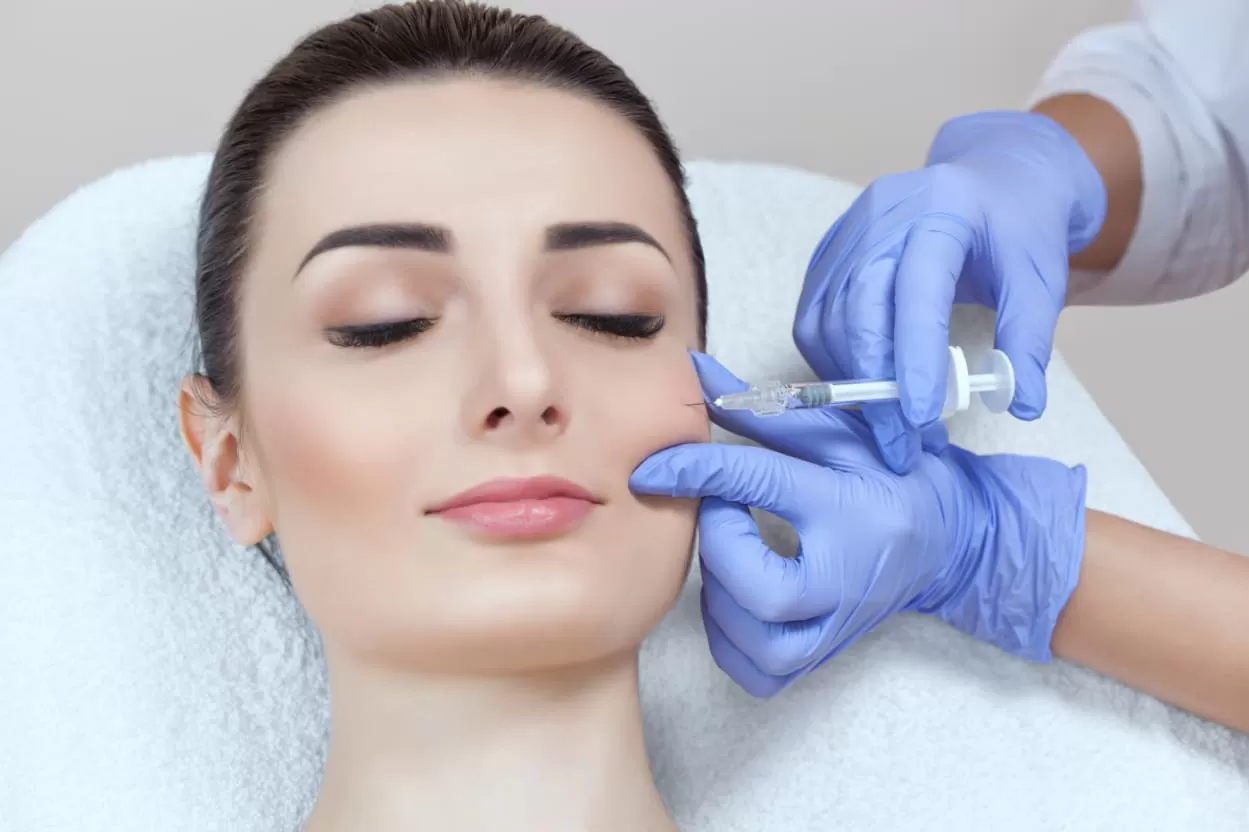
If you have read that a vampire facial is usually paired with microneedling in one appointment, you might reasonably assume a peel can be bolted on the same way. It cannot, and the reason is specific: a peel's job is to make the surface shed, and shedding skin is not a surface anyone should be injecting into. These two treatments are sequenced weeks apart rather than stacked, with the actual gap set by the depth of peel you had and how your skin responded.
That is the answer. What follows is why, and what to ask so the two plans are laid out together rather than booked on separate calendars.
Why can a peel not be added to the same appointment?
Because the two treatments leave the skin in incompatible states.
PRP Vampire Treatment takes a small sample of your blood, spins it to concentrate the platelets, and returns that platelet-rich plasma to your skin to prompt collagen production. Delivering it necessarily breaks the skin, and the whole procedure depends on sterile conditions — blood drawn, spun and re-injected under sterile technique by a doctor is what keeps infection risk low in a treatment that opens the surface.
A Chemical Peel works the opposite way round. A solution is brushed on, left for roughly three to five minutes depending on the peel, then neutralised, followed by a cool compress, a hydrating cream and sunscreen. What follows over the next few days is the point of it: the treated skin sheds, and the instruction is explicitly not to pick, peel or scratch it — to let it come away on its own.
Put those together and the conflict is obvious. One treatment needs an intact, clean surface to inject through. The other deliberately produces a flaking one.
Which one goes first?
The peel, and then PRP once the skin has finished shedding and settled — that is the order that respects both protocols.
The reasoning is in the peel's own aftercare. Daily broad-spectrum sunscreen, staying out of direct sun and heat while the skin settles, no waxing, threading or bleaching for a week, and no Retin-A or other sensitising products for 72 hours. A treatment that punctures the surface does not belong inside that window. Slight redness or flaking for a few days after a superficial peel is normal, and deeper peels take longer.
Going the other way — PRP first — is also workable, but it has its own short wait: redness and mild swelling after PRP settle over a day or two, and you would not want a peel solution going onto skin that is still reacting.
What you should not do is guess which way round yours should be. Bring both goals to one appointment and ask for the order, because the answer depends on which concern is the priority rather than on a general rule.
How long should the gap be?
We are not going to publish a number, because the thing that decides it is not published either: superficial, medium and deep peels are all offered and matched to your skin and concern, and a few days of flaking after a superficial peel is a different proposition from a deeper one.
What is knowable is the shape of the two plans, and it is worth seeing them side by side before you commit to either:
- PRP runs as a course of around five to six sessions, spaced to let collagen remodelling complete between them, with the effect of a completed course typically holding for around a year and maintenance after that.
- Peel courses run over several months for superficial peels, with fewer sessions for deeper ones, each with its own patch test before the first full treatment.
Those are two multi-month commitments, not two appointments. Asking for the gap in days at your review is reasonable; asking a page to supply it is not.
Can I just pick one instead?
Often that is the better question, and the honest answer depends on what is bothering you rather than on combining for its own sake.
PRP's documented strengths are collagen work: softer acne scarring, because the concentrated growth factors drive remodelling in the dermis where scars sit and creams cannot reach; improved firmness and elasticity as new collagen builds; and softer fine lines, without adding volume or altering your features.
A peel's work is at the surface — lifting away dead surface cells so fresher skin comes through, with the depth and solution chosen by a doctor for your skin type, which is the part that decides whether a peel helps or backfires.
If your concern sits in one of those two descriptions and not the other, you may not need both at all. A clinic willing to say so is more use to you than one that sequences everything.
What should I declare before either?
For the peel, a glycolic acid allergy is something to raise up front, and the patch test exists for exactly that reason. You are also asked to avoid waxing or bleaching beforehand and to stop exfoliating scrubs and benzoyl peroxide for at least 48 hours.
For PRP, the consultation is where the doctor establishes whether it suits you at all. Both treatments break or disturb the skin barrier, so an active infection or broken skin at the site is a reason to postpone rather than to proceed carefully.
Tell the clinic you are considering both, at the first appointment. The front desk cannot sequence a plan nobody has mentioned, and two sets of bookings made independently is exactly how people end up with a peel appointment four days after a PRP session.
Does Bangalore change the sequencing?
Not the order, but it tightens the peel half of it. The post-peel instruction is daily broad-spectrum sunscreen and staying out of direct sun and heat while the skin settles — and an afternoon commute on two wheels in open sun is precisely what that means. If your week cannot accommodate that, the peel is the appointment to move, not the sunscreen rule.
PRP is easier to fit: minimal downtime, with redness and mild swelling settling over a day or two, though topical anaesthetic goes on about 45 minutes beforehand so the appointment is longer than the injecting suggests.
Across two courses running over months, the practical planning question is which weeks you can genuinely protect from sun and heat — and that is worth saying out loud when the schedule is being built.
Getting the order set
Bring both treatments to one consultation and ask for the sequence and the gap in days, not in general terms. The consultation fee is waived against treatment if you go ahead, at either our Bellandur or Indiranagar clinic. Book an appointment and say at the outset that you are weighing both — that one sentence is what turns two courses into a plan.