
Combining Botox and Chemical Peel: Order, Spacing and Why
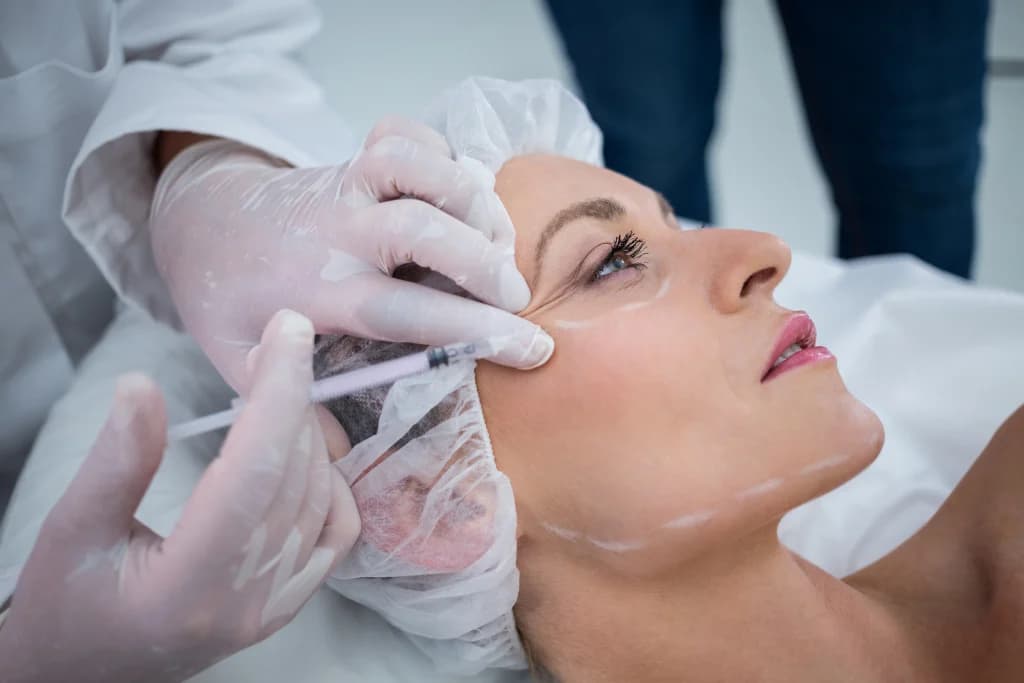
Botox and a chemical peel address different layers and different problems — one temporarily relaxes the muscles behind expression lines, the other lifts spent surface cells so fresher skin comes through. They are normally planned as two separate appointments rather than stacked into one. Neither protocol at this clinic fixes a gap between them, so the order and the interval are set by your doctor at consultation.
Most people arriving at this question have already worked out that their face has two things going on at once. That instinct is usually sound. What follows is how a doctor turns it into a schedule.
Why would one plan include both?
Because a line and a mark are not the same problem, and neither treatment pretends to solve the other's.
Botox is an injectable that eases the contraction of specific facial muscles. Less contraction means the skin sitting over those muscles creases less. That is why it is aimed at the horizontal lines across the forehead, the vertical frown lines between the brows, and crow's feet at the outer corners of the eyes — the creases that come from movement repeated thousands of times.
A chemical peel never touches the muscle. It applies a controlled acid solution so the built-up dead layer lifts away, which is what improves texture, dullness, congestion and the pigmented marks left behind after breakouts. Medium-depth peels also prompt new collagen as the skin repairs, which softens the appearance of fine lines over a course of treatments.
So a face can genuinely carry both: expression lines that deepen when you raise your brows, and a surface that reads rough or blotchy in daylight. Neither treatment reaches the other's territory.
Do they overlap on fine lines at all?
Partly, and this is the part worth getting right before you spend money on either.
At the assessment for an injectable, the doctor watches your face at rest and in movement, and separates the lines that are dynamic from the lines that are static. Only the first group responds well to a wrinkle-relaxing injectable. A crease that is fully present when your face is completely still is a different problem, and relaxing the muscle will not lift it.
A peel works on the surface, so it can soften how fine lines read regardless of what the muscle underneath is doing — but that softening builds across a course your doctor sets, not in one visit. The two effects therefore look similar in a brochure and behave nothing alike on a calendar.
Is there a standard interval between the two?
No, and anyone quoting you a number without examining your skin is inventing one. Neither the Botox protocol nor the peel protocol here specifies a gap from the other. That is a genuine silence, not an oversight — what the interval should be depends on which peel depth you are having, how your skin responded to the patch test, and what else is in your plan.
What is documented is the shape of each recovery, and that is what a doctor builds the schedule around.
Which usually comes first?
There is no fixed answer, but two documented facts push most plans in a particular direction.
The peel comes with a patch test before the first full treatment, and its aftercare is strict for a defined window: broad-spectrum sunscreen every day, no direct sun or heat while the skin settles, no waxing, threading or bleaching for a week, nothing sensitising such as Retin-A for 72 hours, and no picking at skin that is flaking. Superficial peels usually leave slight redness or flaking for a few days; deeper peels flake more and for longer.
The injectable side has a different rhythm. The appointment takes about 15 to 30 minutes, downtime is minimal and most people go straight back to work the same day. Tiny raised bumps and mild redness at the injection points are common and usually settle within an hour or two. But the result itself is slow: changes begin around four to seven days and settle by two weeks, which is when you come back for review.
Put together, the peel occupies your skin's surface for days and the injectable occupies your calendar for a fortnight. Which of the two is booked first is therefore usually a question of which concern is bothering you more, and what else is happening in the weeks ahead. Your doctor makes that call in the room.
What does the peel's aftercare rule out while the injection settles?
The peel's instructions are the more restrictive of the two, and they apply to your skin whether or not you have had anything injected. Sunscreen daily is the one nobody is allowed to skip. Heat, direct sun, swimming and strenuous exercise in the first 24 hours are all off, and the flaking has to be left alone to shed on its own — picking at it is what turns an ordinary recovery into a mark.
The Botox side asks less of you day to day, but it asks for patience. The two-week review exists precisely so that a point which has settled unevenly can be adjusted rather than guessed at, and that review is far harder to interpret if your skin is mid-peel and inflamed at the same time. Spacing the two is as much about being able to judge the result as it is about safety.
What should prompt a call to the clinic?
Some things are worth ringing about rather than waiting out, and you are not expected to work out what they mean — that is our job, not yours.
Get in touch if redness or swelling at an injection point increases after the first day rather than settling; if a bruise keeps spreading instead of fading over a few days; if heaviness or a noticeable unevenness appears or persists beyond the first fortnight; or, on the peel side, if the treated skin becomes markedly more painful, weeps, or develops a colour change you were not warned about. If anything at all changes in how you swallow or breathe in the days after an injectable, treat that as urgent — do not wait to see whether it settles. If you cannot reach the clinic, go to the nearest emergency department.
What do the two sides cost?
Botox is priced from ₹299 per unit. That is a per-unit rate rather than the cost of a treatment, and how many units your plan needs depends on your muscle pattern and how much softening you want, so the figure only becomes meaningful once a doctor has mapped your face.
Chemical peels start from ₹2,999 per session. Superficial peels are usually repeated across several months to build a result, and your doctor sets that schedule at consultation.
A consultation is ₹500, waived against treatment.
Where to start
Come in with the concern rather than the shopping list. Say which lines bother you and when you notice them, and let the assessment decide whether one treatment, both, or a different plan altogether is the honest answer. If it is both, you will leave with an order and a set of dates rather than a rule of thumb.
Book a consultation and we will take it from there.