
Hair Patch vs Medical Hair Regrowth Treatment: How to Actually Decide
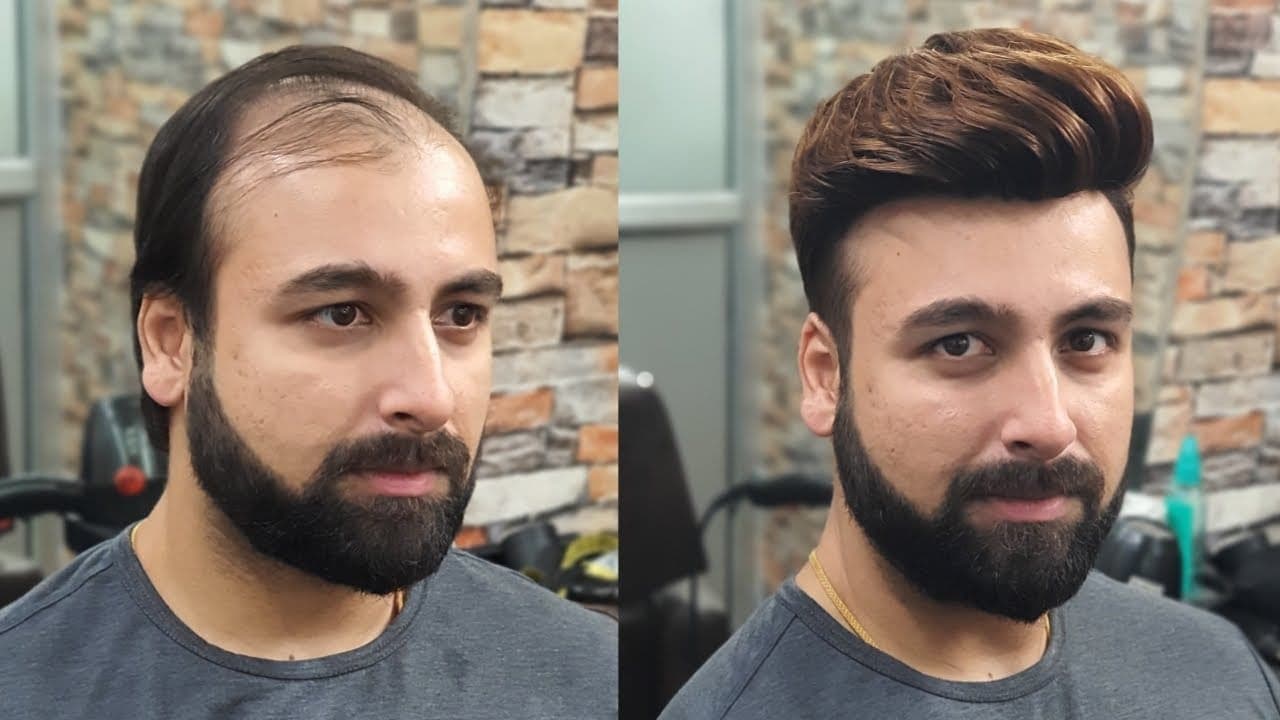
A hair patch and a medical regrowth treatment answer two different questions. The patch answers "how do I look by this evening?" — it is a custom-made hair system fitted over the thinning area, matched to your own hair, and the change is visible the day it is fitted. Regrowth treatment answers "what can my own follicles still do?" — it works on the scalp itself, and its results are measured in months. Neither is superior; they are tools for different stages of the same problem, and they are not mutually exclusive.
If you have been circling between the two — or between a patch and the surgery ads that follow every hair-loss search — this post lays out what a Hair Patch Treatment actually is, where the medical route fits, and how a doctor helps you decide rather than sell.
What exactly is a hair patch, and is it surgery?
It is not surgery, and that distinction does a lot of work. A hair patch is an external system fitted to the scalp: nothing is implanted, cut or injected, no anaesthesia is involved, and there is no surgical recovery to plan around. It is also not a transplant — that is surgery which relocates your own follicles, a different procedure entirely, and one The Aesthetic Edge does not offer. The patch is fitted, worn, serviced, and — this matters — removable.
That reversibility is genuinely rare in the hair-loss world. If you decide the patch is not for you, the system comes off and your scalp is as it was; few hair-loss options leave that door open. For someone weighing a big, visible change, being able to change your mind is worth more than most marketing promises.
The craft is in the matching. Colour, texture, wave pattern and density are matched to the hair you already have, so the join is not obvious at the edges — and how natural the result looks depends almost entirely on that matching and on the cut that blends the system into your own hair. It is why the matching stage takes as long as it does, and why the practical advice is simple: ask to see the match against your hair in daylight before the system is made. The fitting itself is typically one appointment of one to two hours, and you walk out with the result the same day.
One more thing that separates a clinic fitting from a shop fitting: your scalp is examined first. An inflamed, infected or actively flaking scalp is treated before anything is fitted to it — because fastening a system over an unhealthy scalp helps nobody, and only a medical setting checks.
When does medical regrowth treatment make more sense?
When your follicles still have something to give. Treatments such as GFC Hair Loss Treatment and PRP Hair Regrowth Treatment work on follicles that are weakened but still active, which makes earlier and moderate thinning their natural territory. Their timeline is honest but slow — reduced shedding first, visible density over months, because hair grows at its own pace — and the payoff is your own hair, growing from your own scalp.
The flip side is the boundary the patch exists for: where thinning is too far along for regrowth treatment to give the coverage you want, a patch is a straightforward way to get it. No amount of follicle stimulation covers an area where the follicles are long gone, and an honest clinic says so instead of selling you a year of sessions toward a result that cannot arrive.
So the decision largely writes itself from an examination. Early thinning, active follicles, patience for a months-long timeline → the medical route. Advanced loss, coverage wanted now, or an event-heavy season where you want to look a particular way by a particular date → the patch. And genuinely unsure which side you are on → that is not a self-diagnosis; it is the first question of a consultation.
Can you do both at once?
Often, yes — and this is the part most comparison articles miss. The two approaches do not compete for the same territory: the patch covers the area that needs covering today, while regrowth treatment works on the follicles that can still respond. For many patients the sensible plan is exactly that combination — look the way you want to look now, and invest in your own hair in parallel. How the two are sequenced, and whether your scalp suits both, is decided at the consultation after a doctor has actually looked; the patch's own fitting process already includes that scalp examination, so the conversation happens naturally.
Living with a patch is undramatic, with one caveat worth knowing before you commit: most day-to-day activity is fine — but what is safe in the gym, the pool and the shower depends on the attachment method used, so you are given specific instructions for your system at the fitting rather than general advice. Systems also need periodic re-securing and refreshing; how often depends on the attachment method and how fast your own hair grows, and that interval too is set for you at the fitting. For a working Bangalore week, the practical summary is: one fitting appointment, then scheduled maintenance you can plan around, at either our Indiranagar or Bellandur clinic.
The decision is easier with your scalp in the room
Reading comparisons only takes you so far, because the deciding fact — how much active follicle you still have, and where — is not visible in the mirror and not knowable from a blog post, including this one. Book a consultation at The Aesthetic Edge, Indiranagar or Bellandur. A doctor will examine your scalp, tell you plainly which side of the patch-versus-regrowth line you are on — or whether the right plan is both — and let you make the call with real information instead of guesswork.