
Exosome Therapy: The Worldwide Trend, Assessed for Indian Hair
Exosome therapy is the newest arrival in hair regrowth, and it is having a global moment. For an Indian reader the honest summary is this: the mechanism is sound, the concentration of signalling factors is high, and the evidence base is genuinely thinner than the one behind older blood-derived options. It suits early thinning, properly assessed, and it is not a shortcut.
What is the trend, exactly?
A shift from putting material into the scalp towards putting instructions into it.
For years the in-clinic regrowth options here worked from your own blood. PRP concentrates platelets from a small sample; GFC prepares a growth factor concentrate from one. Both are processed in the clinic and returned to your scalp.
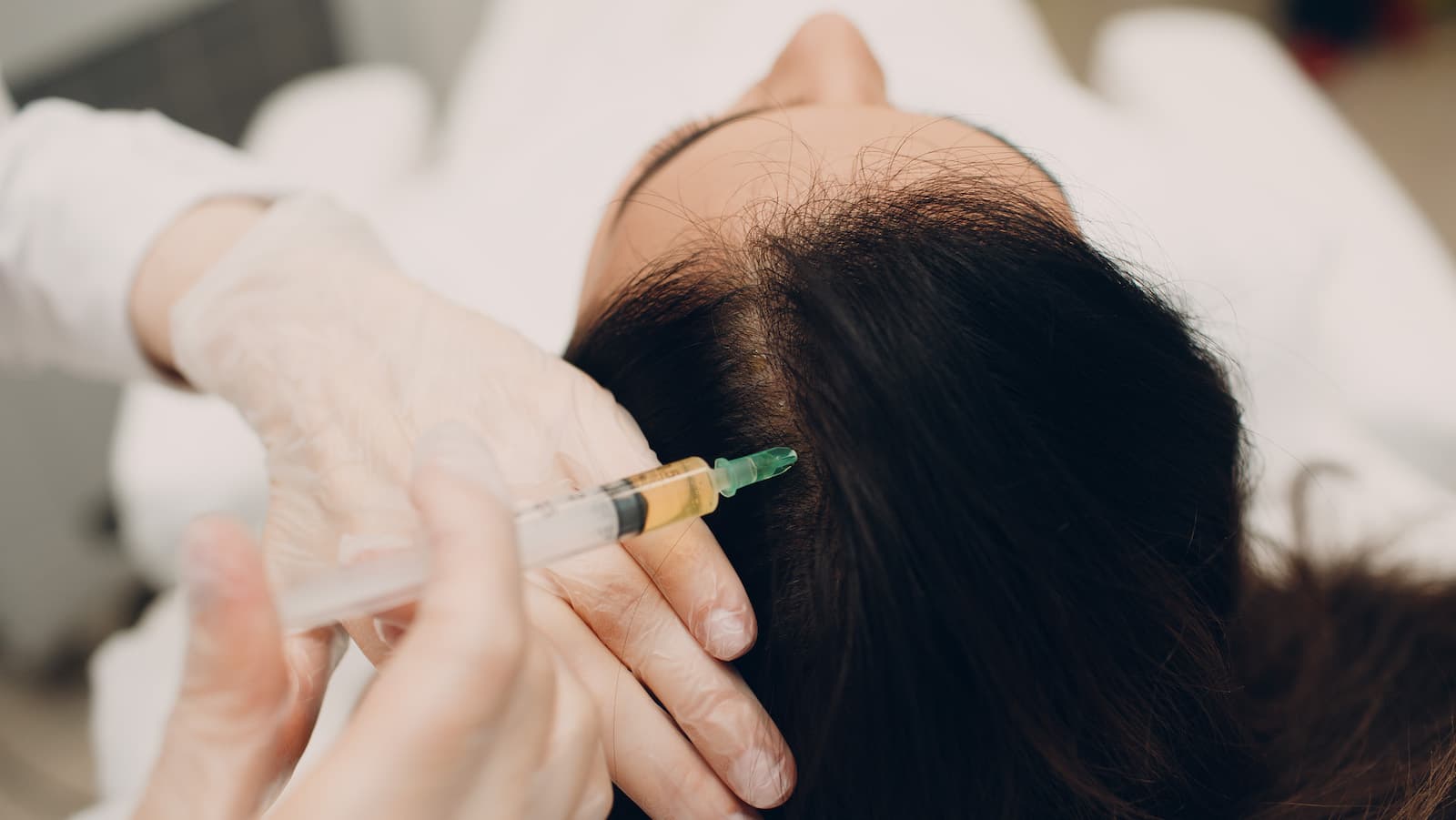
Exosome hair treatment changes the source. The exosomes are prepared in a laboratory, most commonly from stem-cell culture lines, and delivered into the scalp through fine micro-injections. There is no blood draw and no centrifuge step. What is delivered is a bundle of growth factors and signalling molecules — the message a healthy cell would send — at a higher concentration than a blood-derived preparation typically reaches.
That is the whole of the trend. It is a real change in approach rather than a rebranding, which is why it has spread quickly, and why it deserves a careful read rather than an enthusiastic one.
Does the evidence actually support it?
Partly, and the honest word is "emerging". This is where a clinic writing about a treatment it offers has to be careful, so here is the plain version.
The mechanism is well understood — cells do communicate through exosomes, and delivering that signalling payload to a weakened follicle is a coherent idea. The concentration argument is real. What is not yet settled is the long game: exosome therapy is newer than blood-derived scalp treatments, and long-term outcome data is still accumulating. PRP and GFC have simply been used for longer, and that length of use is itself a form of evidence.
None of which makes exosomes a poor choice. It makes them a choice that should be made after an assessment rather than because a treatment is new. If someone presents this to you as settled science, or as obviously superior to everything that came before it, they are ahead of the data.
Does it suit the way hair thinning presents here?
For a good number of readers, yes — because of when people tend to come in rather than anything about the treatment itself.
Patients in Bangalore very often arrive describing months of increased shedding, a parting that has widened, and hair that is finer than it was but still there. Some connect it to water, some to heat and humidity, some to a stretch of poor sleep or a period of stress or illness. Those observations are worth bringing to a consultation — but what is actually driving your thinning is established by a doctor examining your scalp and taking your history, not by matching yourself to a description. Thinning has medical, nutritional, hormonal and inherited causes, and they are not distinguishable from a photograph or an article.
Where exosomes fit is defined narrowly and it is worth memorising: they signal follicles that are weakened but still active. Early and moderate thinning, in both men and women, is the situation the treatment is designed for. Areas that have been fully bare or scarred for years are not — exosomes cannot rebuild a follicle that has gone, and regrowth cannot be promised where too little active follicle remains. A doctor should say that to you at assessment, before a course is sold rather than after.
What about the practical side — time, sessions, downtime?
This is where the treatment fits an Indian working week rather well, and it is a fair part of its appeal.
A session runs about 45 to 60 minutes, most of it spent waiting for anaesthetic cream to numb the scalp. The injections themselves take roughly 20 to 30 minutes. There is no downtime: normal activity the same day, with strenuous exercise, swimming and direct sun avoided for two days and hair products for six hours. A typical course is three to four sessions around four weeks apart.
Because there is no blood draw, the visit is shorter and simpler than the alternatives — which genuinely matters if the reason you have put this off for a year is that you could not find the afternoon.
How long before you see anything?
Reduced shedding first, and visible density in months. Anyone offering you a different timeline is selling rather than explaining.
Hair grows at roughly a centimetre a month, and nothing injected into a scalp changes that. This is the single most useful fact to hold on to when you are reading marketing about a new treatment, because it applies equally to every option on every clinic's menu. It is why baseline photographs are taken before the first session and compared at a review at around three months, and why no clinic can honestly promise a visible difference in 30 days.
What should an Indian reader ask before booking anywhere?
Four questions, and they are the ones that separate a considered clinic from an enthusiastic one.
- Which product is being used, where does it come from, and how is it screened? Preparations are lab-derived and processed by their manufacturer. This clinic does not publish a brand name on the page, because the specific product, its source and its screening are things to discuss openly in the room rather than advertise. A clinic that cannot answer this is a clinic to leave.
- Has anyone actually examined my scalp? Every course here starts with a doctor's scalp assessment. If a course is quoted before an examination, that is the problem, whatever the treatment is called.
- Am I a candidate, honestly? The useful answer is sometimes no, or sometimes "an older option suits your scalp better". Which of PRP, GFC or exosomes fits depends on your scalp and your preferences, and is decided at consultation.
- What happens if it does not work? The plan is not fixed at the start — it is reviewed against your photographs at three months and adjusted from there. Ask what "adjusted" means before you begin.
Is it worth it?
It is worth assessing, which is a different sentence from the one most trend coverage ends on.
If your thinning is early, your follicles are still active, you would rather avoid a blood draw, and you have understood that the evidence base is younger than the alternatives, exosome therapy is a reasonable and modern option performed here by a doctor. If your thinning is long-standing, or nobody has yet established what is causing it, the treatment is not the first question — the diagnosis is.
Side effects are mild and local: redness and tenderness at the injection points settling within a day or two, occasional itching or scalp tightness, and small bruises that are uncommon and fade within days.
There is no single published price, because there is no single course; the number of sessions and the area treated are what set it, and both come out of the assessment. Consultations are ₹500, waived against treatment. Book an appointment and bring whatever you currently use on your scalp, including over-the-counter products.