
Dermaplaning vs Hydra Medi Facials: How to Choose
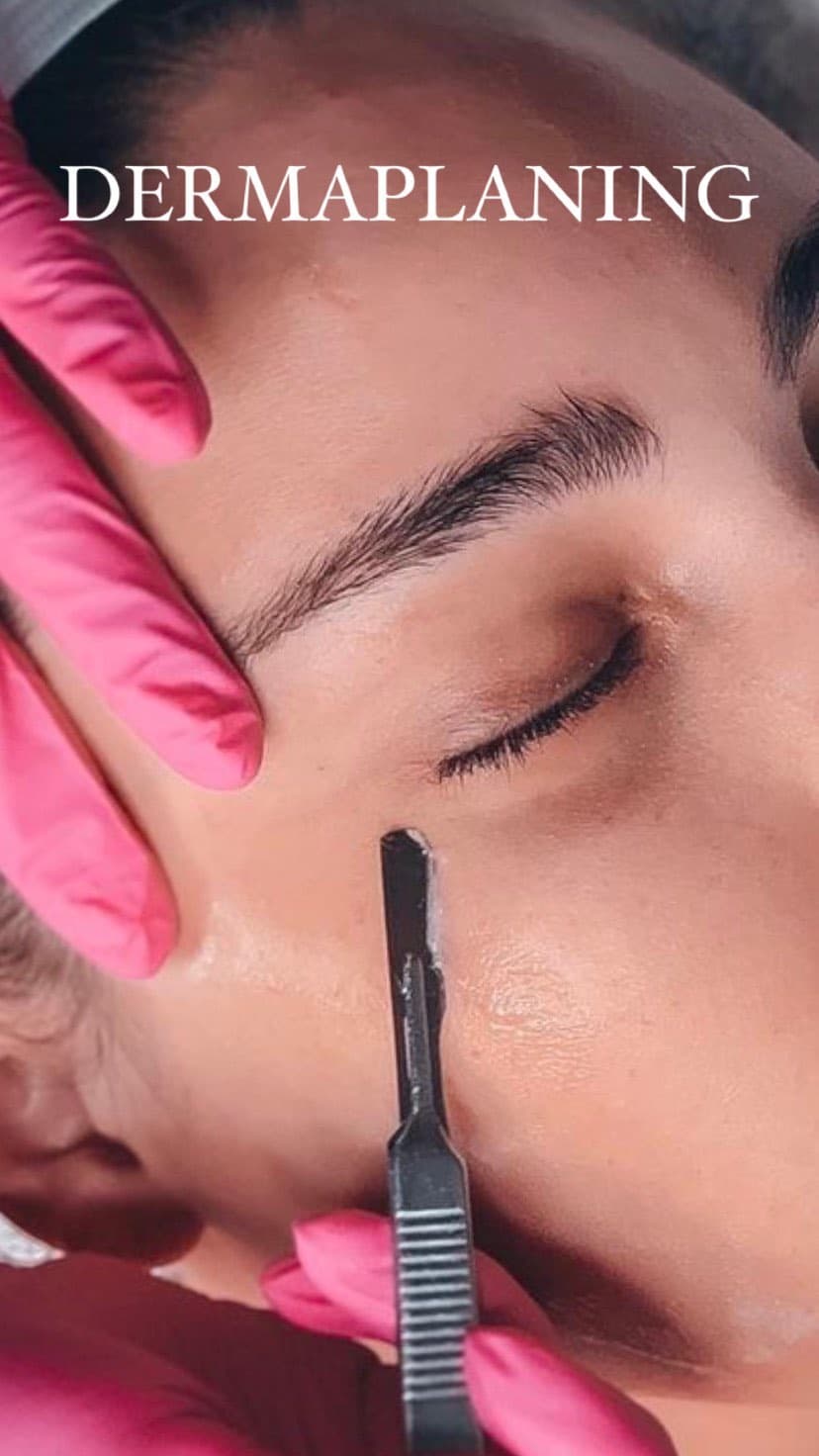
Dermaplaning and a Hydra Medi Facial both leave skin smoother with no downtime, but they work differently. Dermaplaning is a blade exfoliation that removes dead surface cells and the fine facial hair growing through them. A Hydra Medi Facial cleanses, exfoliates, extracts congestion and infuses actives in one sitting. Choose on whether your concern is surface hair and texture, or congestion and hydration.
Put like that, the choice usually resolves itself — and quite often the answer is that they belong together rather than in competition. Here is what each one genuinely does, the cases each of them wins, and where they overlap.
What is the actual difference between them?
Dermaplaning is a physical exfoliation and nothing else. A sterile single-use blade, held flat against clean dry skin, lifts away the dead surface cell layer and the fine vellus hair most people call peach fuzz. No device, no suction, no solution left on the skin. A session is 30 to 45 minutes.
A Hydra Medi Facial is a three-in-one medical facial: it cleanses and infuses the skin with active ingredients, exfoliates away dead cells, and finishes by oxygenating so those actives absorb properly. Along the way it uses gentle suction to lift loosened debris and to draw out softened blackheads and congestion — which replaces squeezing, and the bruising that comes with it.
So one takes material off the surface. The other takes material out of pores and puts actives in. Both exfoliate; only one of them removes hair, and only one of them extracts.
How do they compare, side by side?
| Dermaplaning | Hydra Medi Facial | |
|---|---|---|
| What it is | Physical exfoliation with a blade | Infusion, exfoliation and oxygenation in one session |
| Removes fine facial hair | Yes | No |
| Clears blackheads and congestion | No | Yes, by suction extraction |
| Delivers actives into the skin | No — but it helps yours absorb | Yes, hydrating and antioxidant infusions |
| Downtime | None; makeup the same day, sunscreen essential | None to speak of; mild redness settles quickly |
| Results visible | Immediately | Most see brightness after one session |
| How long it holds | Roughly 3–4 weeks | Several weeks, longer with good home care |
| Typical frequency | Every 3–4 weeks | One session a month |
| Sensitive skin | Assessed case by case | Suitable for all skin types, including sensitive skin |
| Performed by | Trained clinician, doctor-supervised | A doctor reviews your skin before the protocol runs |
| From | ₹1,999 per treatment | ₹2,999 per treatment |
| Consultation | ₹500, waived off against treatment | ₹500, waived off against treatment |
The Hydra Medi Facial price includes a complimentary chemical peel with every session, which is a ₹1,999 session on its own.
When does dermaplaning genuinely win?
When fine facial hair is part of the problem. This is the clearest case, because a Hydra Medi Facial does not remove hair at all. If your makeup sits patchy because foundation is catching on peach fuzz, or the hair catches the light in photographs, only one of these two addresses that.
It also wins on immediacy of texture. The smoothness is there by the time you sit up, with nothing having been left on the skin and no device involved. And it wins as a preparation step: clearing the surface first helps a facial or a peel reach the skin more evenly, which is why dermaplaning is often booked before something else rather than instead of it.
When does a Hydra Medi Facial genuinely win?
When the concern is congestion rather than surface texture. Blackheads and blocked pores need softening and extraction, and a blade passing over the surface does neither. If your skin looks tired and congested and a salon facial never seems to last, this is the one built for that.
It also wins where actives are the point. The protocol infuses hydrating and antioxidant ingredients while the skin is freshly cleared, which is the moment they penetrate most readily — dermaplaning improves how well your products absorb but puts nothing in itself.
And it is the more accommodating of the two for reactive skin. The Hydra Medi Facial protocol has anti-inflammatory and anti-bacterial elements and is described as suitable for all skin types including sensitive skin. Dermaplaning is not ruled out for sensitive skin, but small nicks or grazes are more likely on uneven or very reactive skin, so it is a judgement made at assessment.
Are there days when neither is the right answer?
Yes, and the lists are not identical, which matters more than it sounds.
Dermaplaning is postponed or declined for active cold sores, sunburn, broken or infected skin, and some skin conditions. Active inflammatory acne is the common one: a blade crossing inflamed spots, pustules or cysts can spread bacteria and worsen them. Settled acne where the concern is texture or marks is often fine.
A Hydra Medi Facial is postponed for an active rosacea flare, sunburn or an infected breakout, since those can be made worse rather than better. It is also not offered in pregnancy — tell your doctor at consultation so an appropriate alternative can be discussed. The dermaplaning protocol does not name pregnancy either way, so if that applies to you, raise it and let the assessment settle the plan rather than assuming from an article.
Can you have both?
Frequently, yes, and it is a common plan rather than an indulgent one. Dermaplaning clears the surface so the facial that follows works on skin rather than on the dead layer sitting over it. Whether they are sequenced in one visit or spread across a month depends on your skin, and that sequencing is decided at consultation — not from a menu, and not faster than your skin is ready for.
What should make you contact the clinic afterwards?
Neither treatment asks much of you afterwards, which is exactly why it is worth knowing what is worth a phone call. Please do not try to assess it yourself.
After dermaplaning, contact the clinic if pinkness lasts beyond a day or two, if a graze does not look like it is healing, if the skin becomes genuinely painful rather than mildly sensitive, or if a cold sore appears. After a Hydra Medi Facial, get in touch if redness persists beyond a day or the skin feels genuinely irritated, rather than treating it at home. In both cases, ring the clinic that treated you or arrange a review appointment. Something looked at early is nearly always simpler than the same thing looked at late.
Sunscreen is not negotiable after either. Freshly exfoliated skin burns more easily — for around a week after dermaplaning, and in the week following a facial.
Which should you book?
If you can name the concern as hair and rough texture, start with dermaplaning. If you can name it as congestion, dullness and dehydration, start with the facial. If you cannot separate the two, that is a completely ordinary place to be, and it is what the consultation exists for.
Book an appointment and someone will examine your skin before recommending either. The consultation is ₹500, waived off against the treatment you go on to have.