
Dentures vs Dental Implants: How to Choose
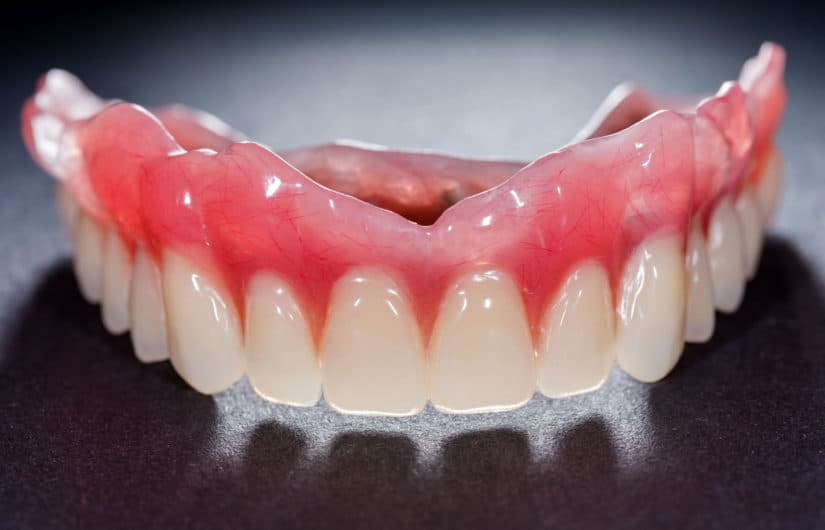
A denture rests on the gums and lifts out; an implant is a titanium root fixed into the jawbone. Dentures need no surgery and are ready in weeks, which matters where bone or general health rules surgery out. Implants stay put, need no adhesive, and help slow the bone loss that eventually loosens a denture.
Neither of those is the answer to "which is better", because that question has no general answer. It has an answer for your jaw, and this article is about the things that decide it.
What is the actual difference?
A denture is a removable replacement for missing teeth and the gum tissue around them. A full denture replaces a whole arch; a partial fills in around the teeth you still have. It is made to your own mouth and adjusted over several visits until it sits comfortably, and it comes out at night.
A dental implant is an artificial tooth root, usually titanium, placed into the jawbone to support a replacement tooth. It restores biting and chewing without altering the healthy teeth on either side, and it keeps the jawbone stimulated where a tooth has been lost.
The single structural difference — resting on the gum versus being anchored in the bone — is what produces almost every other difference below.
Side by side
| Dentures | Dental implants | |
|---|---|---|
| How it is held | Rests on the gums, removable | Anchored in the jawbone, fixed |
| Surgery | None — nothing is placed into the jawbone | Placement into the jawbone under local anaesthesia |
| Visits | Several: impressions, try-in, fitting, then adjustments | Typically three to four across the treatment |
| Timeline | Weeks, plus a few weeks to adapt | Several months, to let the implant fuse with bone |
| Effect on the jaw | Bone continues to resorb underneath, so the fit changes | Transmits chewing force into the bone and helps slow that loss |
| Neighbouring teeth | A partial is designed around the teeth you still have | Stands on its own; healthy teeth stay untouched |
| Daily care | Cleaned daily, removed at night, kept moist | Cleaned like a natural tooth; no soaking, no fixative |
| Speech | Replacing missing teeth helps; expect a week or two of adjustment | Fixed in the jaw, so it does not slip or click as you speak |
| Over the years | Several years; relining or remaking is normal, not a failure | Intended as long-term; the crown may need replacing sooner than the implant |
| Adapting to it | A few weeks for eating and speaking; sore spots eased at follow-ups | Soreness and swelling for a few days; soft foods for a short period |
When does a denture genuinely make more sense?
Four situations, and the first is the one that settles the argument outright.
When surgery is not on the table. Dentures do not involve placing anything into the jawbone, which makes them an option where bone volume or general health rules surgery out. An implant needs enough bone to hold it securely, and the implant core is explicit that uncontrolled diabetes, active gum disease, heavy smoking or insufficient jawbone can all affect healing. Where those apply, a denture is not the consolation prize — it is the treatment that works.
When you want it done sooner. A denture is a matter of several appointments over weeks. An implant takes several months, because the bone has to fuse to the implant surface before the final tooth goes on.
When several teeth are missing across an arch. A full denture replaces a whole arch as one appliance, and a partial fills in around what remains.
When you want something that can be adapted. Dentures can be relined, adjusted and repaired as your mouth changes, rather than having to be replaced outright each time.
When do implants genuinely make more sense?
Also four, and they are the mirror image.
When a denture is already moving. The patients who ask us about implants most often say the same thing: their denture moves when they eat and they are tired of adhesive. An implant is fixed in the jaw. There is no nightly soaking and no fixative.
When you want to protect the bone. This is the difference that compounds. The jaw loses bone where a tooth root is missing, and an implant transmits chewing forces into the bone and helps slow that loss. Under a denture, resorption carries on — which is exactly why a denture that fitted well loosens over the years and needs relining or remaking.
When speech and confidence matter most. An implant does not slip or click while you speak.
When you are replacing one tooth, not many. Implants can support a single crown, a bridge spanning several missing teeth, or a full arch — but a single gap is where an implant is at its most straightforward, and where it avoids involving any neighbouring tooth at all.
Is there a middle option?
Yes, and it is underused. Implant-retained dentures clip onto a small number of implants, which greatly improves stability — for a lower denture in particular, which is generally the harder of the two to settle.
You get the denture's coverage of a whole arch with a great deal of the implant's security. It still requires adequate bone and it is still surgery, so it is discussed at assessment like any other option — but if you have been framing this as a binary, it is worth asking about.
What does the decision actually depend on?
Less on preference than most people expect, and more on three findings:
- Bone. For implants, a full examination with X-rays or a CT scan checks bone volume, gum health and the position of nearby nerves and sinuses. If the scan shows there is not enough bone to hold an implant securely, a bone graft may be needed — common where a tooth has been missing a long time.
- Gums and remaining teeth. Denture planning assesses the remaining teeth, gums and jawbone, and identifies any preparatory treatment. Active gum disease affects both routes.
- General health and habits. Healing is what an implant depends on. This is a medical conversation, not a cosmetic one.
Both treatments are performed by a dentist, always.
What about the cost?
We do not publish a figure for either, and that is deliberate rather than evasive. Both are quoted after an examination, because both are priced around findings — how much of the arch is involved, how many implants a plan needs, whether grafting or preparatory treatment is required.
What is worth weighing at the same time is the shape of the spending, not just its size. A denture is a lower outlay that carries expected maintenance: relines and remakes as the bone changes. Implants are a higher outlay intended as a long-term replacement rather than something replaced every few years, though the crown on top may need replacing sooner than the implant itself. Neither is automatically the cheaper answer over a decade, and no one can promise which will be for you without seeing your jaw.
Our consultation is ₹500, waived against treatment.
Making the decision
If you are missing teeth and weighing these up, the honest next step is an assessment that compares both for your case — bone condition, gum health, general health, and what you want the result to do.
Book an appointment and have both options laid out against your own X-rays. Whichever way it goes, the reasoning should be something you can see for yourself.