
Cool Sculpting vs Lipolytic Injections: How to Choose
Both treatments reduce a stubborn pocket of localised fat without surgery, and neither is a weight-loss treatment. Cooling suits the larger, flatter areas an applicator seats well over; injections reach small, defined pockets a device cannot. The real difference is what each asks of you afterwards — and which of the two your own medical history quietly rules out.
If you have arrived here with two names and no way to sort them, this walks through the trade-offs in the order they actually matter when you are choosing.
What is the actual difference in how they work?
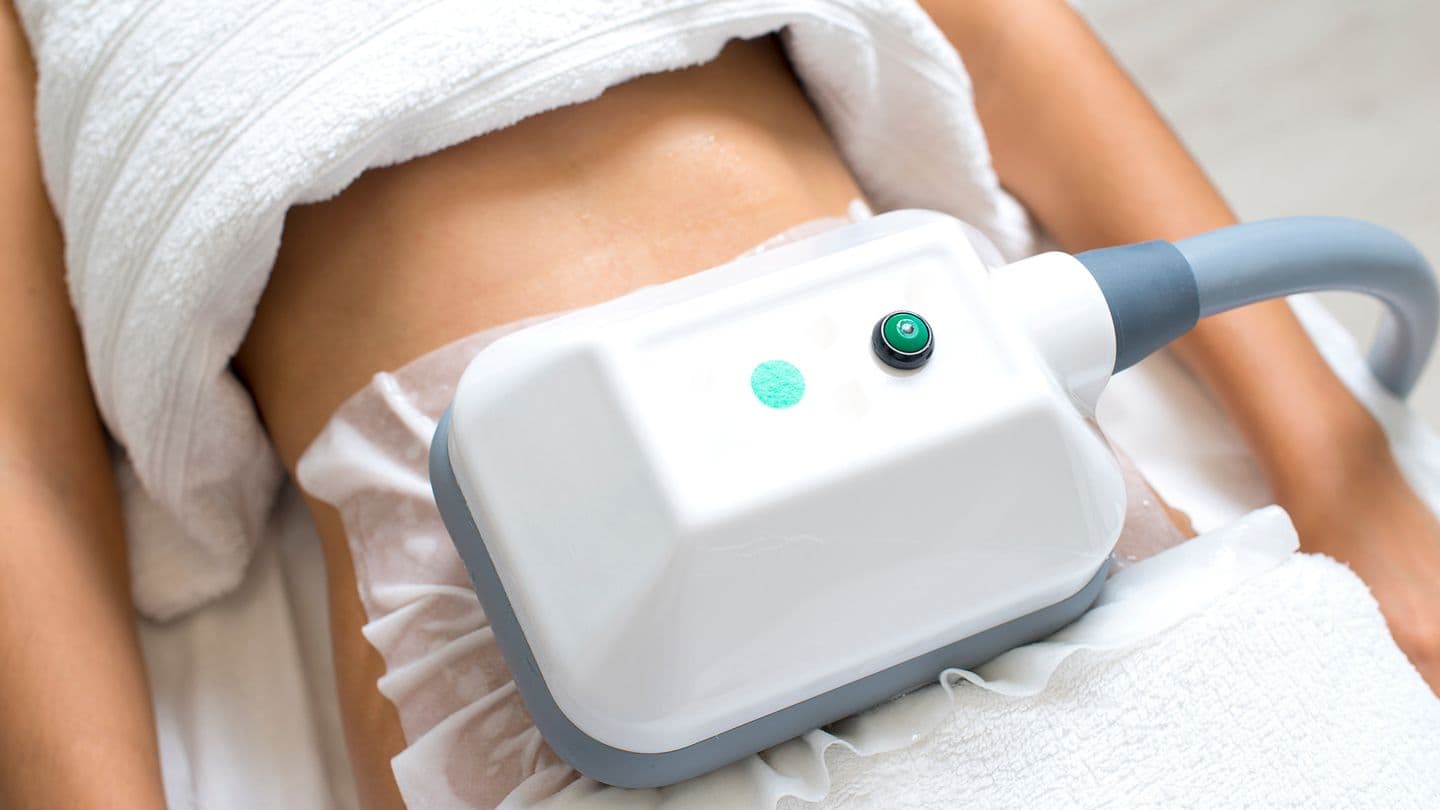
One works from outside the skin and one from inside it. Cool Sculpting sits an applicator on the surface and uses controlled cooling, with suction, to target the fat cells beneath — no needles, no incisions, no anaesthetic. Lipolytic Injections place an agent that breaks down fat cells directly into the pocket being treated, in small amounts at multiple points across a marked area, so the dose is spread evenly rather than concentrated.
That single structural difference drives nearly everything below. A device has to make contact with the shape of you; an injection goes where the needle is aimed.
Which one fits the area I am pointing at?
Size and shape decide this more than preference does. Cooling is applied to areas an applicator can seat properly over — the lower abdomen, the flanks, the inner thighs, and under the chin where the contour suits it. Injections are aimed at small, defined pockets, and are often the more sensible answer under the chin and along the jaw, where a device applicator can struggle to get a useful grip.
So the honest sorting rule is unglamorous. A broad, flat pocket points towards cooling. A small, sculpted one points towards injections. Some areas — under the chin being the obvious example — can genuinely be approached either way, and that is the case where an examination earns its fee rather than a comparison table.
What do the days after each one feel like?
This is where the two diverge most, and it is the difference most people are not told about before booking.
After cooling, most patients go straight back to their day, including work. Redness, swelling and bruising are common and generally settle within hours to a few days. The area is often numb as soon as the applicator comes off; sensation usually returns within a few hours, though reduced sensation can persist for some days, and mild aching or cramping in the first days is normal. There is no recovery period to plan around.
After injections, expect swelling — sometimes marked, most noticeable in the first days, and settling over about a week. Redness, bruising and tenderness at the injection points are common, and bruising is more likely if you take blood-thinning medication. The area can feel firm or uneven for some weeks as it settles.
The consequence is counter-intuitive: the treatment with the shorter appointment has the longer visible aftermath. Injections take a matter of minutes and fit into a working day; a cooling session runs roughly 35 to 90 minutes per area but leaves you looking much as you did when you walked in. If you have a wedding, a shoot or a video-heavy fortnight coming, that distinction matters more than any other on this page.
How do the session counts really compare?
Both are courses more often than not, but they are counted differently.
With cooling, the number follows the size of the area: smaller areas often need one or two sessions, larger ones may need four to six. You should be given that number at your consultation, before you commit to anything.
With injections, a course is the norm, and the plan is deliberately adjusted as you go. The area is reviewed before each session and the schedule revised to how you have actually responded, rather than run to a fixed script sold up front. Some people prefer the certainty of a stated number; others prefer a plan that can change when their own response says it should. Neither preference is wrong, and it is worth saying which you are at the consultation.
Both are gradual. Neither shows its result on the day, and injections have a particular quirk worth knowing in advance: the area swells first and then settles, so early on it can look larger rather than smaller. Real change becomes visible over the weeks across a course, not after a single session. Patients who are not told this often conclude after one appointment that it has not worked.
Who is ruled out of each?
The exclusion lists are different, and this is where the choice is sometimes made for you rather than by you.
Cooling is not advised during pregnancy or breastfeeding, and it is ruled out for anyone with cold-related conditions such as cryoglobulinaemia, cold agglutinin disease or paroxysmal cold haemoglobinuria. A hernia at the treatment site also rules it out.
Injections are not advised during pregnancy or breastfeeding, with an infection at the site, or with certain medical conditions. A full history is taken before treatment either way.
Neither list is something to self-assess against. Bring your medical history and your current medication — including anything blood-thinning — to the consultation, and let the assessment do its job. The answer is sometimes that one option is fine and the other is not, which turns an agonising choice into a straightforward one.
What should I do if the result looks uneven?
Ring the clinic and be seen, rather than deciding at home what it means.
Both treatments can leave an area looking irregular while it settles, and both have their own version of it. With injections, firmness or lumpiness for some weeks is described in the aftercare — tell your doctor rather than massaging it yourself. With cooling, contour irregularity and, rarely, an increase in fat in the treated area have both been reported, and the instruction from us is the same: raise any unexpected change rather than waiting to see.
Contact the clinic if pain, swelling or redness is worsening rather than settling, if swelling has not begun to subside within about a week of injections, if numbness has not started to recover, if the treated area is changing shape in a way nobody prepared you for, or if something simply feels wrong. You are not expected to know which of those matters. That is the point of the review appointment, and of the phone number on your aftercare sheet.
Will either of them help me lose weight?
No — and if any clinic tells you otherwise, that is the moment to leave. Both treatments reduce fat in a defined area for people who are already near a stable weight. Neither changes your weight, and neither is a treatment for general weight management.
Both are also distinct from liposuction, which is a surgical procedure performed under anaesthetic and achieves considerably more in a single sitting. These are the non-surgical options for one area at a time.
And whichever route you take, the result holds alongside a stable weight and consistent habits. Fat cells cleared by the body are not replaced, but the cells remaining in the area can still enlarge — so without that, the surrounding fat simply rearranges itself around the treated pocket.
How does the consultation actually decide?
By examining the pocket rather than the brochure. The doctor looks at where the fat sits, how much of it there is, how the skin over it behaves and what your timeline is, then reviews your medical history for the exclusions above. Sometimes the honest conclusion is that the concern is not primarily fat at all — and cooling or injecting fat cells does nothing for skin that has lost its firmness.
That sorting step is the actual value of a doctor-led clinic: you are not choosing between two marketing pages, you are having one examination that says which — if either — fits the thing you are pointing at.
Booking it
Stop comparing names and let someone look at the area. Book a consultation at The Aesthetic Edge, Indiranagar or Bellandur — ₹500, waived off against treatment — and you will leave knowing which approach fits your pocket, how many sessions it honestly needs, what the days afterwards look like, and whether anything in your history takes one of the two options off the table.