
Combining Q-Switch Laser and Chemical Peel: Order, Spacing and Why
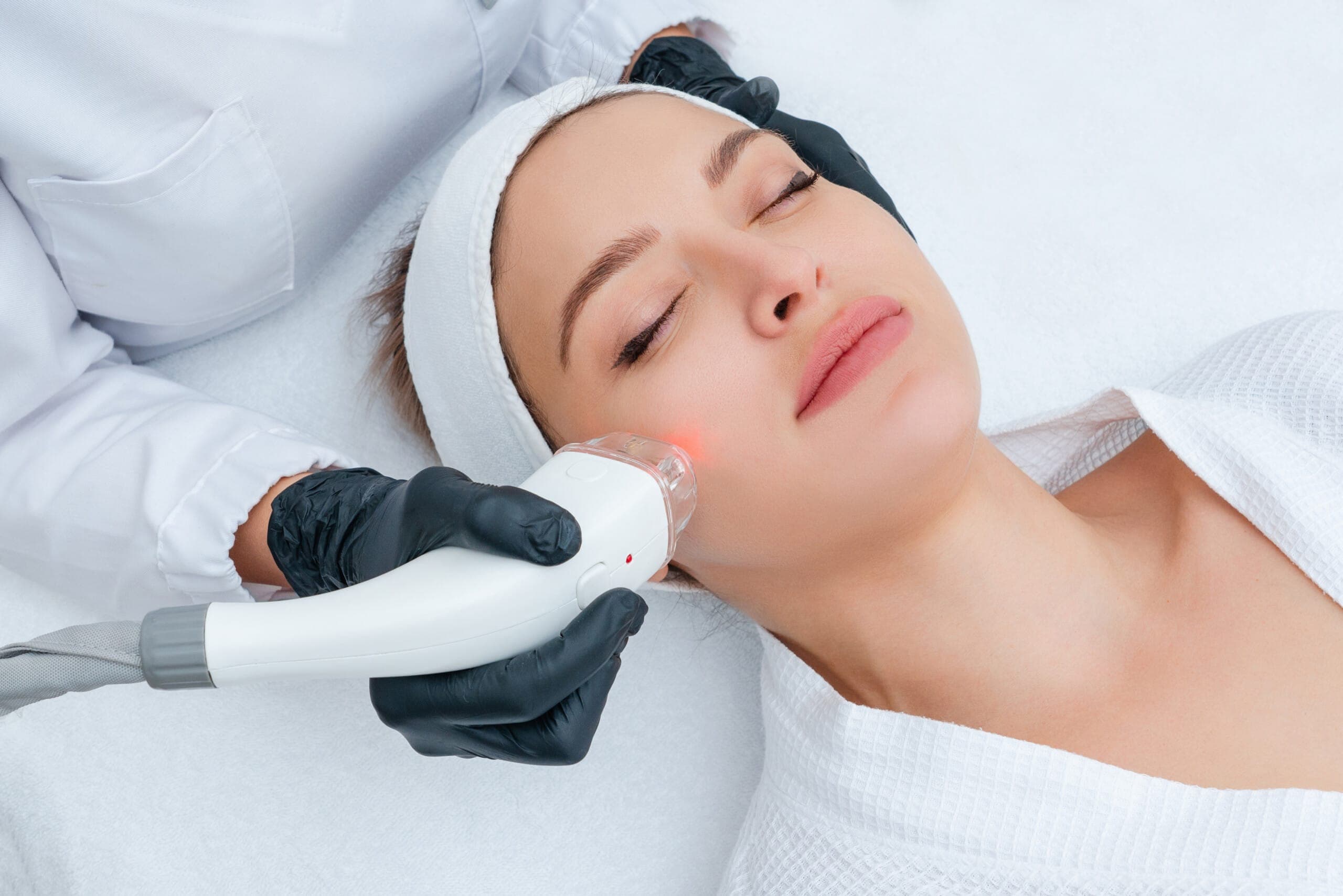
Peels and Q-Switch laser are combined because they work at different depths: a peel lifts dead surface cells and the pigment held in them, while the laser reaches pigment sitting below what a peel can touch. The order and the spacing are set by your doctor at consultation, because each has preparation and aftercare rules that overlap with the other.
That last point is the practical crux, and it is where a lot of self-designed plans come unstuck. Someone books a peel, feels encouraged, books a laser session for the following week, and arrives having broken the laser's own preparation instructions without realising there were any. Below is how the two fit together, and what to have settled before either appointment is in the diary.
Why would anyone need both?
Because pigmentation is rarely all at one depth. Peels lift pigmented surface cells and encourage turnover underneath, so post-acne marks and other shallow discolouration read as lighter over a course. But melasma and dermal pigment sit below the level a peel can reach, which is why Q-Switch laser exists as a mainstay for stubborn pigmentation: it delivers extremely short, high-energy pulses that shatter pigment into particles small enough for the body to clear, while leaving the surrounding skin intact.
Put together, the peel is doing the surface work — texture, dullness, shallow marks, the built-up dead layer that makes skin look flat — while the laser is addressing what sits underneath it. Neither is a stronger version of the other, and that is the sentence worth carrying into a consultation.
There is a second reason people end up with both, and it is a legitimate one: plenty of patients want to start with something gentler before considering laser at all. A chemical peel is a reasonable first step for someone in that position, and whether it turns out to be sufficient on its own is something the response tells you within a course.
Which one comes first?
There is no universal answer, and any plan that offers one without examining your skin is guessing. What determines it is the assessment: at a Q-Switch consultation the doctor identifies what the pigmentation actually is — sun damage, melasma, post-inflammatory marks — because the cause decides the settings and the number of sessions. A peel is chosen the same way, with depth and solution selected after an assessment and a patch test rather than picked off a menu.
Two things do shape the sequence in practice. If the working diagnosis is mostly surface pigment and texture, starting with peels and reviewing is sensible. If the pigment is clearly sitting deeper, a peel course alone is likely to plateau — the familiar pattern of steady early improvement followed by nothing more.
How far apart do the two sit?
The cores of both treatments set out their own windows, and reading them side by side shows why this cannot be improvised.
Before a Q-Switch session, exfoliants, bleaching creams and retinoids are stopped three days ahead, and sun exposure is avoided for two weeks, so the skin is in a safe baseline state. After a peel, you stay out of direct sunlight for about a week, avoid waxing, threading and bleaching for a week, avoid Retin-A and other sensitising products for 72 hours, and let the skin shed on its own without picking.
Those are not the same instructions, and they are not compatible with booking whatever slot happens to be free. What the two cores do not do is state a fixed number of days between a peel and a laser session — so the honest answer is that your doctor sets the interval for your skin and your treatment plan. Ask for it explicitly, and ask again if the plan changes, rather than assuming last time's gap still applies.
What does the recovery look like across a combined plan?
Each treatment has its own short recovery, and knowing which effect belongs to which avoids a lot of unnecessary alarm.
After a peel, expect slight redness or flaking for a few days following a superficial peel — deeper peels flake more and for longer. The treated area can look lighter or darker than surrounding skin while it settles, and daily broad-spectrum sunscreen is the single biggest factor in whether that resolves cleanly.
After a laser session, treated pigment often looks darker before it lifts, and mild redness is common. Both settle over roughly a week. There is no downtime in the sense of needing time off — most people return to normal activity the same day, and the skin usually settles fully in about a week.
The overlap is instructive: both recoveries are dominated by sun protection and by not interfering with skin that is doing something visible. Sun exposure after a laser session is the main cause of pigmentation returning or worsening, and daily SPF 50 with a week away from direct sun is a part of the plan rather than advice attached to it.
How will I know whether it is working?
Slowly, and by review rather than by mirror-checking.
Fragmented pigment is cleared by your body over the weeks after each laser session, so lightening is gradual and continues between visits. Sessions are spaced to allow exactly that, and your doctor reviews the response before each one — which is also when the settings get adjusted. Around six sessions is typical for overall skin rejuvenation and pigmentation, with a number given after seeing the area rather than in advance.
Peels build the same way. Superficial peels are usually repeated several times over a few months; medium and deep peels need fewer sessions, on a schedule your doctor sets at consultation.
Judging either in week one is how people abandon plans that were on track. The darkening after a laser session in particular is expected, not a sign the treatment has gone wrong.
Who is this combination not suitable for?
Both treatments have their own reasons to postpone, and they need to be checked against each other rather than one at a time.
Laser is ruled out for the time being by active bacterial, fungal or viral skin infection including herpes simplex, psoriasis in the area, skin cancer, and pregnancy or breastfeeding. A peel is postponed or replaced by pregnancy and breastfeeding, diabetes for certain peels, recent isotretinoin or other acne treatment, and recent cosmetic surgery that has left the skin sensitive. Tell your doctor about any glycolic acid allergy before a peel is chosen.
There is also a hazard specific to deeper skin tones that is worth stating plainly, because it is the failure mode this combination is most likely to produce if it is rushed. A peel that is too strong for your skin type causes pigmentation rather than clearing it, and deeper pigmented skin is more prone to post-inflammatory pigmentation. Depth is a medical decision, a patch test comes before the first full treatment, and the reason the Q-Switch suits melanin-rich skin is mechanical — the pulse is short enough to shatter pigment particles while surrounding tissue barely heats. Neither of those safeguards survives being hurried.
If skin stays red, or feels genuinely irritated rather than settling in the days after either treatment, contact the clinic instead of treating it at home. Rare complications of peels — scarring, infection, prolonged swelling — are uncommon but real, which is why the aftercare instructions are not presented as suggestions.
What holds the result once the course is done?
Sunscreen and any prescribed lightening cream are what keep cleared pigmentation from returning. Peel results are long-lasting rather than permanent, ranging from months to years depending on depth, with sun protection deciding where in that range you land.
Melasma deserves its own sentence, because it is the concern this combination is most often booked for and the one most often mis-sold. It is a chronic, relapsing condition. Laser toning manages it well, and maintenance sessions plus topical treatment are part of the plan rather than an afterthought. A plan for melasma that ends at "a course of six" is incomplete.
If you have been on creams or peels for a while and the improvement has levelled off, the useful next conversation is about depth — what your pigmentation actually is, and whether anything you are currently doing can reach it. The consultation is ₹500, waived off against treatment.
Book an appointment and have the sequence planned rather than assembled a session at a time.