
Combining Laser Hair Reduction and Hydra Medi Facials: Order, Spacing and Why
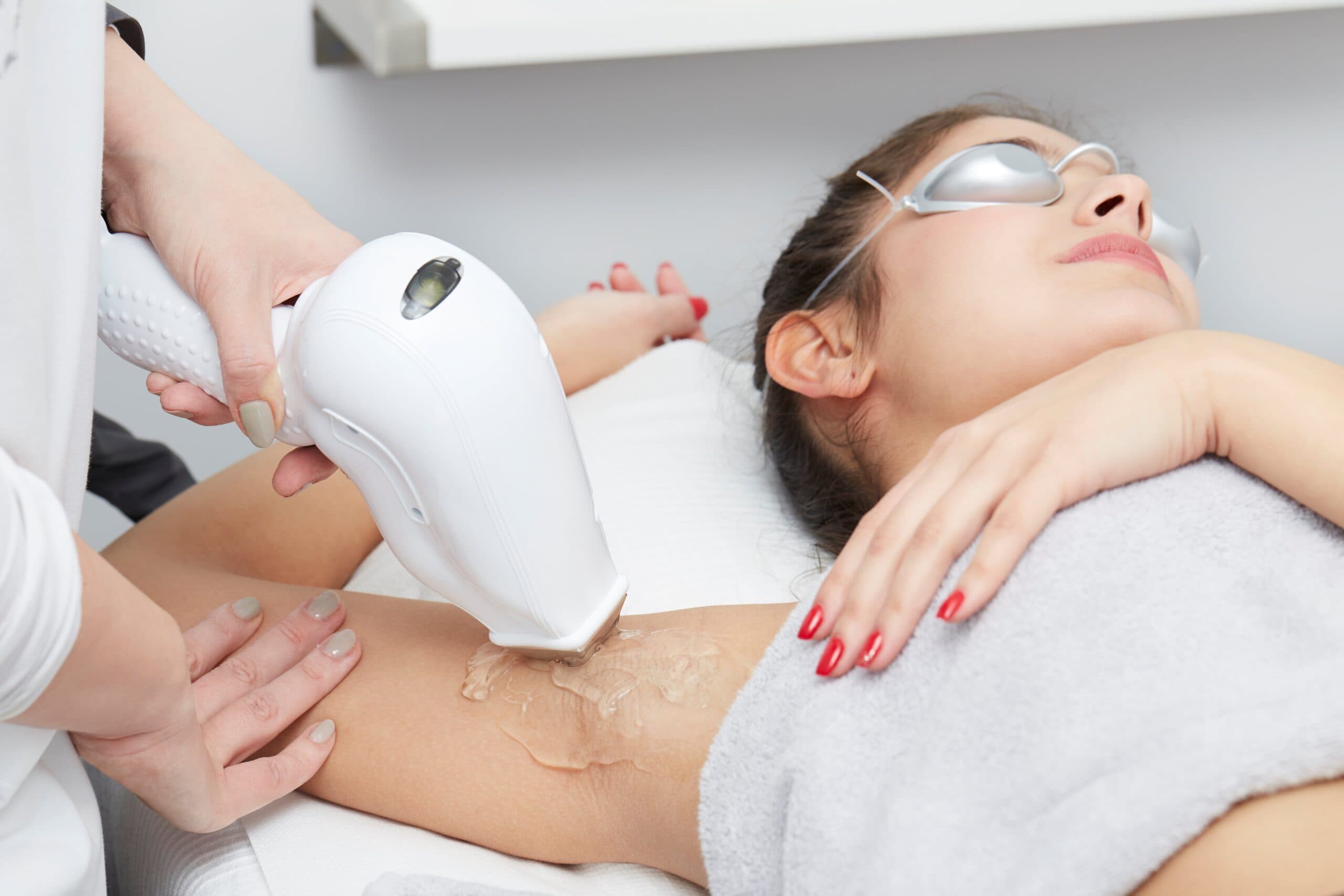
Yes, you can have both — they treat different things and neither treatment page rules the other out. What a combined plan needs is an order and a spacing, and neither page publishes a fixed interval between them. That interval is set at your consultation, from the aftercare window of each treatment and from the course cadence the laser is working to.
That is the honest answer, and the rest of this is what goes into it.
Which of the two sets the calendar?
The laser does, and it is worth understanding why before you try to book around it.
Laser hair reduction runs as a course of six to eight sessions, and the spacing between them is not arbitrary. Only hairs in their active growth phase respond to a session, so the intervals exist to catch follicles as they enter that phase. That is the whole reason a course of six to eight is needed rather than one visit. Move a session for convenience and you are moving it away from the thing it was timed for.
A Hydra Medi Facial works to a different logic. It is a maintenance treatment recommended at one session a month, where the benefit comes from regularity rather than from any single visit. A month is a rhythm rather than a biological window.
So in practice the inflexible calendar anchors and the flexible one moves around it. Book your laser dates first, then place the facials in the gaps. That is reasoning from how each course works rather than a rule printed on either page — your doctor may sequence it differently for reasons specific to you, and if they do, that is the version to follow.
How long should I leave between a laser session and a facial?
Neither treatment page states a number, and it would be irresponsible for a blog post to invent one. What both pages do give you is the shape of the problem.
After a laser session, skin may feel sensitive for one to two days, and you are asked to keep makeup, scented lotions and deodorant off the treated area for 24 hours. Redness and sensitivity typically last from a few hours to two days. Separately, treated hairs shed over the following 5 to 30 days, which is normal and not something to be worked around.
A Hydra Medi Facial has no downtime to speak of — mild redness, if it happens at all, settles quickly, and you return to normal activity immediately. Its own aftercare asks you to hold off on exercise for a couple of days and to keep sunscreen on.
Put those side by side and you can see what a doctor is actually resolving: two short aftercare windows that overlap, on skin that is more reactive than usual for part of the laser course. Ask for the interval at the consultation, and ask again if a session gets rescheduled — that is the moment a carefully planned gap usually collapses.
The rule that catches people out: no waxing or threading
This is the single most common way a combined plan goes wrong, and it has nothing to do with the facial itself.
Laser hair reduction needs the root in place to work. You are asked not to wax, pluck or tweeze for two weeks before your first session, and not to wax or pluck at all until the course is finished. A razor is fine for the duration.
The problem is that a lot of people's idea of a facial appointment includes having the upper lip threaded or waxed on the same visit. If you are having facial laser on the upper lip, chin or jawline, that habit removes the exact target the next laser session was going to treat.
So say it out loud when you book: no threading, no waxing, no plucking on any area in the laser course. It is an easy instruction to follow once someone has told you, and an easy one to breach by accident in a salon chair.
Does it matter that the laser is on my face rather than my legs?
It changes the overlap, so yes.
Facial hair is one of the most commonly requested areas — upper lip, chin, sides and jawline. Facial skin is thinner and more reactive than the body, so settings are lower and sessions are usually spaced closer together than they are for legs or arms. Hormonal causes are also checked first, because treating the hair without checking the cause disappoints people.
Closer spacing means more laser sessions competing with the monthly facial for the same square inches of skin. If your laser course is on your legs, underarms or back, the two treatments barely meet and the scheduling question is almost academic. If it is on your face, the plan needs building properly, which is an argument for having both under the same roof rather than at two places that cannot see each other's calendars.
What do both treatments ask of you in the same direction?
Two things, and they are the useful overlaps.
Sunscreen, throughout. Treated skin reacts more strongly to UV after laser, and sun exposure before or after a session raises the risk of burns and pigmentation — which is why sunscreen and shade matter for the whole course, not just the day after. The facial's aftercare asks you to keep sunscreen on as well. One instruction, satisfied once.
Postponing for the same reasons. Sunburn is a reason to postpone a facial, and sun exposure is a laser risk. An active rosacea flare or an infected breakout means rescheduling the facial rather than pushing through. Neither treatment is performed during pregnancy. Laser is also not recommended for people with vitiligo or other autoimmune skin conditions.
One more laser-specific note worth knowing on deeper skin tones: occasional temporary lightening or darkening of the treated area can occur and usually settles, and correct settings for your skin type are what keep it uncommon. That is why the diode system used here, with integrated cooling, is chosen for melanin-rich skin, and why the assessment covers skin tone before anything is set.
If redness persists beyond a day after either treatment, or you see blistering after a laser session, contact the clinic rather than treating it at home.
What does the combination cost?
They are two separate treatments, priced separately.
Laser hair reduction starts from ₹999 per area, and the number of areas and sessions comes out of your assessment. A Hydra Medi Facial is from ₹2,999 per session, and includes a complimentary chemical peel that is a ₹1,999 session in its own right.
There is no bundled figure for the pair, and you should be wary of any quoted before someone has looked at your skin. What a combined plan actually costs depends on which areas you are treating and how many sessions your hair and skin call for — that is quoted at the consultation, which is ₹500 and is waived against treatment.
Where to start
Read both protocols in full — laser hair reduction for the course structure and the preparation rules, and the Hydra Medi Facial page for what a monthly session involves.
Then book a consultation and bring both plans to the same conversation. Sequencing two courses is genuinely easier to do once, at the start, than to unpick halfway through when a rescheduled laser session has landed on top of a facial.