
Carbon Laser vs Hydra Medi Facials: How to Choose
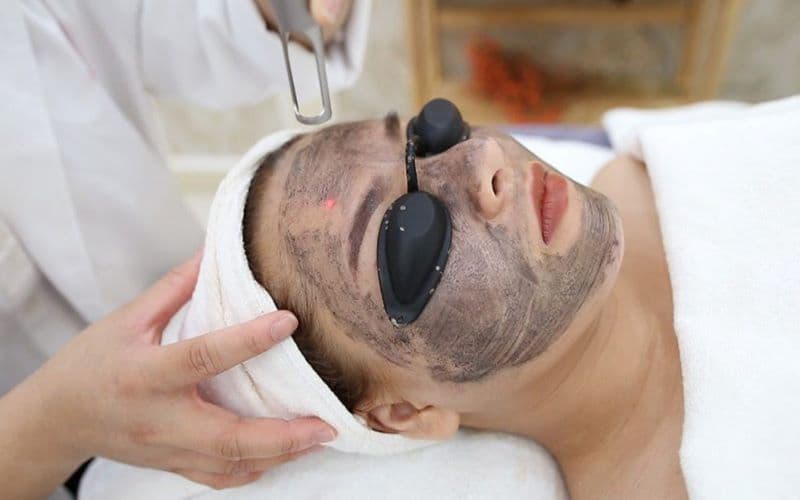
A carbon laser peel targets oil and congestion from inside the pore and adds a collagen-stimulating effect, in a course of four to six sessions. A Hydra Medi Facial cleanses, exfoliates and oxygenates as monthly maintenance, and suits all skin types including sensitive skin. Oily and breakout-prone skin usually points to the first; reactive or dull skin to the second.
That is the short answer. The longer one is worth reading, because the two treatments overlap in the one respect people usually shop on — both are quick, both leave almost nothing to recover from, and both are common bookings in the week before an event — and diverge on almost everything else.
What is a carbon laser peel actually doing?
A carbon-based lotion is spread over the skin and given time to sink into the pores, where it binds to oil and debris. A low-energy laser pass binds the carbon to what it has absorbed. A higher-energy pass then vaporises it, lifting the trapped material out with it, while a smoke evacuator clears the residue. Calming products and sunscreen finish the session.
The important part of that description is the word inside. The treatment is not exfoliating the surface — it is reaching into the pore and taking out what is sitting in it. That is why the carbon laser page frames it around oiliness, breakouts and enlarged pores rather than around glow.
The laser energy also warms the deeper layer, which prompts collagen regeneration and improves firmness and elasticity alongside the cleansing effect. That is a genuine second mechanism, and it is one the facial does not have.
A session runs about 30 to 45 minutes including preparation and aftercare.
What is a Hydra Medi Facial actually doing?
Three things in one sitting. The skin is cleansed and infused with nutrient-rich actives, then exfoliated to clear dead cells and prime it for absorption, and finally oxygenated so those actives are drawn in and the skin is left to heal from within.
The Hydra Medi Facial is described on its own page as a maintenance treatment rather than a corrective one, and that framing is the honest one. It is not trying to change your skin type. It is keeping skin clear, hydrated and even between sessions, which is a different job from bringing a congested, oily complexion down over a course.
It is also the more forgiving of the two on paper: it suits all skin types, including sensitive skin, and the protocol has anti-inflammatory and anti-bacterial elements, which is why it is usually tolerated well by sensitive and breakout-prone skin.
Which one suits oily, congested skin?
Carbon, on the balance of what the two pages document.
The carbon peel exists for skin that turns oily within hours, where pores look enlarged because of it, and where breakouts are regular. Clearing the pore lining and reducing surface oil is the mechanism that brings breakouts down and makes enlarged pores less obvious over a series.
Bangalore gives that skin type plenty to work with. A daily commute through traffic on the Outer Ring Road or CMH Road puts particulate on the face for the length of the ride, and the humid months keep oil production up. Neither of those creates the underlying oiliness, but both give congestion something to build on.
One caveat that belongs here rather than in a footnote: active, inflamed acne may need medical treatment first, which your doctor assesses at consultation. A laser peel is not the answer to every breakout.
Which one suits sensitive or reactive skin?
The facial, and this is the row where the comparison goes the other way.
Hydra Medi Facials are documented as suitable for all skin types including sensitive skin, and the anti-inflammatory element is part of why. The carbon laser page makes no equivalent claim — what it documents is oily, congested and breakout-prone skin, and a screening step where your doctor rules out anything that would make a laser peel unsuitable that day.
If your skin flares easily and most facials leave it red for a day, the facial is the more conservative starting point, and the consultation exists to say so out loud rather than to sell you the more expensive option.
How do the schedules compare?
This is the difference that surprises people, because it changes what you are signing up for.
A carbon laser peel is a course: four to six sessions a few weeks apart, with improvements often noticeable after a single session and results holding for several months with maintenance sessions afterwards.
A Hydra Medi Facial is a rhythm: one session a month for consistent results, with the effect carrying for several weeks and longer with good home care. Most patients see refined texture and a more even tone from the first treatment.
Put plainly — the peel is something you complete and then top up; the facial is something you keep doing. Neither is inherently the harder commitment. They are just different shapes, and it is worth knowing which shape fits your year before you book either.
On cost, the consultation at both clinics is ₹500, waived off against treatment. Every Hydra Medi Facial session includes a complimentary chemical peel, which is a ₹1,999 session on its own. Session pricing for either treatment is confirmed at consultation, once someone has actually looked at your skin.
What should I expect afterwards, and what is not normal?
Both are low-recovery treatments. That is not the same as no aftercare.
After a carbon peel, mild redness or warmth is the usual immediate effect and typically goes within a few hours. Skin is more reactive to UV straight afterwards, so daily broad-spectrum sunscreen protects the result and prevents post-treatment pigmentation. Some patients find the skin a little dry or flaky for a day or two as surface debris clears — moisturise, and leave scrubs alone while that settles. If redness is still there the next day, tell the clinic rather than treating it yourself.
After a Hydra Medi Facial you can return to normal activity immediately. Exercise is worth holding off for a couple of days while the skin regenerates, sunscreen stays on, and the home-care products you are advised are what carry the result between monthly sessions. Mild redness or itching is uncommon and short-lived. If redness persists beyond a day, or the skin feels genuinely irritated, tell the clinic rather than treating it at home.
Both treatments have reasons to postpone rather than push through. For the carbon peel: active skin infection, recent sunburn, pregnancy and certain oral acne medications. For the facial: an active rosacea flare, sunburn or an infected breakout, and it is not performed on pregnant patients at all. Say so at consultation and an appropriate alternative can be discussed.
Can I have both?
That is a question for the consultation rather than for a page. Neither treatment page sets out a combined protocol, and sequencing two treatments on the same skin is a decision that depends on what your skin is doing now — not on which article you read last.
So which one should I book?
If the complaint is oil, visible pores and regular breakouts, and you are willing to run a short course, the carbon peel is the treatment built for that problem. If the complaint is dullness, dehydration or a face that reacts to everything, and you want something you can keep doing monthly, the facial is. If you genuinely cannot tell which describes you, that is exactly what the examination is for.
Both clinics — Indiranagar and Bellandur — are doctor-led, and the screening step in both treatments is a doctor deciding what is appropriate today, not a menu choice made at reception.
Book a consultation and have your skin looked at before you choose between them.