
Combining Laser Hair Reduction and Chemical Peel: Order, Spacing and Why
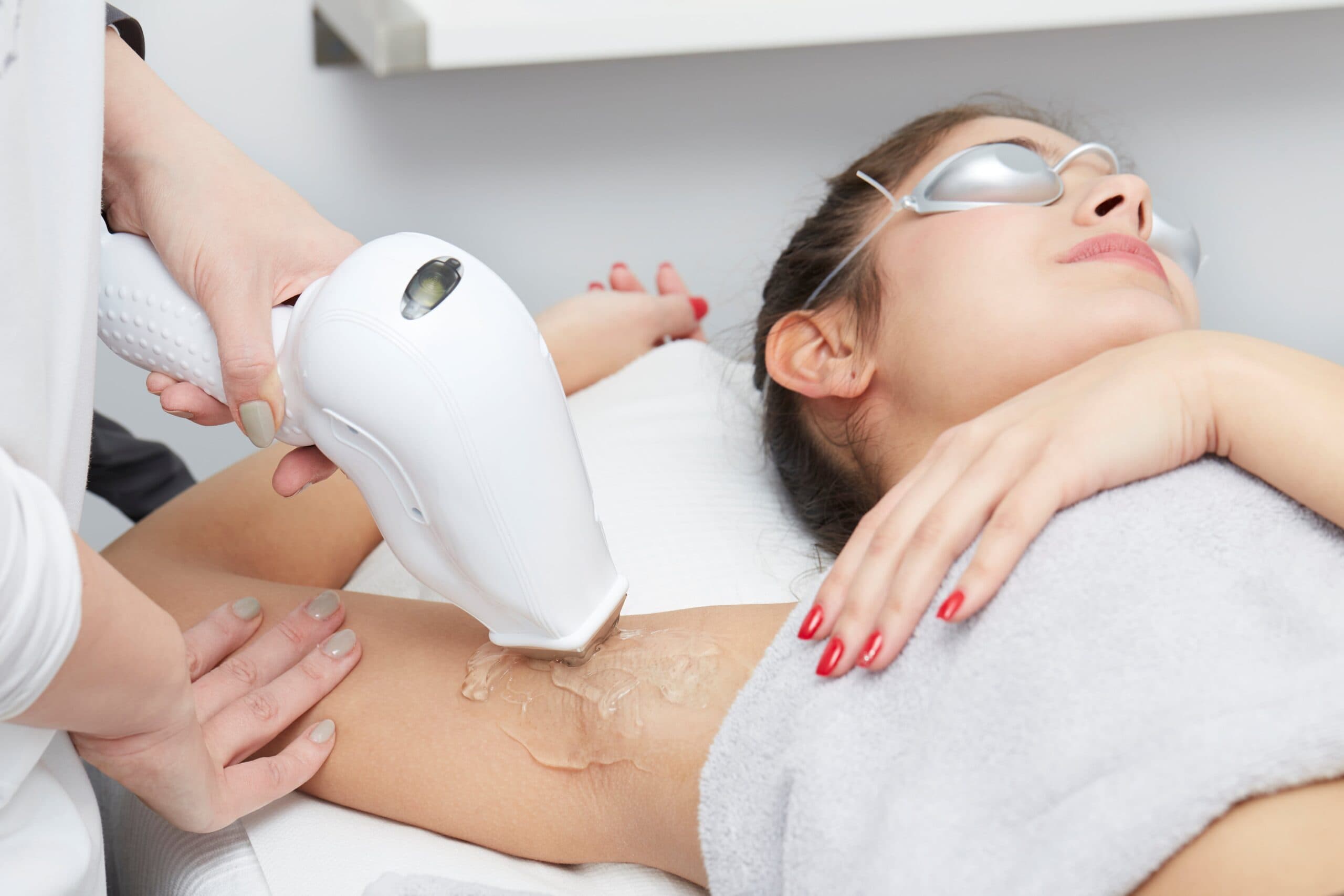
These two treatments can absolutely be part of the same plan, but they should not be part of the same week. Laser hair reduction needs skin that is calm, unirritated and well away from recent sun, while a chemical peel deliberately leaves skin shedding, more sensitive and asking to be kept out of heat and UV for days afterwards. The practical answer is that the laser course sets the calendar and the peel is fitted into the quiet stretch between sessions — but the actual interval is a clinical decision your doctor makes, because neither treatment page commits to a fixed laser-to-peel gap.
Who actually ends up booking both?
Usually someone whose two complaints are unrelated but happen to sit on the same skin. A full laser course runs six to eight sessions with occasional maintenance afterwards, so it occupies many months — and in that time the same patient often wants to deal with dullness, uneven tone or texture, which is what a peel is for. Rather than wait out the laser course, people quite reasonably ask whether the two can run in parallel.
They can run in parallel across the months. They cannot run in parallel across a given fortnight, and understanding why is most of what makes the combination work.
Why can't both be done in the same visit?
Because each one leaves the skin in a state the other does not want to meet.
After a laser session, skin may feel sensitive for one to two days, and you are asked to avoid makeup, scented lotions and deodorant on the area for 24 hours. A peel brushed onto skin in that state is being applied to a surface that is already reactive. Going the other way is worse: a superficial peel leaves slight redness or flaking for a few days, and you are asked not to pick, peel or scratch but to let it shed on its own. A laser pass over actively flaking skin is not the controlled situation the settings were chosen for.
There is also the matter of what each one asks of your behaviour. The laser asks you to avoid direct sunlight and use broad-spectrum sunscreen, because treated skin reacts more strongly to UV and exposure before or after a session raises the risk of burns and pigmentation. The peel asks for daily broad-spectrum sunscreen and for you to stay out of direct sun and heat while the skin settles. Stacking two separate sun-sensitive windows on top of each other is how patients end up with the pigmentation they were trying to avoid.
In what order should they be done?
In practice the laser course leads, for a reason that has nothing to do with which treatment matters more. Laser timing is not negotiable: sessions are spaced to catch follicles in their active growth phase, because only hairs in that phase respond, and that is why a course is six to eight sessions rather than one. Shift a laser session and you are not just rescheduling an appointment, you are missing a growth window.
A peel has no equivalent constraint. Superficial peels run as a course over several months, which means the individual sessions are far more flexible about exactly which week they land in. So the laser dates go on the calendar first and the peel slots into the gaps — not because the peel is less important, but because it is the one that can move.
What decides the gap between them?
Three things, and the first is the one that is genuinely unknowable from an article: your own skin. Neither our laser page nor our peel page publishes a laser-to-peel interval, and we would rather say so plainly than invent a number that sounds authoritative. Your doctor sets it after assessing your skin type, tone and texture.
What the pages do tell you is what has to have finished before the next thing starts. Treated hairs shed over roughly 5 to 30 days after a laser session, so there is a whole stretch of activity after the appointment itself. A peel needs its own clear run: no waxing, threading or bleaching for a week afterwards, and no Retin-A or other sensitising products for 72 hours. And before a peel, you stop exfoliating scrubs and benzoyl peroxide for at least 48 hours and a patch test is always done before the first full treatment.
Read those together and the shape is obvious even without a stated number — each treatment needs the other's settling period to be genuinely over, not nearly over.
Waxing is banned by both, for different reasons
This is the instruction patients break most often, usually because they received it twice and assumed it was the same rule.
Before a laser session, do not wax, pluck or tweeze for two weeks, because the laser needs the root in place to work — waxing removes the very target the light is aimed at. Between sessions the same applies; a razor is fine, and the area is shaved and cleaned at the clinic on the day anyway. After a peel, the ban is about the skin rather than the hair: no waxing, threading or bleaching for a week, because freshly peeled skin should not be stripped again.
So across a combined plan you are effectively off waxing for the duration. For most people starting laser that is a relief rather than a sacrifice, since the repeating three-week waxing appointment is usually what sent them to us in the first place.
Does it change anything if the two are on different areas?
It changes the spacing conversation, not the principle. Laser areas include underarms, bikini, legs, back, arms and face, and a peel is frequently wanted on the face alone. When the two sit on completely different skin, the local interaction — reactive skin meeting an active treatment — largely disappears, and the plan can usually be tighter.
What does not disappear is the sun-sensitivity overlap, since that is systemic in the sense that you only have one set of daily habits. Nor does the general principle that your doctor should know what else is being done to your skin and when. Tell us about every treatment on the calendar, not just the one you are sitting down for.
What does Bangalore add to this?
Mostly a sun problem that is easy to underestimate. Both treatments ask for diligent broad-spectrum sunscreen and shade, and an Outer Ring Road commute at either end of the working day is real UV exposure however little time you consciously spend outdoors. The peel's settling days and the laser's sun-sensitive window are both worth planning around your actual commute rather than around your weekend.
Heat matters too. A peel asks you to stay out of direct sun and heat while the skin settles, which is worth remembering before a long bike ride home in the afternoon. And the practical upside is genuine: laser sessions are quick, need no recovery time, and sensitivity typically settles within a day or two, so they are the easier of the two to fit around a working day at either our Bellandur or Indiranagar clinic.
How does the plan actually get set?
At a consultation, by someone looking at your skin. A doctor assesses skin type, tone and texture, patch tests before the first full peel, and chooses laser settings for your hair colour, thickness and the area being treated — the diode system we use has integrated cooling and is chosen specifically because it treats deeper skin tones more safely than older systems. Those are not decisions a sequencing article can make for you; what an article can do is tell you which questions to bring.
If you want both on the calendar, book an appointment and say so at the start, so the two courses are planned together rather than one being fitted awkwardly around the other later.